


Introduction
One of the hearth controls is the hearth rate sensor, based or plethysmograph. In our specific case this probe is based on the light transmission so the version is a PPT, or photoplethysmograph.
The general principle is to measure a light source transmitted through a human body tissue: the change of the transmitted light varies synchronized with the heart pulses. This probe will be used in conjunction with the blood pressure analysis to take a more complete blood status checking.
Main components
Sensor
After several tests the choice for the adopted sensor has been oriented to the IR component TCRT1000 reflective optical sensor ( see the attached data sheet) for photoplethysmography (and other non-biomedical applications). It has the advantage of working at 3.3V in the IR range at a fixed wavelenght of 950nm that has a good tissue penetration with very low influence from the external visible light; in fact direct light exposition of the sensor reduces the detection contrast and can create serious problems in the detection but in this specific application the sensor reflection is read with the transmitter-reflecting surface directly connected to the human body tissue surface so this problem does not exist. So, despite this low cost device is declared for non-specific medical applications it has demonstrated to work fine in a very stable way.
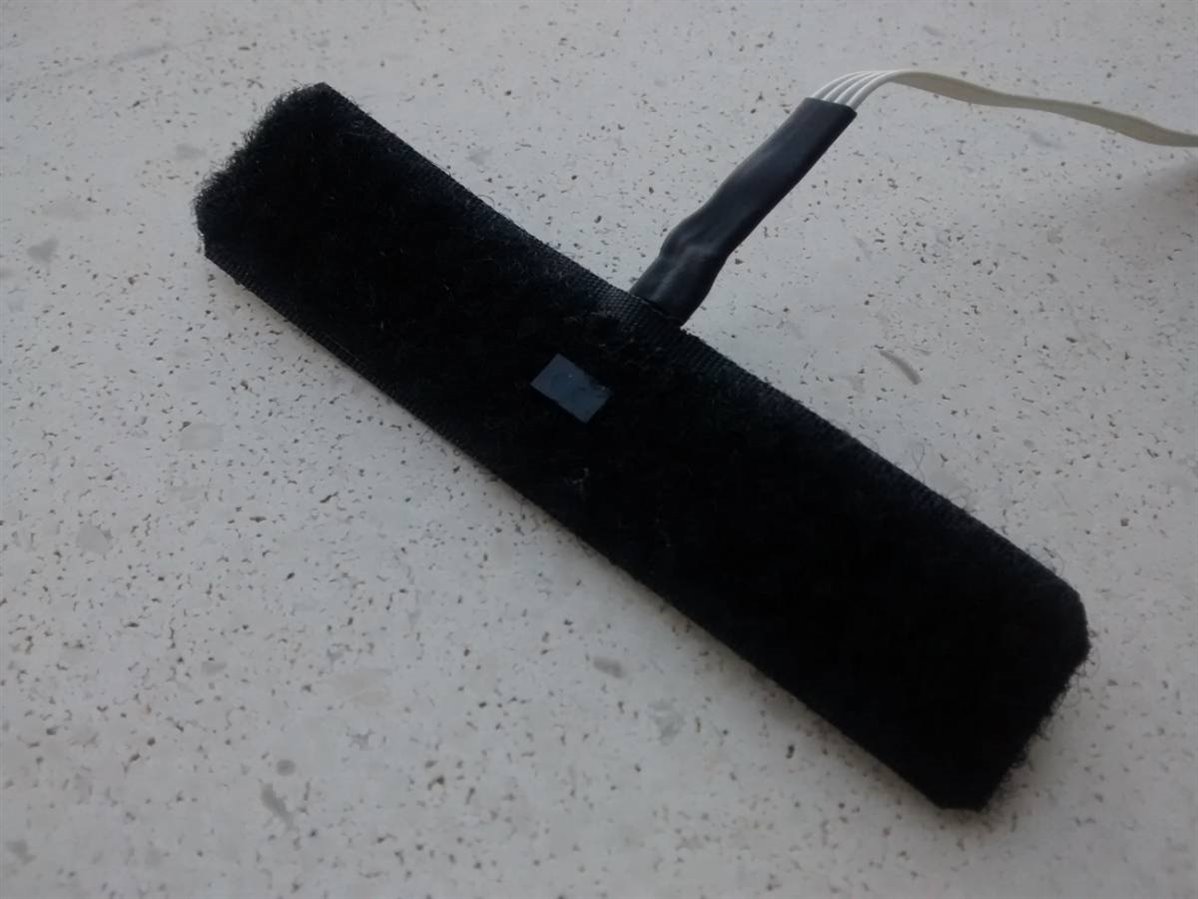
The test version of the sensor has been included in a velcro strip that should be closed around (better) the finger index of the patient. The prototype version will provide a more comfortable support for the base always following this principle.
Signal processing
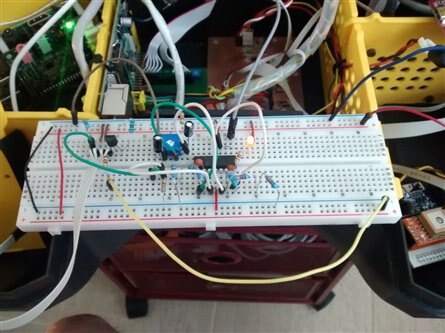
Inspired by some solutions explained on Electronic Projects Focus the following images shows the test preview circuit where using a generic four OP Amp MCP6004 (see the attached data sheet) the sensor signal is filtered by the noise, isolating and amplifying the beat frequency only so it can be detected as a digital level change.
The signals are filtered and amplified through two stages: a low-pass and a high-pass filter isolating and amplifying the value. The final resulting signal is then post-processed for Meditech by the BitScope device (uses a one of the 8 logic channels).
The output from the low-pass filter is sent to the high-pass filter through a 5K trimmer for the final tuning of the signal before the last amplification stage.
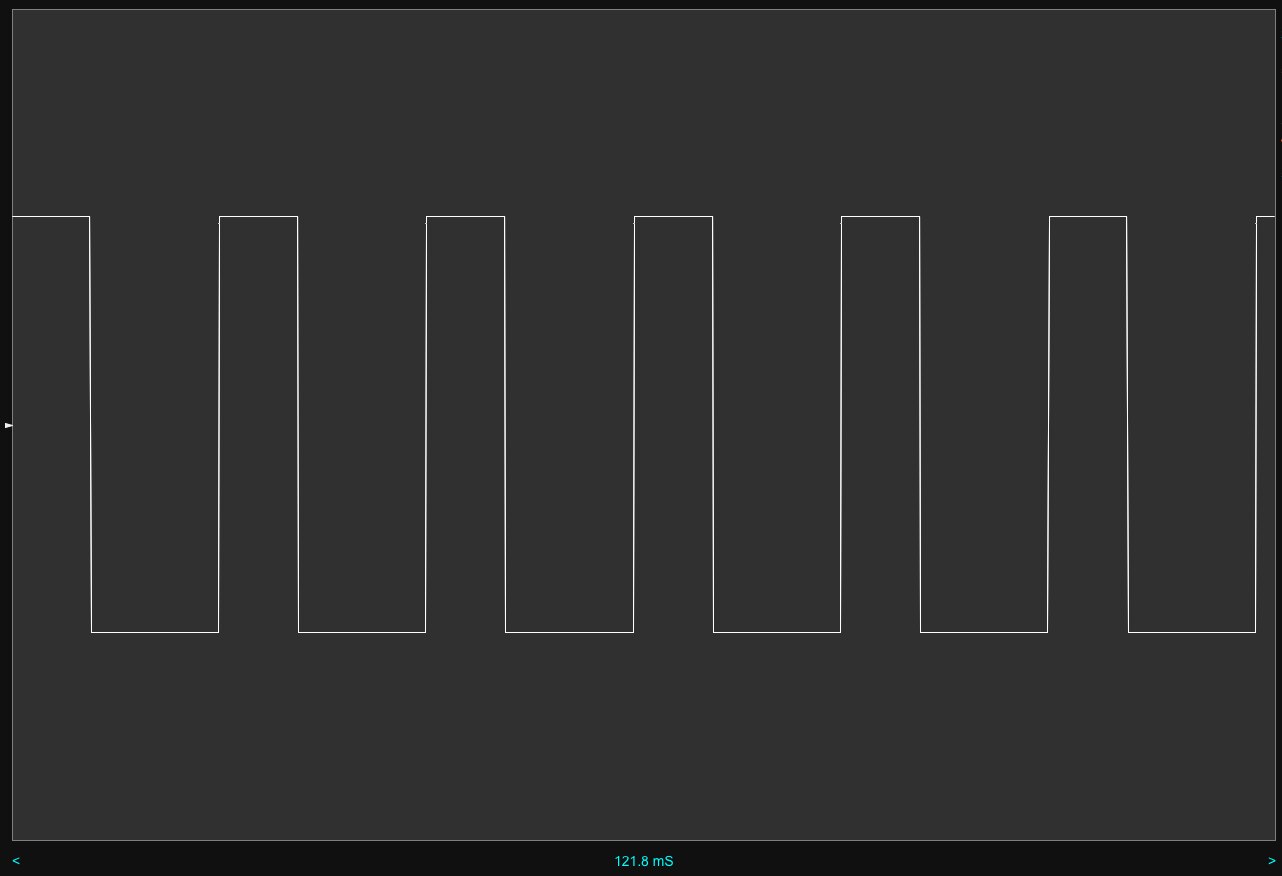
The heartbeat frequency detection (in the image above has been detected with the BitScope meter application) demonstrated to be very stable and reliable for the usage.
Circuit preview
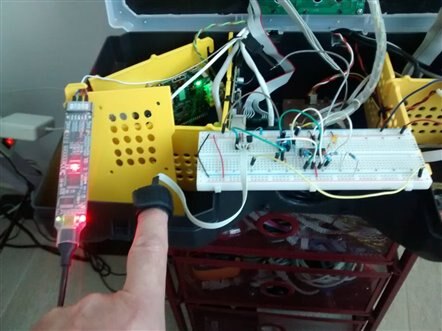
The following images and video shows a breadboard testing circuit preview of the probe.
| TCRT1000.pdf | |
| TCRT1000-TechnicalDocumentation.pdf | |
| MPC6004.pdf |


Top Comments
-

mcb1
-
Cancel
-
Vote Up
+1
Vote Down
-
-
Sign in to reply
-
More
-
Cancel
-

balearicdynamics
in reply to mcb1
-
Cancel
-
Vote Up
0
Vote Down
-
-
Sign in to reply
-
More
-
Cancel
-

mcb1
in reply to balearicdynamics
-
Cancel
-
Vote Up
0
Vote Down
-
-
Sign in to reply
-
More
-
Cancel
Comment-

mcb1
in reply to balearicdynamics
-
Cancel
-
Vote Up
0
Vote Down
-
-
Sign in to reply
-
More
-
Cancel
Children