BEGIN:VCALENDAR
VERSION:2.0
METHOD:PUBLISH
BEGIN:VEVENT
ORGANIZER:MAILTO:
DTSTART:20220420T160000Z
DTEND:20220420T170000Z
LOCATION:On24
SUMMARY:Maximizing Vivado Efficiency with Board Awareness
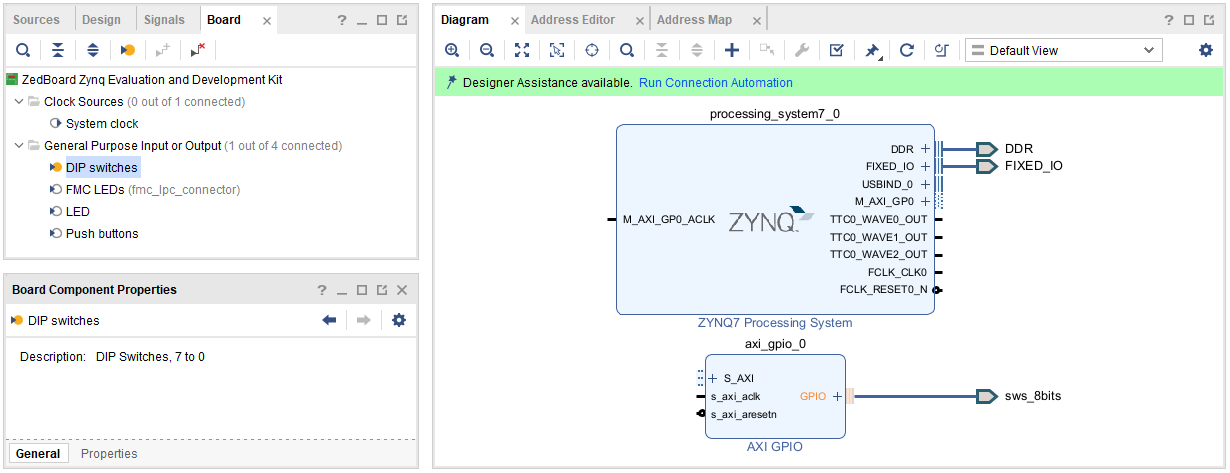
DESCRIPTION;ENCODING=QUOTED-PRINTABLE:logo_2D00_amd_2D00_xilinx.jpeg \n Creating A Custom Board Definition \n Getting started with an AMD-Xilinx design is much easier if you use a development board. AMD-Xilinx, Avnet, and other partners have a wide variety of development boards available with accompanying “Board Definition” files from the XilinxBoardStore that allow AMD-Xilinx’s Vivado tool to become “board-aware.” This makes it very simple to create a block design and add IP that is present on the board, which Vivado then automatically connects and constrains. Not only does it make it easier to get started, this “board-awareness” also allows huge increases in efficiency as multiple designs can be designed quickly. Since AMD-Xilinx, Avnet, and other partners provide these board definition archives, a typical user will never need to create that archive for a development board. But what happens when a custom board is developed? Is it possible for engineers to create their own board definitions that make Vivado “aware” of their new custom board? Yes! While the capability to create these Board Definition archive is in the documentation, it is still a challenging task. This webinar is intended to simplify the process of creating your own custom board definition, starting from a template provided by Avnet. \n What You Will Learn In This Webinar: \n \n Understand what Vivado “board awareness” is \n Learn the critical elements in a board definition archive \n See how to generate PS and PL parameters for a custom board definition \n Use a template to create and install a custom board definition \n \n image004.png \n 006.jpeg \n The Presenter \n \n \n \n fletcher_5F00_b.jpg \n \n \n Bryan Fletcher, Technical Marketing Director at Avnet \n \n \n I've been a fan of programmable logic technology since early in my career at Hewlett-Packard and Evans & Sutherland. I work now in Avnet's Products & Emerging Technologies group. I’ve worked on many development boards over the years, including ZedBoard and Ultra96-V2. I previously supported programmable logic designs as a Field Applications Engineer.
X-ALT-DESC;FMTTYPE=text/html:logo_2D00_amd_2D00_xilinx.jpeg
Creating A Custom Board Definition
Getting started with an AMD-Xilinx design is much easier if you use a development board. AMD-Xilinx, Avnet, and other partners have a wide variety of development boards available with accompanying “Board Definition” files from the XilinxBoardStore that allow AMD-Xilinx’s Vivado tool to become “board-aware.” This makes it very simple to create a block design and add IP that is present on the board, which Vivado then automatically connects and constrains. Not only does it make it easier to get started, this “board-awareness” also allows huge increases in efficiency as multiple designs can be designed quickly. Since AMD-Xilinx, Avnet, and other partners provide these board definition archives, a typical user will never need to create that archive for a development board. But what happens when a custom board is developed? Is it possible for engineers to create their own board definitions that make Vivado “aware” of their new custom board? Yes! While the capability to create these Board Definition archive is in the documentation, it is still a challenging task. This webinar is intended to simplify the process of creating your own custom board definition, starting from a template provided by Avnet.
What You Will Learn In This Webinar:
- Understand what Vivado “board awareness” is
- Learn the critical elements in a board definition archive
- See how to generate PS and PL parameters for a custom board definition
- Use a template to create and install a custom board definition
image004.png
The Presenter
| fletcher_5F00_b.jpg |
| Bryan Fletcher, Technical Marketing Director at Avnet |
| I've been a fan of programmable logic technology since early in my career at Hewlett-Packard and Evans & Sutherland. I work now in Avnet's Products & Emerging Technologies group. I’ve worked on many development boards over the years, including ZedBoard and Ultra96-V2. I previously supported programmable logic designs as a Field Applications Engineer. |
CLASS:PUBLIC
END:VEVENT
END:VCALENDAR