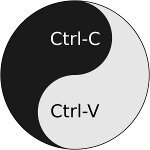
The news of the Church of Kopimism, an organization in favor of file sharing without regard to copyright and IP laws, becoming an officially recognized religion in Sweden was surprising to me. It is not surprising that a group critical of the laws regulating a large part of the global economy should choose to organize itself a religion. I am surprised that in an age where so much material is provided free that people feel the need to organize against copyright laws.
My first real word processor was a bootleg copy of WorkPerfect 4.2. (I purchased a retail copy of WordPerfect 6.0 years later.) In the 80s and 90s, people pirated software using BBSs and informal personal networks. A friend told me the large church his family attended had a software interest group where people would bring software, which was primarily distributed on 5.25” or 3.5” floppies at the time, to share with other members of the congregation. We wondered if copying software was really wrong if a mainstream church was openly promoting it in its newsletter.
Over twenty years later, I am composing this article using Google Docs. When I don’t have internet access, I use OpenOffice. There is simply less motivation today to pirate software when there are so many free alternatives. The same is true in the music industry where many musicians make their music freely available and only charge for a premium recording of the music. TV shows and movies are available for a small monthly subscription or for free with periodic interruptions for advertisements.
Supporters of Kopimism apparently don’t want producers even to be able to charge for the premium versions of their products. This is unfortunate because even in our modern economy, which has elements of a gift economy, it is good to give the producers the right to license their IP. Increasingly, they are choosing to give away their IP and charge to help people use it to solve particular problems. We should keep both options available.
Some reports are suggesting Kopimism is energized by threat that legislation like the Stop Online Piracy Act (SOPA) poses to piracy. SOPA has been widely criticized for potentially chilling legitimate sharing of ideas. Critics of SOPA who want to pirate copyrighted material undermine these legitimate criticisms.
Is there any legitimate point that supporters of Kopimism are making about how we should control copyrighted material in the digital world?
My first real word processor was a bootleg copy of WorkPerfect 4.2. (I purchased a retail copy of WordPerfect 6.0 years later.) In the 80s and 90s, people pirated software using BBSs and informal personal networks. A friend told me the large church his family attended had a software interest group where people would bring software, which was primarily distributed on 5.25” or 3.5” floppies at the time, to share with other members of the congregation. We wondered if copying software was really wrong if a mainstream church was openly promoting it in its newsletter.
Over twenty years later, I am composing this article using Google Docs. When I don’t have internet access, I use OpenOffice. There is simply less motivation today to pirate software when there are so many free alternatives. The same is true in the music industry where many musicians make their music freely available and only charge for a premium recording of the music. TV shows and movies are available for a small monthly subscription or for free with periodic interruptions for advertisements.
Supporters of Kopimism apparently don’t want producers even to be able to charge for the premium versions of their products. This is unfortunate because even in our modern economy, which has elements of a gift economy, it is good to give the producers the right to license their IP. Increasingly, they are choosing to give away their IP and charge to help people use it to solve particular problems. We should keep both options available.
Some reports are suggesting Kopimism is energized by threat that legislation like the Stop Online Piracy Act (SOPA) poses to piracy. SOPA has been widely criticized for potentially chilling legitimate sharing of ideas. Critics of SOPA who want to pirate copyrighted material undermine these legitimate criticisms.
Is there any legitimate point that supporters of Kopimism are making about how we should control copyrighted material in the digital world?