element14 Community
element14 Community
    Register Log In
  • Site
  • Search
  • Log In Register
  • Community Hub
    Community Hub
    • What's New on element14
    • Feedback and Support
    • Benefits of Membership
    • Personal Blogs
    • Members Area
    • Achievement Levels
  • Learn
    Learn
    • Ask an Expert
    • eBooks
    • element14 presents
    • Learning Center
    • Tech Spotlight
    • STEM Academy
    • Webinars, Training and Events
    • Learning Groups
  • Technologies
    Technologies
    • 3D Printing
    • FPGA
    • Industrial Automation
    • Internet of Things
    • Power & Energy
    • Sensors
    • Technology Groups
  • Challenges & Projects
    Challenges & Projects
    • Design Challenges
    • element14 presents Projects
    • Project14
    • Arduino Projects
    • Raspberry Pi Projects
    • Project Groups
  • Products
    Products
    • Arduino
    • Avnet & Tria Boards Community
    • Dev Tools
    • Manufacturers
    • Multicomp Pro
    • Product Groups
    • Raspberry Pi
    • RoadTests & Reviews
  • About Us
  • Store
    Store
    • Visit Your Store
    • Choose another store...
      • Europe
      •  Austria (German)
      •  Belgium (Dutch, French)
      •  Bulgaria (Bulgarian)
      •  Czech Republic (Czech)
      •  Denmark (Danish)
      •  Estonia (Estonian)
      •  Finland (Finnish)
      •  France (French)
      •  Germany (German)
      •  Hungary (Hungarian)
      •  Ireland
      •  Israel
      •  Italy (Italian)
      •  Latvia (Latvian)
      •  
      •  Lithuania (Lithuanian)
      •  Netherlands (Dutch)
      •  Norway (Norwegian)
      •  Poland (Polish)
      •  Portugal (Portuguese)
      •  Romania (Romanian)
      •  Russia (Russian)
      •  Slovakia (Slovak)
      •  Slovenia (Slovenian)
      •  Spain (Spanish)
      •  Sweden (Swedish)
      •  Switzerland(German, French)
      •  Turkey (Turkish)
      •  United Kingdom
      • Asia Pacific
      •  Australia
      •  China
      •  Hong Kong
      •  India
      •  Korea (Korean)
      •  Malaysia
      •  New Zealand
      •  Philippines
      •  Singapore
      •  Taiwan
      •  Thailand (Thai)
      • Americas
      •  Brazil (Portuguese)
      •  Canada
      •  Mexico (Spanish)
      •  United States
      Can't find the country/region you're looking for? Visit our export site or find a local distributor.
  • Translate
  • Profile
  • Settings
Publications
  • Learn
  • More
Publications
Blog JAXA bouncing asteroid robot, collecting data on the fly
  • Blog
  • Documents
  • Events
  • Files
  • Members
  • Mentions
  • Sub-Groups
  • Tags
  • More
  • Cancel
  • New
Join Publications to participate - click to join for free!
  • Share
  • More
  • Cancel
Group Actions
  • Group RSS
  • More
  • Cancel
Engagement
  • Author Author: Catwell
  • Date Created: 24 Oct 2012 6:52 PM Date Created
  • Views 570 views
  • Likes 1 like
  • Comments 1 comment
  • research
  • transportation
  • industry
  • hmi
  • robotics
  • robot
  • space
  • Design
  • cabeatwell
  • jaxa
  • prototyping
  • space_exploration
  • measurement
  • sensor
  • innovation
  • communication
Related
Recommended

JAXA bouncing asteroid robot, collecting data on the fly

Catwell
Catwell
24 Oct 2012

image

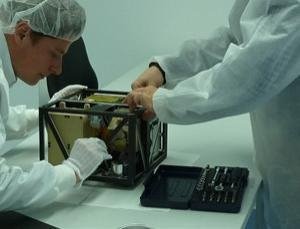
A component of the Hayabusa 2 prototype (via JAXA)


On October 1st, a memorandum was signed that will result in one of the most ambitious projects in space exploration. This agreement formalizes a collaboration of the German Aerospace Center (DLR) and the Japanese Aerospace Exploration Agency (JAXA) to send a spacecraft and lander to Asteroid 1999 JU 3 in 2018 to try to learn about the origins of water and life on earth, mining asteroids for resources, and how we could fend off an earth-bound asteroid. This collaboration will also include the Centre National d’Etudes Spatiales (CNES) and the Technische Universität Braunschweig.


Asteroid 1999 JU 3, a carbonaceous asteroid, has been dated to be around 4.5 billion years old. It has endured little change in that time and scientists believe it could have come in contact with water at some point, so it is of particular importance. The mission to study it will send the Japanese spacecraft Hayabusa 2 to rendezvous with the asteroid, take some measurements of its surface, select what debris samples are worth collecting and finally drop off the lander it carries onboard before returning to Earth.


The onboard lander called MASCOT, short for Mobile Asteroid Surface Scout, weights only about 22 lbs and is the size of a milk crate. On board, it carries a spectrometer given by the CNES to examine mineral samples, a DLR radiometer to measure temperature, a magnetometer developed by the Technische Universität Braunschweig and a DLR camera that will look at fine structures found on the asteroid’s surface in order to learn more about the properties of rocks found and accurately map the landing site.


You don't have permission to edit metadata of this video.
Edit media
x
image
Upload Preview
image


The MASCOT will be the first lander ever to take samples from different parts of an asteroid. It will be sent into a freefall when it is 100 m from the asteroid’s surface.  It is capable of sensing and adjusting its landing orientation using onboard sensors and mechanisms for the drop. The lander is mobile because it is also equipped with a jumping mechanism, composed of rapidly accelerating spinning weights, that will allow it to hop from place to place on the unpredictable terrain under low gravitational conditions. The MASCOT will use it scientific instruments to collect data for 16 hours. Specs are still being determined, but it was proposed that the lander be powered by a 160 Wh-210 Wh LiSOCl2 battery when it is deployed. All of its collected information will be communicated back to land. This information will also put the samples collected by Hayabusa 2 into the right context, in other words it will collect samples in various catagories on its own.


The project hopes to answer many questions about the role of asteroids in our past and how they can play a role in human development or survival in the future. The carbonaceous asteroid 1999 JU 3 is of the type most commonly found in our solar system so chances are we will find general and applicable information or at least new information that will lead to new hypotheses. The agreement was signed between JAXA and the DLR at the International Astronautical Congress (IAC) in Naples. Launch date for the mission will be sometime in 2014 or 2015.


You don't have permission to edit metadata of this video.
Edit media
x
image
Upload Preview
image


Cabe

http://twitter.com/Cabe_e14

  • Sign in to reply
  • DAB
    DAB over 13 years ago

    Good project.


    Soon we will realize the wealth of materials just waiting for us to go get them.

    Especially since there is growing resistance to using our undiscovered wealth, we can exploit the asteroids until someone decides we are going to harm some as yet uncovered asteroid beings.


    Just my opinion,

    DAB

    • Cancel
    • Vote Up 0 Vote Down
    • Sign in to reply
    • More
    • Cancel
element14 Community

element14 is the first online community specifically for engineers. Connect with your peers and get expert answers to your questions.

  • Members
  • Learn
  • Technologies
  • Challenges & Projects
  • Products
  • Store
  • About Us
  • Feedback & Support
  • FAQs
  • Terms of Use
  • Privacy Policy
  • Legal and Copyright Notices
  • Sitemap
  • Cookies

An Avnet Company © 2025 Premier Farnell Limited. All Rights Reserved.

Premier Farnell Ltd, registered in England and Wales (no 00876412), registered office: Farnell House, Forge Lane, Leeds LS12 2NE.

ICP 备案号 10220084.

Follow element14

  • X
  • Facebook
  • linkedin
  • YouTube