


What is Experimenting with Flyback Transformers?
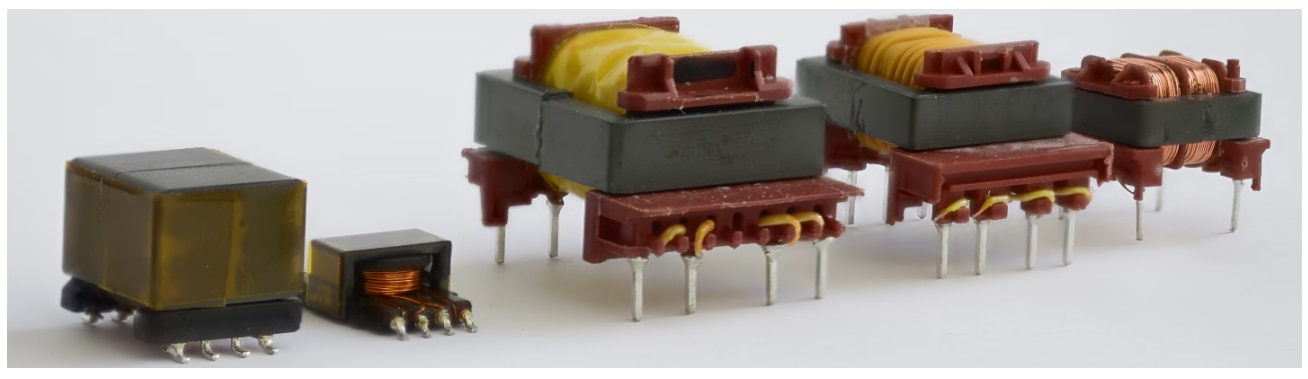
Flyback transformers are used in switched-mode power supplies, converters, inverters, and much more. They are a unique device, They function as an isolated inductor, storing energy in every cycle. (A typical transformer does not store any energy since it transfers energy immediately from a source to its load. Experimenting with Flyback Transformers is an element14 community competition where the participants had the opportunity to experiment with Bourn's flyback transformers and compete for some great prizes.
The element14 Community would like to thank our sponsor, Bourns, for providing the flyback transformer kits and support.
 Grand Prize: javagoza
Final - Magic Lightbox: Project Summary
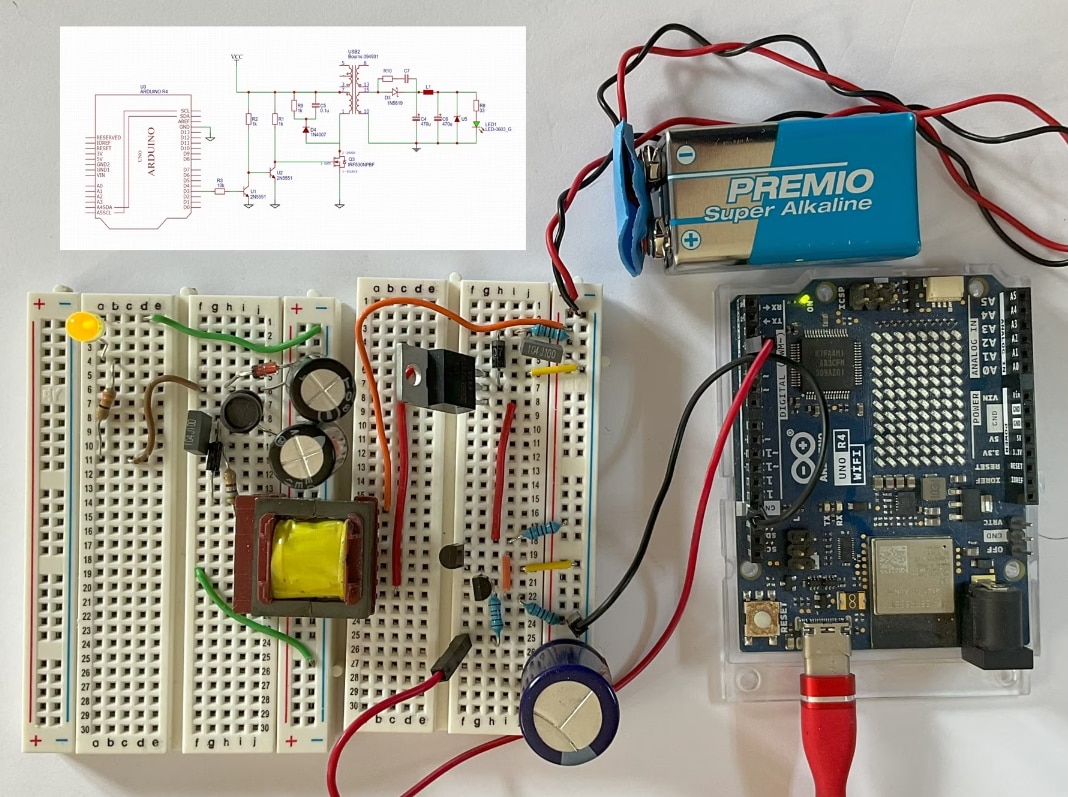
The Magic Lightbox addresses a photography lighting challenge, specifically designed for small objects like electronic components. Comprising two opposing LED panels resembling softboxes, the setup enhances contrast for photographing such components. The system integrates a PID controller for closed-loop regulation, adjusting Proportional, Integral, and Derivative actions based on the difference between actual and desired states. A Pulse Width 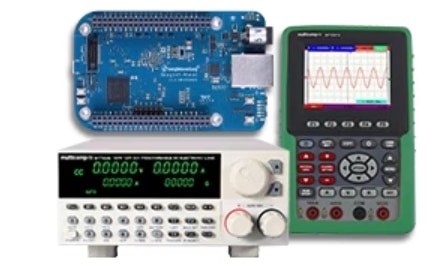 Modulation (PWM) controller modifies the duty cycle, regulating energy storage in the flyback transformer.
The flyback converter provides DC to DC conversion with galvanic isolation, transferring energy from the primary coil to the load through an output capacitor acting as an energy pump. Judge noted: A very interesting project. Javagoza did an excellent job taking the reader through all the experiments that were carried out, and stuck to the theme of flyback transformers. A lot was achieved, and the circuit diagrams were appreciated. check out the experiments
Runner Up Prize: Anthocyanina
DC to DC Demystified - Summary - It Flies Back!
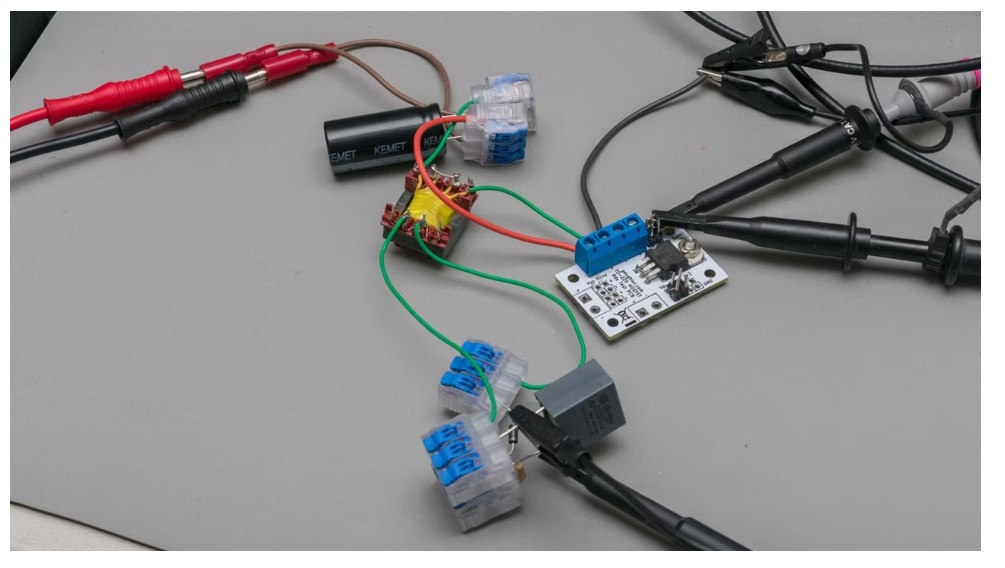
At the start of the challenge, I had just a bit of knowledge about flyback transformers and converters from briefly exploring them in class. But from the day I saw the 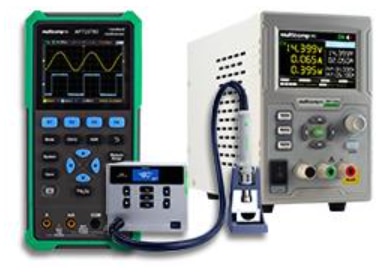 challenge announcement, it piqued my interest and my curiosity to research this fascinating subject. I also learned many new things thanks to my constant reading on the topic since day one, and thanks to the other challengers' blogs and their comments on mine that knowledge was expanded even further. Judge noted: A great blend of simulation and practical results, it provided technical understanding for readers. Excellent measurements diagrams and photos. Check out the experiments
 Third Prize: Gough Lui
Flybacks from the Ground Up – Part 6 (Final): “… Landing is Mandatory”
Power conversion is a key part of modern electronics designs. Almost every low-power, low-cost, energy-efficient, compact, light-weight mains power adapter has a flyback 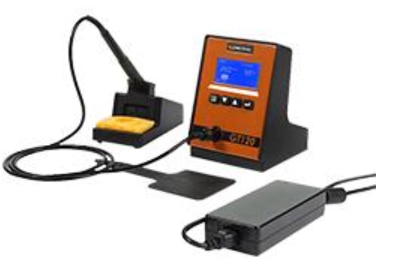 transformer in it. As a result, I decided to participate in this challenge as a complete novice, having never studied electromagnetics and having no design experience in this domain, to see whether I could build something “from the ground up” experimentally and detail the results. Judge noted: Very readable, and it was great to see the novel approach of inserting flyback transformers into existing circuits, to see how they would perform. It was excellent to see attention to the choke and PLC transformers too. It was clear that there wasn’t enough time to systematically go through flyback designs, but nevertheless Gough pulled it together. Check Out The Experiments
 Finisher Prize: abhishek2018
Final Results Blog : Playing with Bourns 2.25-22 W Flyback Transformers
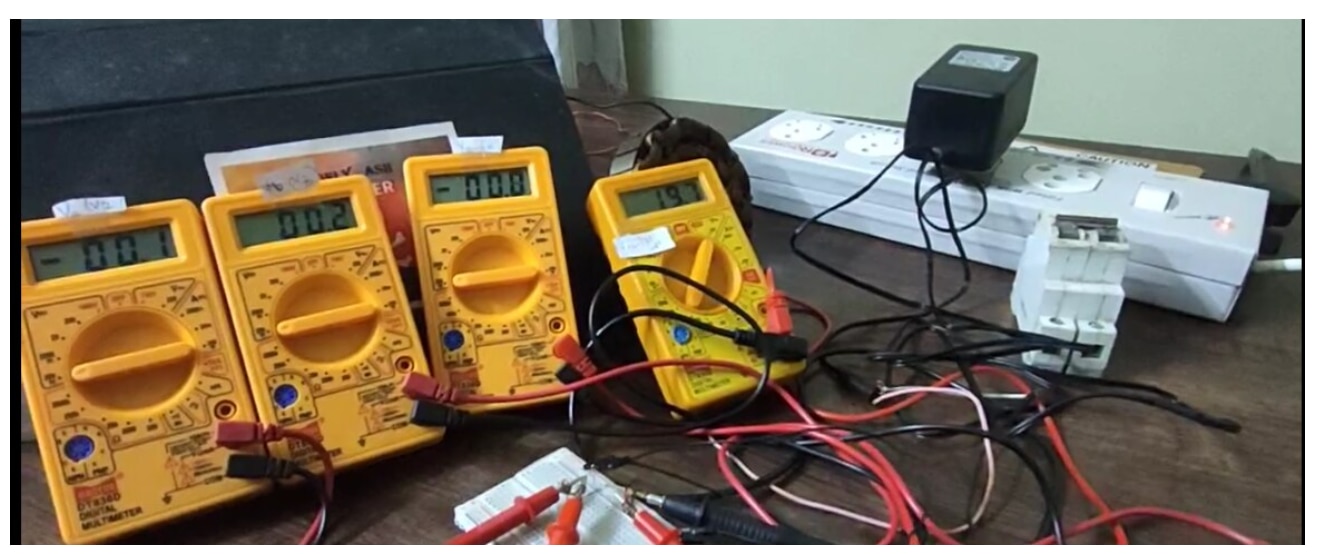
 With the flyback transformer kit, I planned many main tasks and experiments which would include a tutorial, 5 blogs, and software files. I ended my participation in this design challenge playing with common mode chokes and AC-DC flybacks. Judge Noted: To get to the final blog is a significant achievement for all contestants. He stuck closely to the subject of flyback transformers. The final blog needed some extra work. Great effort for sticking through the entire challenge! Check out the experiments
Other Participants
We'd like to thank Don Bertke and Shabaz for judging the Experimenting with Flyback Transformers Challenge! Their input on the projects was invaluable to our final decisions.
Top Member: DAB
Don spent 35 years in the aerospace industry working on many advanced projects. His range of experience covers nearly every scientific field and most ranges of the electromagnetic spectrum. He has a very broad interest and knowledge in science with extensive analysis in image, multispectral and hyper-spectral analysis. He has also worked on a wide range of embedded computer applications, including integrated search and rescue systems.
Top Member: Shabaz
Shabaz has studied Electronics Engineering followed by Law, and worked primarily in the fields of radio communications (military), telecommunications (infrastructure used by phone companies), data networks, and information technology. He was originally involved in hardware design, followed by software engineering and technical marketing.
 About the Sponsor
Bourns, Inc., is a leading manufacturer and supplier of position and speed sensors, circuit protection solutions, magnetic components, microelectronic modules, panel controls and resistive products. Headquartered in Riverside, California, USA, Bourns serves a broad range of markets, including automotive, industrial, consumer, communications, non-critical life support medical (low/medium risk), audio and various other market segments. Additional company and product information is available at www.bourns.com.
Top Comments