element14 Community
element14 Community
    Register Log In
  • Site
  • Search
  • Log In Register
  • Community Hub
    Community Hub
    • What's New on element14
    • Feedback and Support
    • Benefits of Membership
    • Personal Blogs
    • Members Area
    • Achievement Levels
  • Learn
    Learn
    • Ask an Expert
    • eBooks
    • element14 presents
    • Learning Center
    • Tech Spotlight
    • STEM Academy
    • Webinars, Training and Events
    • Learning Groups
  • Technologies
    Technologies
    • 3D Printing
    • FPGA
    • Industrial Automation
    • Internet of Things
    • Power & Energy
    • Sensors
    • Technology Groups
  • Challenges & Projects
    Challenges & Projects
    • Design Challenges
    • element14 presents Projects
    • Project14
    • Arduino Projects
    • Raspberry Pi Projects
    • Project Groups
  • Products
    Products
    • Arduino
    • Avnet & Tria Boards Community
    • Dev Tools
    • Manufacturers
    • Multicomp Pro
    • Product Groups
    • Raspberry Pi
    • RoadTests & Reviews
  • About Us
  • Store
    Store
    • Visit Your Store
    • Choose another store...
      • Europe
      •  Austria (German)
      •  Belgium (Dutch, French)
      •  Bulgaria (Bulgarian)
      •  Czech Republic (Czech)
      •  Denmark (Danish)
      •  Estonia (Estonian)
      •  Finland (Finnish)
      •  France (French)
      •  Germany (German)
      •  Hungary (Hungarian)
      •  Ireland
      •  Israel
      •  Italy (Italian)
      •  Latvia (Latvian)
      •  
      •  Lithuania (Lithuanian)
      •  Netherlands (Dutch)
      •  Norway (Norwegian)
      •  Poland (Polish)
      •  Portugal (Portuguese)
      •  Romania (Romanian)
      •  Russia (Russian)
      •  Slovakia (Slovak)
      •  Slovenia (Slovenian)
      •  Spain (Spanish)
      •  Sweden (Swedish)
      •  Switzerland(German, French)
      •  Turkey (Turkish)
      •  United Kingdom
      • Asia Pacific
      •  Australia
      •  China
      •  Hong Kong
      •  India
      • Japan
      •  Korea (Korean)
      •  Malaysia
      •  New Zealand
      •  Philippines
      •  Singapore
      •  Taiwan
      •  Thailand (Thai)
      • Vietnam
      • Americas
      •  Brazil (Portuguese)
      •  Canada
      •  Mexico (Spanish)
      •  United States
      Can't find the country/region you're looking for? Visit our export site or find a local distributor.
  • Translate
  • Profile
  • Settings
Experts, Learning and Guidance
  • Technologies
  • More
Experts, Learning and Guidance
Ask an Expert Forum A question about Experiment 11 in Make: Electronics (2nd edition)
  • Blog
  • Forum
  • Documents
  • Leaderboard
  • Files
  • Members
  • Mentions
  • Sub-Groups
  • Tags
  • More
  • Cancel
  • New
Join Experts, Learning and Guidance to participate - click to join for free!
Actions
  • Share
  • More
  • Cancel
Forum Thread Details
  • State Suggested Answer
  • Replies 9 replies
  • Answers 2 answers
  • Subscribers 303 subscribers
  • Views 1883 views
  • Users 0 members are here
  • make electronics
  • chapter 11
Related
See a helpful answer?

Be sure to click 'more' and select 'suggest as answer'!

If you're the thread creator, be sure to click 'more' then 'Verify as Answer'!

A question about Experiment 11 in Make: Electronics (2nd edition)

david_brehm
david_brehm over 7 years ago

I have been trying to complete Experiment #11 in the Make Electronics Book, second edition.  I was able to get the oscillator working with the lights, but have not been able to get the speaker working.  I have tried multiple speakers, etc.  I bought the kit so I think the components are probably correct.


Any way to test each part of the circuit?  It seems the voltage fluctuates during the oscillation so it makes it tougher to troubleshoot.
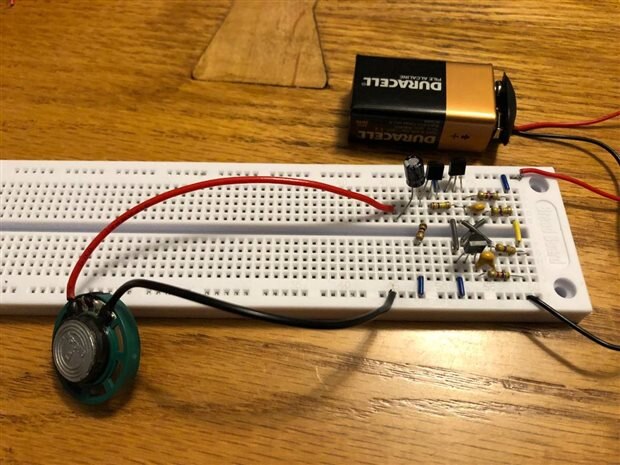
 

image

  • Sign in to reply
  • Cancel

Top Replies

  • jw0752
    jw0752 over 7 years ago in reply to david_brehm +4 suggested
    Hi David, Unless I am missing something your assembly looks good. What size capacitors are you using in the astable multivibrator circuit. Once possibility is that the oscillation is above the frequency…
  • david_brehm
    david_brehm over 6 years ago in reply to jw0752 +4 suggested
    Success! I rebuilt the circuit again on a second breadboard and got it to work. Then I went back to the original breadboard and found a bad transistor. I have been making a lot of progress in learning…
  • david_brehm
    david_brehm over 7 years ago in reply to jw0752 +2
    yes. This has been posted before. There was a wire out of place. I reviewed this but cannot find my mistake. I have tried multiple speakers. I have tried different capacitors. Here are the pages from the…
  • jw0752
    0 jw0752 over 7 years ago

    Hi David,


    I believe we saw a question on this experiment once before and if I recall there was a wire out of place. Can you attach / send a picture? Be sure to use the icons in the tool bar to insert links and pictures or they do not come through. Your link above does not work for me but I have the book so I could look it up. Do you have a multimeter? The authors schematic and breadboard layout are good so it should work. Test the speaker by putting a AA battery across the terminals briefly and listen for a click.


    John

    • Cancel
    • Vote Up +1 Vote Down
    • Sign in to reply
    • Verify Answer
    • Cancel
  • david_brehm
    0 david_brehm over 7 years ago in reply to jw0752

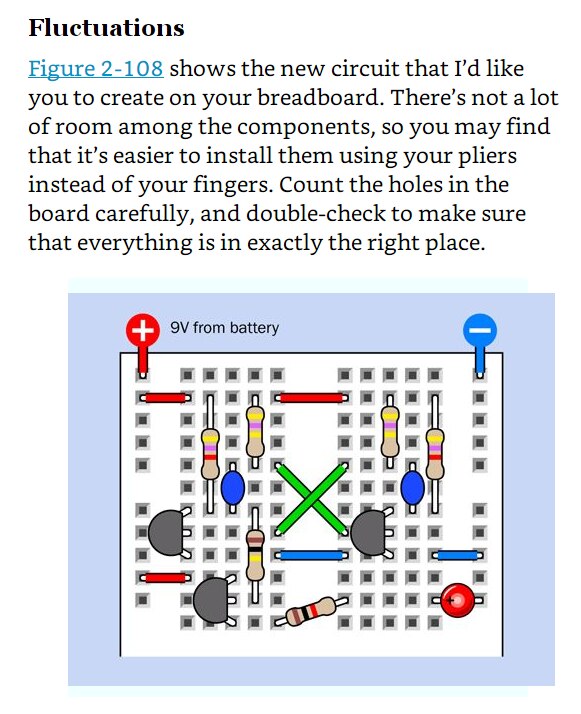
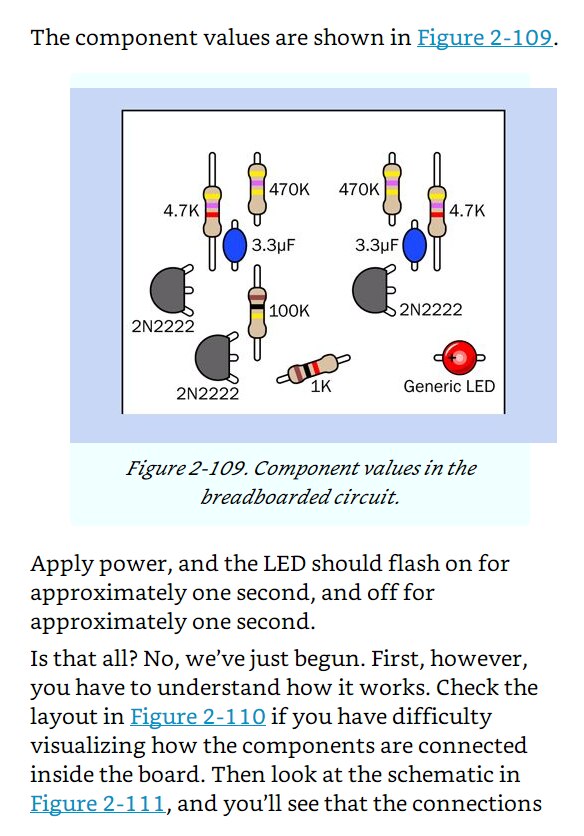
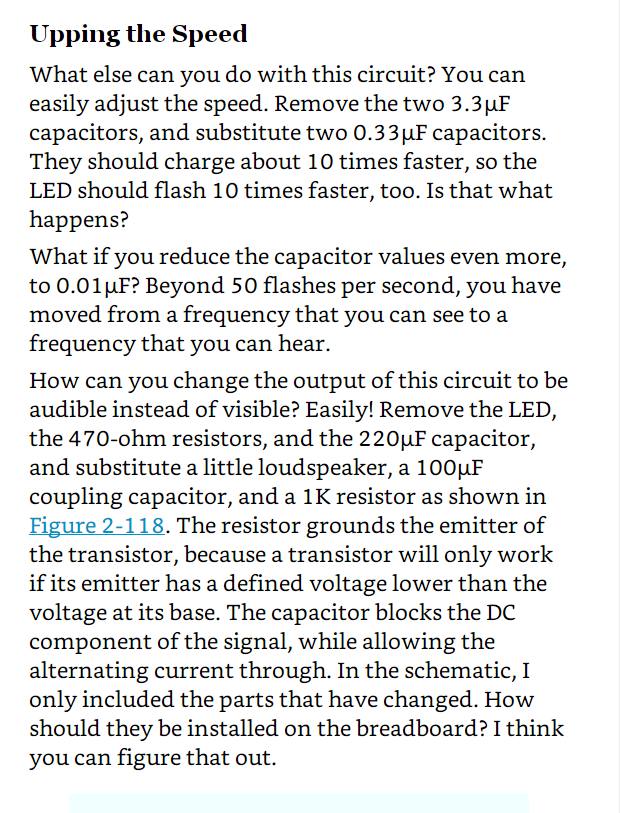
    yes.  This has been posted before.  There was a wire out of place.  I reviewed this but cannot find my mistake.  I have tried multiple speakers.  I have tried different capacitors.  Here are the pages from the book:


    image


    I got this part working fine...


    image


    image

    image

    • Cancel
    • Vote Up +2 Vote Down
    • Sign in to reply
    • Verify Answer
    • Cancel
  • jw0752
    0 jw0752 over 7 years ago in reply to david_brehm

    Hi David,

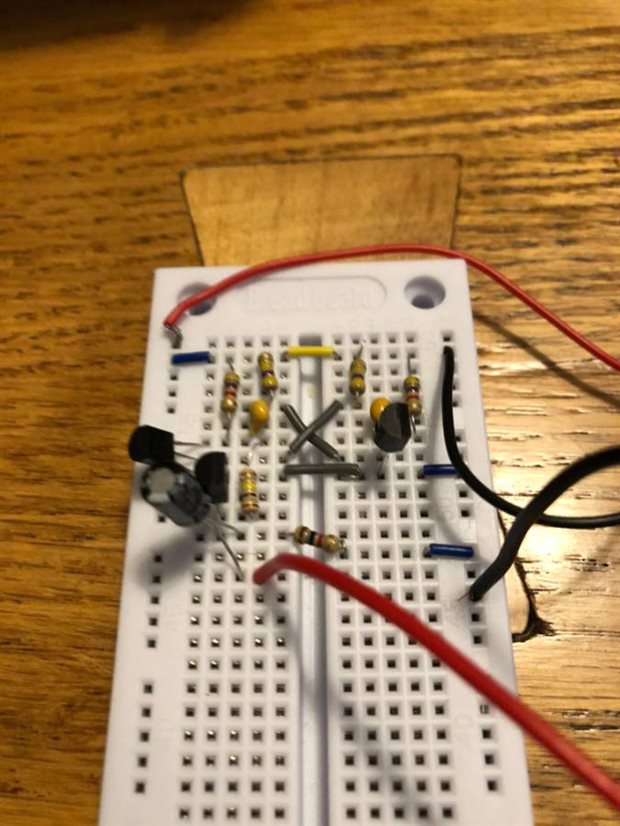
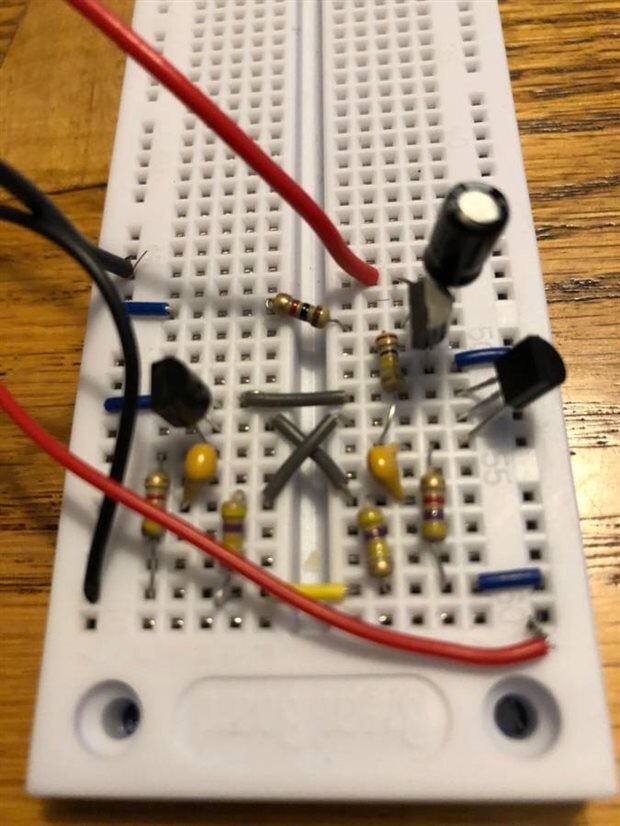
    Do you have a way of posting a picture of your circuit so I can try to check it? If you can add pictures from several different angles as this helps sometimes. Did you have the LED flashing before you went to the speaker?


    John

    • Cancel
    • Vote Up +1 Vote Down
    • Sign in to reply
    • Verify Answer
    • Cancel
  • jw0752
    0 jw0752 over 7 years ago in reply to david_brehm

    Make certain that the 1K resistor is connected between the emitter of the transistor and the ground rail as the circuit will not work otherwise.

    • Cancel
    • Vote Up +1 Vote Down
    • Sign in to reply
    • Verify Answer
    • Cancel
  • david_brehm
    0 david_brehm over 7 years ago in reply to jw0752

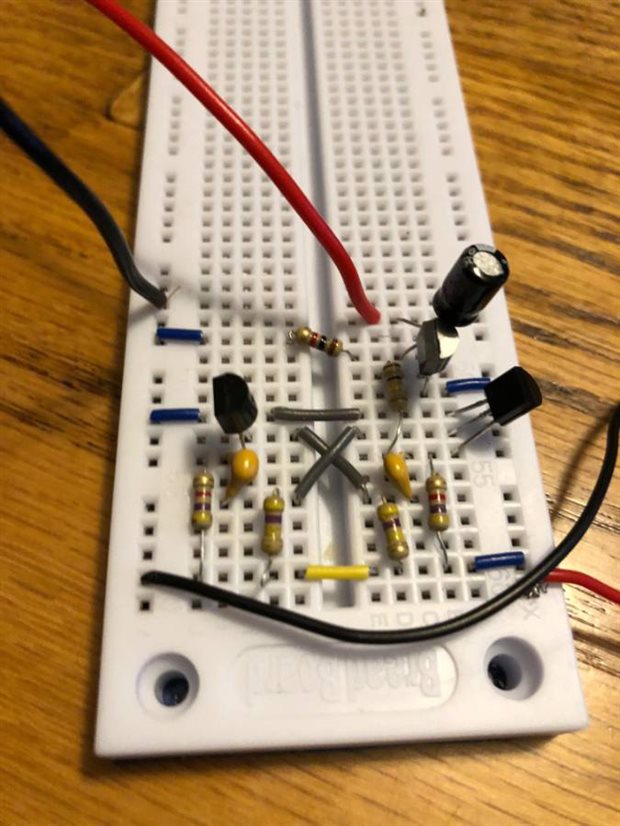
    I do have a 1K resistor connected on the emitter of the transistor and I did get the LED to turn on and off.  Here are some additional pictures.


    image


    imageimage

    • Cancel
    • Vote Up +1 Vote Down
    • Sign in to reply
    • Verify Answer
    • Cancel
  • jw0752
    0 jw0752 over 7 years ago in reply to david_brehm

    Hi David,


    Unless I am missing something your assembly looks good. What size capacitors are you using in the astable multivibrator circuit. Once possibility is that the oscillation is above the frequency range of the speaker. Have you tested the speaker by briefly putting a 1.5 volt battery across it to see if it clicks? You could go back to the LED set up to see if that is still working. If it is then install the speaker again without changing the capacitors. Instead of a flashing LED you should hear a click, click, click in the speaker. If you can get that working gradually decrease the size of the caps to hear the clicking increase in frequency. The best part of this exercise is that it is not working which will force you to solve the problem and in the course you will learn more than if it had worked the first time around. Keep up the good work, the fun is really in beating the challenge of things that don't work as expected. Also if you do solve the problem please get back to me as now I am interested,


    John

    • Cancel
    • Vote Up +4 Vote Down
    • Sign in to reply
    • Verify Answer
    • Reject Answer
    • Cancel
  • david_brehm
    0 david_brehm over 7 years ago in reply to jw0752

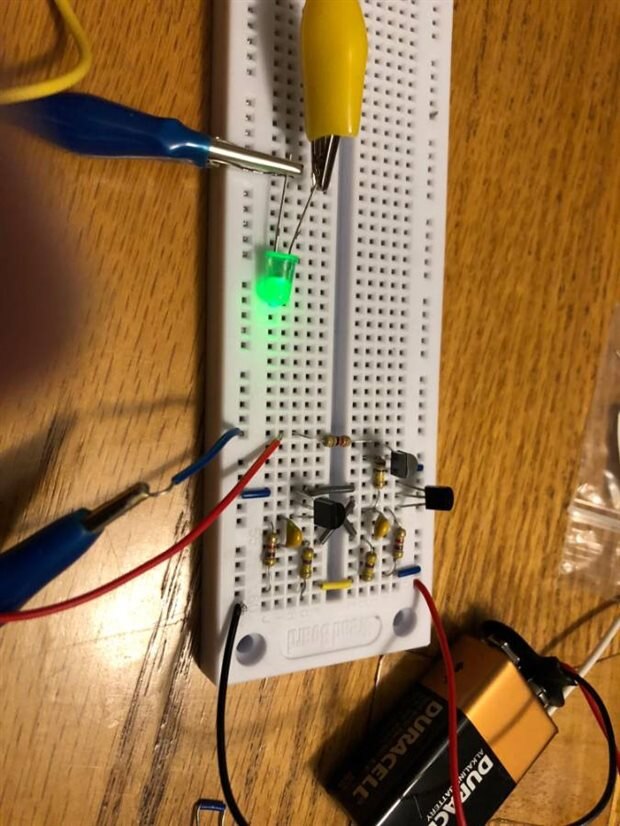
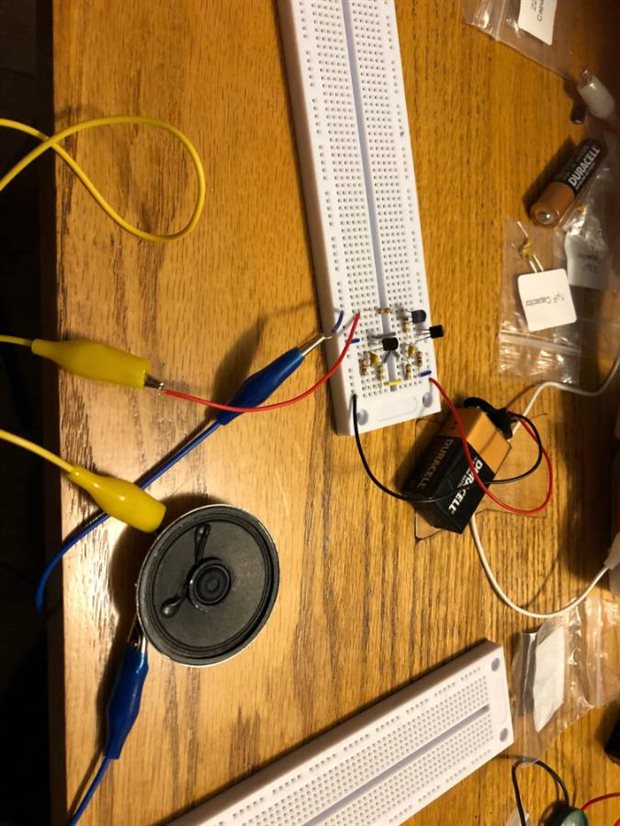
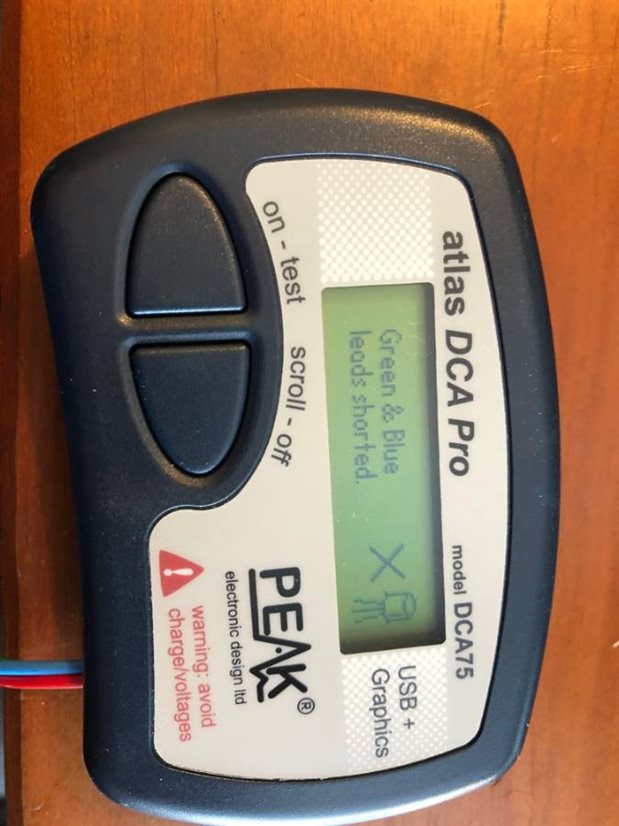
    I can get the light to blink reliably now.  I attach the LED with alligator clips and it works.  Then I attached the speaker to the alligator clips to speaker and it never chirps.  I can get the speakers to chirp if I connect them directly to the 1.5V or 9V battery.  But I never hear anything when I connect them to the circuit.


    What does this mean?  Do I not have enough voltage across the speaker to drive it?  When I put 1.5V directly across the speaker I get a chirp. Or do I not have enough current flow?


    If I attach my to the alligator clips to my multimeter it registers 8.2V.  Is this because it can't sense the voltage turning on and off?


    l actually have an oscilloscope on the way.  Would I be able to measure the current and voltage on this circuit?


    I am very puzzled I can't get this speaker to make any noise...


    David imageimage

    • Cancel
    • Vote Up +1 Vote Down
    • Sign in to reply
    • Verify Answer
    • Cancel
  • jw0752
    0 jw0752 over 7 years ago in reply to david_brehm

    Hi David,

    We are making progress. In the picture you are hooking the speaker in series with the 1K resistor. I am going to assume that the speaker has 8 ohms while it may have less. In this situation 99% of the power will be across the resistor and 1 % will be across the speaker. Hooked in this way there is probably not enough energy getting to the speaker to hear. Even hooked the way that it was described with the 100 uF cap in series with the speaker and parallel to the 1K resistance I do not expect it to be very loud. The LED does not have a resistance in the same way that the speaker does. It will demand a 1.2 volt drop across it when forward biased. The 1 K resistor along with the LED limits the current to approximately 7.8 volts divided by 1K or 7.8 mA. You should be able to figure out the things that you are asking about with the tools that you have and have coming but it will take some learning and experimenting. Even with the best tools a man isn't a carpenter until he practices and develops the skills. I think you are doing a great job. You should be able to use your meter to measure the DC resistance in ohms of the speaker. You should also be able to measure the voltage across the speaker, keep in mind with a capacitor in series with the speaker it will not be DC voltage but AC voltage. If you divide the AC RMS voltage by the resistance the formula will give you the current. Multiply the current by the voltage and you will have the watts being converted in the speaker. The oscilloscope will give you the added tool of being able to look at the shape of the signal as well as its magnitude. You will still have to do a little math to figure the current. Look at the speaker and see what the impedance is. the numbers are typically 4, 8, 16, or 40 ohms. The higher the resistance the better chance that you will be able to hear the sound.


    John

    • Cancel
    • Vote Up +2 Vote Down
    • Sign in to reply
    • Verify Answer
    • Cancel
  • david_brehm
    0 david_brehm over 6 years ago in reply to jw0752

    Success!  I rebuilt the circuit again on a second breadboard and got it to work.  Then I went back to the original breadboard and found a bad transistor.  I have been making a lot of progress in learning about electronics -- fixed my first vintage receiver.  Thank you so much for your help and guidance.

    image


    David Brehm

    • Cancel
    • Vote Up +4 Vote Down
    • Sign in to reply
    • Verify Answer
    • Reject Answer
    • Cancel
element14 Community

element14 is the first online community specifically for engineers. Connect with your peers and get expert answers to your questions.

  • Members
  • Learn
  • Technologies
  • Challenges & Projects
  • Products
  • Store
  • About Us
  • Feedback & Support
  • FAQs
  • Terms of Use
  • Privacy Policy
  • Legal and Copyright Notices
  • Sitemap
  • Cookies

An Avnet Company © 2025 Premier Farnell Limited. All Rights Reserved.

Premier Farnell Ltd, registered in England and Wales (no 00876412), registered office: Farnell House, Forge Lane, Leeds LS12 2NE.

ICP 备案号 10220084.

Follow element14

  • X
  • Facebook
  • linkedin
  • YouTube