element14 Community
element14 Community
    Register Log In
  • Site
  • Search
  • Log In Register
  • Community Hub
    Community Hub
    • What's New on element14
    • Feedback and Support
    • Benefits of Membership
    • Personal Blogs
    • Members Area
    • Achievement Levels
  • Learn
    Learn
    • Ask an Expert
    • eBooks
    • element14 presents
    • Learning Center
    • Tech Spotlight
    • STEM Academy
    • Webinars, Training and Events
    • Learning Groups
  • Technologies
    Technologies
    • 3D Printing
    • FPGA
    • Industrial Automation
    • Internet of Things
    • Power & Energy
    • Sensors
    • Technology Groups
  • Challenges & Projects
    Challenges & Projects
    • Design Challenges
    • element14 presents Projects
    • Project14
    • Arduino Projects
    • Raspberry Pi Projects
    • Project Groups
  • Products
    Products
    • Arduino
    • Avnet & Tria Boards Community
    • Dev Tools
    • Manufacturers
    • Multicomp Pro
    • Product Groups
    • Raspberry Pi
    • RoadTests & Reviews
  • About Us
  • Store
    Store
    • Visit Your Store
    • Choose another store...
      • Europe
      •  Austria (German)
      •  Belgium (Dutch, French)
      •  Bulgaria (Bulgarian)
      •  Czech Republic (Czech)
      •  Denmark (Danish)
      •  Estonia (Estonian)
      •  Finland (Finnish)
      •  France (French)
      •  Germany (German)
      •  Hungary (Hungarian)
      •  Ireland
      •  Israel
      •  Italy (Italian)
      •  Latvia (Latvian)
      •  
      •  Lithuania (Lithuanian)
      •  Netherlands (Dutch)
      •  Norway (Norwegian)
      •  Poland (Polish)
      •  Portugal (Portuguese)
      •  Romania (Romanian)
      •  Russia (Russian)
      •  Slovakia (Slovak)
      •  Slovenia (Slovenian)
      •  Spain (Spanish)
      •  Sweden (Swedish)
      •  Switzerland(German, French)
      •  Turkey (Turkish)
      •  United Kingdom
      • Asia Pacific
      •  Australia
      •  China
      •  Hong Kong
      •  India
      • Japan
      •  Korea (Korean)
      •  Malaysia
      •  New Zealand
      •  Philippines
      •  Singapore
      •  Taiwan
      •  Thailand (Thai)
      • Vietnam
      • Americas
      •  Brazil (Portuguese)
      •  Canada
      •  Mexico (Spanish)
      •  United States
      Can't find the country/region you're looking for? Visit our export site or find a local distributor.
  • Translate
  • Profile
  • Settings
Energy Harvesting Design Challenge
  • Challenges & Projects
  • Design Challenges
  • Energy Harvesting Design Challenge
  • More
  • Cancel
Energy Harvesting Design Challenge
Blog A Very Compact Guide to Energy Harvesting - Part 013
  • Blog
  • Forum
  • Documents
  • Files
  • Mentions
  • Sub-Groups
  • Tags
  • More
  • Cancel
  • New
  • Share
  • More
  • Cancel
Group Actions
  • Group RSS
  • More
  • Cancel
Engagement
  • Author Author: COMPACT
  • Date Created: 10 May 2013 8:22 AM Date Created
  • Views 582 views
  • Likes 3 likes
  • Comments 1 comment
  • energy_harvesting
  • energy_harvesting_challenge
Related
Recommended

A Very Compact Guide to Energy Harvesting - Part 013

COMPACT
COMPACT
10 May 2013

It was Würth the wait!

I placed an order with Element14 for some Würth Elektronik 8.2uH inductors and some other parts.
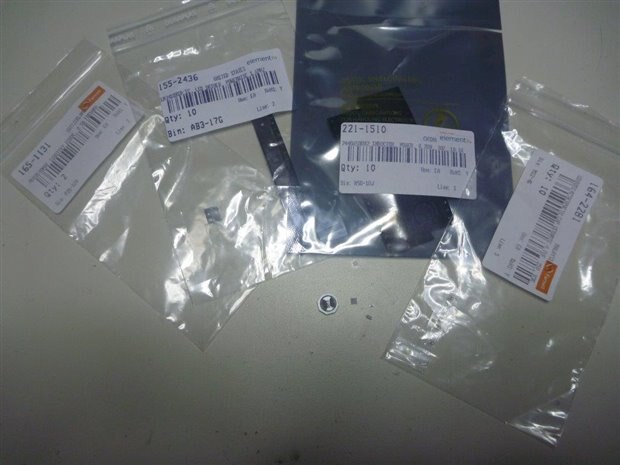
image

What are they for? They're to enable the EFM32 microcontroller to drive the 24 heart LEDs from a single voltage.

I've arranged the 24 LEDs in a four chains of six LEDs like so.

image

This was done as a compromise between part count, reliability and serviceability.

This array arrangement has a Vf of about 12V (6 x 2.0V) and a current requirement of 80mA (4 x 20mA)

A single string of 24 LEDS is susceptable to total display outage with one failed open circuit LED.

It requires a supply voltage of 48 volts with a current of 20mA.

For the array the effects of single open circuit LED would cause only 5 other LEDs in the same string to not light up but cause the current destined for broken string to be channelled across the remaining working strings.

To the other extreme, 24 separate LED circuits would require 24 separate current limiting devices like resistors but has the advantage of only the broken LED not working with no other collateral damage.

This configuration would require a supply voltage of about 2 volts with a current of 480mA.


The EFM32 microcontroller itself is not capable of driving 24 LEDs simultaneously so additional circuitry has been added.

Instead of directly driving a single LED using an EFM32 PWM output this output will be used to drive a LED driver IC that accepts a PWM output.


There are many of these devices around and all have different capabilities.

For my purpose I'd like to drive all the LEDs and microcontroller using a single voltage source with the minimum number of components and device pins.

To accomplish this the LED driver must have;

  • Programmable Current Limiting
  • Voltage up or down conversion
  • PWM input


Linear Technologies has a huge range of suitable devices but I needed something simple and in a hurry for this design challenge so I chose the Texas Instruments LM3410 because it was in stock at Element14 and apart from bypass capacitors and a logic input pullup resistor the only external components are;

  • inductor
  • schottky diode
  • current setting resistor

The LM3410 is a essentially 5 pin device available in 3 different package types. SOT-23, 6 pin WSON and 8 pin MSOP-PowerPad.

The WSON and MSOP packages have a thermal pad to disspate power more efficiently and have separate AGND and PGND pins rather than a combined GND pin.


Feeling a little legless?

Due to its availability and thermal capabilities I ordered the legless WSON packing.

Being legless makes it considerably harder to mount. I used localised IR (InfraRed Radiation) for isolation soldering.

This is essentially an IR oven confined to a single component to minimise collateral damage.

It is great for prototype construction because it allows each component to be added when needed.


What is Unit Testing?

Unit testing is the functional testing of a component in isolation to determine whether it is working correctly.

I performed unit testing on the LED Driver Circuit to ensure that it worked correctly.

This video shows the LED driver firstly driving one string of LEDs and then three strings of LEDS.

You don't have permission to edit metadata of this video.
Edit media
x
image
Upload Preview
image


What is System Integration Testing?

System integration testing is the functional testing of all components and controls that constitute a system.

Ideally this is a comprehensive and formal set of testing procedures.  The formality is ensure test repeatability - a must for quality control.

In this case it is an informal test where the STK3700 kit driving the LED driver that is driving the all 24 LEDs of the heart and checking the slider control against the LED output.

This is a video of my first test of the untuned system. The PWM rate hasn't been tuned yet. It works with human vision persistence but not with video cameras.

It could be as simple as a case of ISO tuning on the camera.


You don't have permission to edit metadata of this video.
Edit media
x
image
Upload Preview
image

  • Sign in to reply
  • DAB
    DAB over 12 years ago

    Well done Monte.


    I like your descriptions and your short tutorial on testing.


    Good job,

    DAB

    • Cancel
    • Vote Up 0 Vote Down
    • Sign in to reply
    • More
    • Cancel
element14 Community

element14 is the first online community specifically for engineers. Connect with your peers and get expert answers to your questions.

  • Members
  • Learn
  • Technologies
  • Challenges & Projects
  • Products
  • Store
  • About Us
  • Feedback & Support
  • FAQs
  • Terms of Use
  • Privacy Policy
  • Legal and Copyright Notices
  • Sitemap
  • Cookies

An Avnet Company © 2025 Premier Farnell Limited. All Rights Reserved.

Premier Farnell Ltd, registered in England and Wales (no 00876412), registered office: Farnell House, Forge Lane, Leeds LS12 2NE.

ICP 备案号 10220084.

Follow element14

  • X
  • Facebook
  • linkedin
  • YouTube