


Hi,
I would like to present the brief description of my energy harvesting project. Previous posts written by Sean and Victor made me realize that I have to be careful about what I say regarding the energy that is available from transducers. That is why in title I stated 'almost', because I am not entirely sure that I can fully substitute the battery with only the harvester as a power supply. But back to the topic …

The other night I was making diner in the kitchen and I saw a blinking red LED on my carbon monoxide detector, indicating that I need to replace batteries. That is when I realized that some energy harvesting technique should do the trick for me next time with a help of some hack. These types of alarms are usually either mains or battery operated. In stores you can also get double powered ones (battery as the buffer, secondary supply). I do not have any power jacks available next to the places where I put my detectors (basement, kitchen and bathroom) and long cords wouldn’t look nice, so I use battery ones. As for energy harvesting I cannot use solar charger in my basement or vibration energy in any of the places, but still I could employ some Peltier modules to get energy from temperature difference in all the places at home. Later on I did put new batteries in my detector and got distracted by other projects and forgot about this energy harvesting idea for some time. Luckily, I was going through some topics on Energy Micro forum and I saw the energy harvesting RoadTest link.
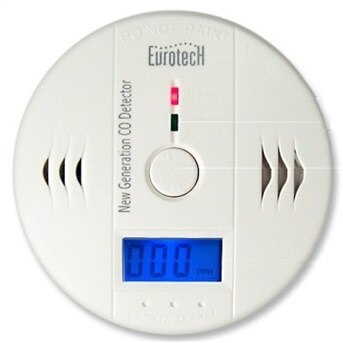
I do not want to use my existing detectors for testing, so another one (like the one in the pic) is being delivered to me sometime next week. It has some electrochemical sensor and is, I believe, as all of these types of detectors/alarms pretty loud. Therefore, I will try to replace the buzzer with some LED or something with less dB, because I would like my hearing to be the same as it is now after multiple test-sessions with this device. So, in the nearest future get ready for some tear-down/hack video post. I will also check the power consumption of this detector in the long time cycle to get a glance what I am dealing with.
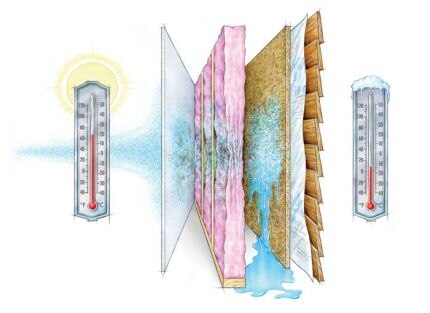
Now, the hard part will be to get the sufficient, continuous portions of energy from the temperature difference. When we touch walls in our homes, we got the feeling that they are so much cooler than the ambient temperature, but this is just the thermal conductivity fooling us  I have read on many flyers from house-insulation companies that this temperature difference between ambient and a wall is about 1 degree (Celsius). It sounds plausible to me, but do not worry – I will check it on my walls in some long periods of time to get more reliable data. I will do this with the contactless thermometer that you all saw in my unboxing video. If this proves correct, one 4cmx4cm Peltier module will not (I am guessing right now, but I will check this) give the expected minimum of 20 mV to start Linear's chip, so I may have to use more that one TEG module is series. The proper contact between module and the wall will be crucial to get the most energy from the module.
If only I can compensate the power consumption of the detector with the energy harvesting, that will be the win for me. After I gave this idea a thought, I realized that I had two choices. I can leave the batteries just for alarm/buzzer/LED and supply the detector and electronics from energy harvester or I could use some rechargeable battery and charge it from the harvester. I could also get some extra power from this small solar panel to the detector in my kitchen.Of course, one may say that you can get some fancy thermal camera and check the walls in the bathroom for pipes with cold water, thus ambient-wall temperature difference would be greater. But still, I would like to make this solution as universal as it can be and not everyone can get hands on these cameras for free.
If this idea proves to be effective I could also try to create my own carbon monoxide detector, based on the EFM32 chip or STK (it depends how much spare time I will have). Good thing about this is that you can add some extra features, i.e. store all the measurements and send it daily via some low-energy RF link to your smartphone. Plus, if you are not at home and alarm turns on and dries the battery, the device could, just before the alarm starts, send the notification to your PC or other device or maybe send you SMS? This way you could avoid danger by not coming into home, thinking that everything is OK because the alarm is off (it is off because the battery is dead).
Anyway, that is my project description and some thoughts. If you like it or you have some suggestions, please leave a comment, and stay tuned for the next posts.
