element14 Community
element14 Community
    Register Log In
  • Site
  • Search
  • Log In Register
  • Community Hub
    Community Hub
    • What's New on element14
    • Feedback and Support
    • Benefits of Membership
    • Personal Blogs
    • Members Area
    • Achievement Levels
  • Learn
    Learn
    • Ask an Expert
    • eBooks
    • element14 presents
    • Learning Center
    • Tech Spotlight
    • STEM Academy
    • Webinars, Training and Events
    • Learning Groups
  • Technologies
    Technologies
    • 3D Printing
    • FPGA
    • Industrial Automation
    • Internet of Things
    • Power & Energy
    • Sensors
    • Technology Groups
  • Challenges & Projects
    Challenges & Projects
    • Design Challenges
    • element14 presents Projects
    • Project14
    • Arduino Projects
    • Raspberry Pi Projects
    • Project Groups
  • Products
    Products
    • Arduino
    • Avnet & Tria Boards Community
    • Dev Tools
    • Manufacturers
    • Multicomp Pro
    • Product Groups
    • Raspberry Pi
    • RoadTests & Reviews
  • About Us
    About the element14 Community
  • Store
    Store
    • Visit Your Store
    • Choose another store...
      • Europe
      •  Austria (German)
      •  Belgium (Dutch, French)
      •  Bulgaria (Bulgarian)
      •  Czech Republic (Czech)
      •  Denmark (Danish)
      •  Estonia (Estonian)
      •  Finland (Finnish)
      •  France (French)
      •  Germany (German)
      •  Hungary (Hungarian)
      •  Ireland
      •  Israel
      •  Italy (Italian)
      •  Latvia (Latvian)
      •  
      •  Lithuania (Lithuanian)
      •  Netherlands (Dutch)
      •  Norway (Norwegian)
      •  Poland (Polish)
      •  Portugal (Portuguese)
      •  Romania (Romanian)
      •  Russia (Russian)
      •  Slovakia (Slovak)
      •  Slovenia (Slovenian)
      •  Spain (Spanish)
      •  Sweden (Swedish)
      •  Switzerland(German, French)
      •  Turkey (Turkish)
      •  United Kingdom
      • Asia Pacific
      •  Australia
      •  China
      •  Hong Kong
      •  India
      •  Japan
      •  Korea (Korean)
      •  Malaysia
      •  New Zealand
      •  Philippines
      •  Singapore
      •  Taiwan
      •  Thailand (Thai)
      •  Vietnam
      • Americas
      •  Brazil (Portuguese)
      •  Canada
      •  Mexico (Spanish)
      •  United States
      Can't find the country/region you're looking for? Visit our export site or find a local distributor.
  • Translate
  • Profile
  • Settings
Energy Harvesting Design Challenge
  • Challenges & Projects
  • Design Challenges
  • Energy Harvesting Design Challenge
  • More
  • Cancel
Energy Harvesting Design Challenge
Blog Wall energy harvesting trials
  • Blog
  • Forum
  • Documents
  • Files
  • Mentions
  • Sub-Groups
  • Tags
  • More
  • Cancel
  • New
  • Share
  • More
  • Cancel
Group Actions
  • Group RSS
  • More
  • Cancel
Engagement
  • Author Author: gelmi
  • Date Created: 5 May 2013 4:06 PM Date Created
  • Views 584 views
  • Likes 1 like
  • Comments 2 comments
  • low_power
  • heat
  • low_energy
  • thermal_energy
  • linear
  • temperature
  • energy_harvesting
  • thermal
  • efm32
  • human_energy
  • peltier
  • energy_micro
  • self_powered
  • kit
  • energy_saving
  • consumer_electronics
  • energy_harvesting_challenge
  • energy_harvesting_source
Related
Recommended

Wall energy harvesting trials

gelmi
gelmi
5 May 2013

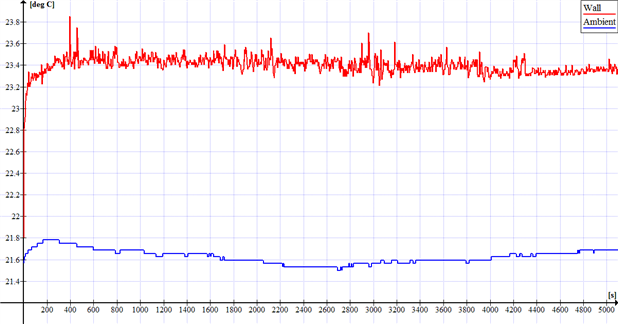
I have started my energy harvesting trials to power up the carbon monoxide detector from the difference between ambient and wall temperature. Firstly, I checked these differences in some long periods of time in couple of rooms at home. I tested both the internal and home outline walls. And I must tell you, I was surprised. Despite of what I have read in the building construction companies fliers, my walls were always a little bit warmer than the air around them. Here is one data plot from the measurements.
image

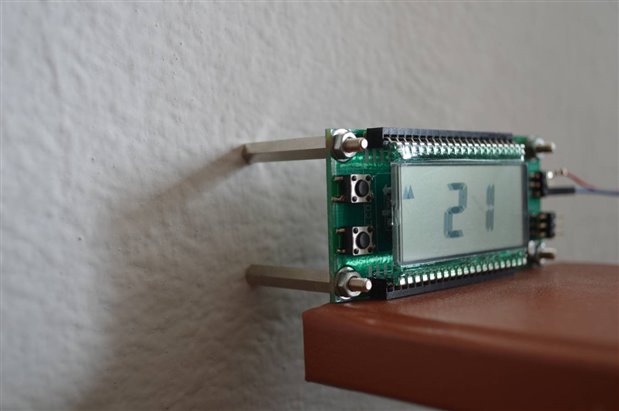
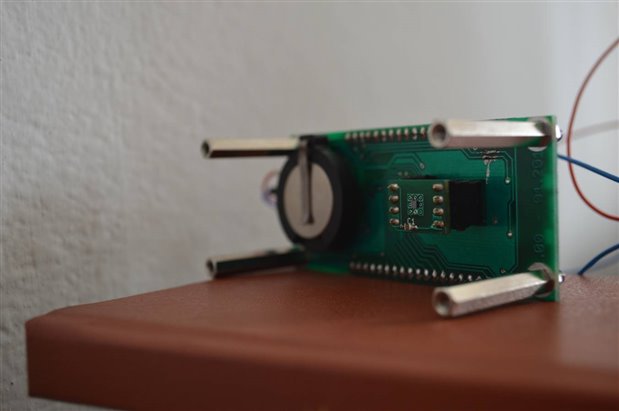
All the measurements were taken with the ‘home made device‘ based on EFM32 and TMP006AIYZFTTMP006AIYZFT contactless thermometer chip. If you are interested in this device, let me know in the comments and I will try to prepare additional post about this device and include Eagle’s PCB designs and BOM.
imageimage

I was a little bit confused with this experiment outcome, but I thought to myself: maybe I am doing something wrong? So, I have double checked everything and in TMP006AIYZFTTMP006AIYZFT docs I have found that this ambient temperature readings are in fact the die temperature. This is supposed to be the same with the ambient but I am measuring small differences and the error of this device measurements is +/- 1 deg. So I have decided to test the TEG from the kit I got.

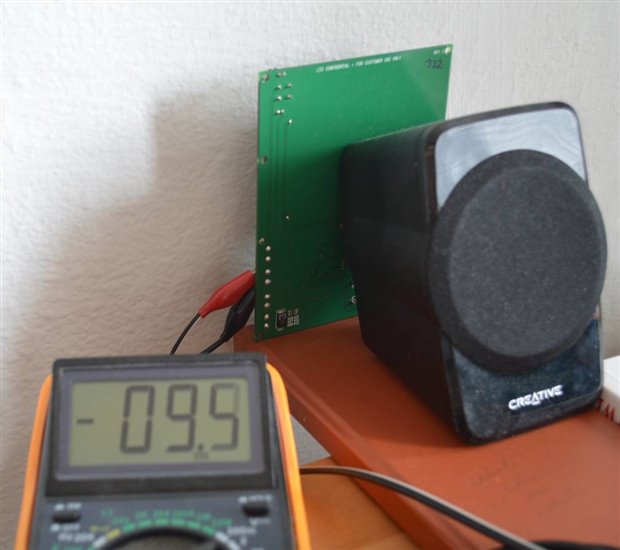
I had put the TEG against the wall and checked the voltage. I was so happy with the results … for only a very short period of time. At first, I got over -40 mV from TEG. But it started to fall down. I realized that the readings were so optimistic because I had the radiator from TEG in my hands for a while and it accumulated my body heat. When it was dissipating, the voltage have been dropping.
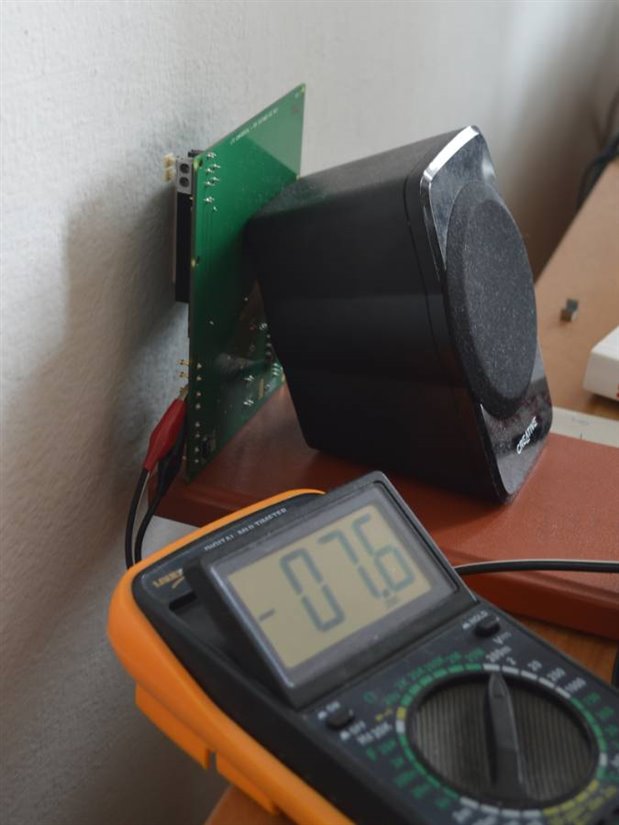
imageimage

I thought, do not worry, you will still have some voltage from difference you measured with thermometer. And I have watched the meter. It was dropping, and dropping, and dropping until the reading was zero.
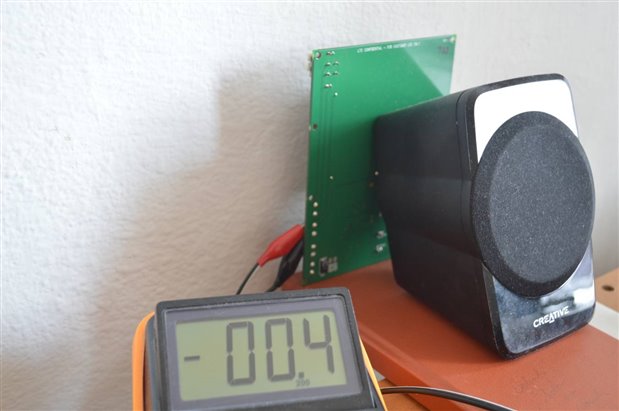
image

Now I have waited for the positive readings. But the display was still indicating zero. I went to have tea, then something to eat and afterwards I went out with my friends. When I was back, on the LCD the zeros were still there. I have realized that the heat transfer between air and the wall via TEG is faster than the heat transfer inside the wall.

In retrospect I have to say that I was too optimistic to harvest energy from that little temperature difference. Maybe it would change something if I have used different radiator, but this is the big if. I believe I have to put on hold wall harvesting and find out other heat source for the carbon monoxide detector. I have checked the voltage when the TEG was put against the window. It got me 3,5 mV steady voltage (I suppose that this would vary due to inside and outside temperature), so I would need more than 6 Peltier modules (4x4 cm) to power up the harvester.
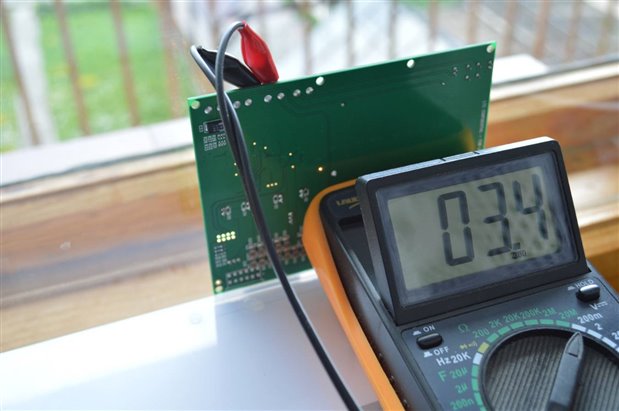
image

I have looked around the rooms I would like to install some green energy carbon monoxide detectors and I have to say that there aren’t many places with the large temperature differences. Nevertheless, in every bathrooms and kitchen there is a warm water source. But the warm water is not constantly running from a tap. I have to check how much energy I can store with one TEG during one shower, one bath or one washing the dishes. If enough energy can be stored in some supercap in order to power the device for the whole day, it would be great. And if the energy would be insufficient, I can always use hybrid power supply.

  • Sign in to reply
  • vsluiter
    vsluiter over 12 years ago in reply to DAB

    Very nice post, good to see you're investigating the practical possibilities and at the same time think about the physics behind it. Your contributions add to the understanding of the topic, I like it that you're going deeper into this matter. I must say that getting a useful application out of energy harvesting is quite a challenge. I have been experimenting and testing today (a post will follow), and every time I return to the point that it's quite hard to get a useful application runnign from 'harvesting' energy. One needs to understand the physics to get a good application going.

    I've been looking into the possibilities of running an application of the temperature difference on my shower tap. One side is hot, the other cold, and during showering water is running through both channels, so the temperature difference is maintained. It's an interesting possibility, maybe I'll make a 'shower timer' out of it.

    • Cancel
    • Vote Up 0 Vote Down
    • Sign in to reply
    • More
    • Cancel
  • DAB
    DAB over 12 years ago

    Interesting test.


    I suspect that the difference in temperature between the wall and the air might just be a matter of the vast difference between the ability of the wall and the air to retain heat.


    The only place I can think of with a fairly large temperature difference would be you cold water tap.  Most city supplied water is in the 40 degree F. range, though it might be in the 55 to 60 degree range depending upon the time of year.


    Either way, you need to find a way to dissipate the heat between the source and the environment.


    Thanks,

    DAB

    • Cancel
    • Vote Up 0 Vote Down
    • Sign in to reply
    • More
    • Cancel
element14 Community

element14 is the first online community specifically for engineers. Connect with your peers and get expert answers to your questions.

  • Members
  • Learn
  • Technologies
  • Challenges & Projects
  • Products
  • Store
  • About Us
  • Feedback & Support
  • FAQs
  • Terms of Use
  • Privacy Policy
  • Legal and Copyright Notices
  • Sitemap
  • Cookies

An Avnet Company © 2026 Premier Farnell Limited. All Rights Reserved.

Premier Farnell Ltd, registered in England and Wales (no 00876412), registered office: Farnell House, Forge Lane, Leeds LS12 2NE.

ICP 备案号 10220084.

Follow element14

  • X
  • Facebook
  • linkedin
  • YouTube