


Introduction
For the last five years I'm running a small worm farm. We are growing European Nightcrawlers for worm bait or indoor composting and to produce castings. These castings are a great soil amendement. Adding worm castings to the soil improves the microbiological life and the fungal diversity substantially. In the past years we had continously growing numbers in sales. The feeding, watering and harvesting is taking more time every year, so I started to think about autimating the growing process at the end of last year.

A good friend of mine helped with the cirrcuit schema and supervises the project, mainly the security aspects of it. It runs on 240 V in a partly wet environment. The control system is based on a raspberry piraspberry pi using two arduino nanosarduino nanos serving as analog-digital-converters. The control of the humidity in the soil of the wormbins can quite easily be managed using humidity sensors, a water pump and some dozens of selonid valves. The sensors get the data used by the raspberry to turn on and off the pump as well as to open and close the valves, all using two layers of relaysrelays. Using multiple relay layers permitts to run the system on different power cirrcuits enhancing the safety off the system, specially when dealing with electrical power next to water sources.
Goal of the Vibration Sensor project
With this project I intend to add some monitoring of the water pipe system. A leak not only would reduce the amount of water delivered to the worm bins. It could also lead to severe damage of the farm buildings. Under normal circumstances a pipe with flowing water in it generates a unique vibration pattern. In case of a leak this pattern changes due to the turbulences in the water flow caused by the leak. The goal of the vibration sensor project is to detect such changes in the vibration pattern. In case of a leakage the main system has to get an alarm as well as our team some sort of notification.
Milestones
I normally try to breakdown a project into smaller subprojects. I first try to solve them alone. And if they are done successfully, then I put them together to the whole system. Thus I have set myself the following milestones:
- Get to know the Nucleo systemNucleo system and do a input/ouput programm for the kemet sensor
- Vibrations in pipe systems and the Fast Furrier transform (FFT) - (Thanks to genebren for that tipp)
- Program a Fast Furrier transform using an example dataset
- Create a notification / alarm system
- Mount the sensor on pipes and collect a data stream
- Analyze the datastream with FFT
- Trigger the alarm based on the sensor reading
- Create a connectivity to the worm watering system
Anticipated problems
Such projects can generate a ton of unforseen problems. The following obstacles could cause troubles:
- Vibrations are not strong enough to be detected
- Normal vibrations in the system make it hard to detect vibrations caused by leaks
- The worm watering system is not up and running by the end of the contest
- I'm not smart enough to understand and implement the Fast Furriert transform
- I don't win the Kemet kit and have no hardware to do the project
About me
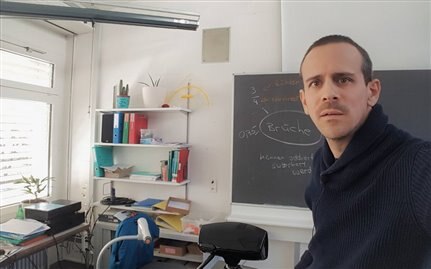
I'm a 44 year old STEM-teacher teaching 7 to 9 graders in mathematics, chemistry, biology and physics. Additionally I offer programming and robotics workshops, mainly using the micro:bit. As teachers have a ton of holidays, I also run a small company owning a worm farm and doing projects in automation specially in the farming sector. And most importantly I'm a father of two boys.
