


Welcome to week 18 of the Design Challenge series here at Element14! This week is all about the Make Life Accessible Design Challenge which is in its fourth week of competition. We had a flood of updates in the past week, most of which were very informative, with lots of progress being made. If you have not had the chance to check out the challengers and their projects, head over to the official landing page for a listing of each!
Make Life Accessible

Before I get into this week's updates, let's take a moment and talk about the this new challenge, and what it's all about. The Make Life Accessible Design Challenge is the first official design challenge of 2016, and challenges its contestants, and anyone else who wishes to participate to showcase your skills to give people freedom from physical limitations. The challenge is based around contestants creating a motor control inspired solutions that will bring benefits to people who are disabled or considered vulnerable, enabling them to live well with their conditions as a result of your solution; remaining independent, confident, active, safe and socially involved.
Thirteen projects were chosen to participate, with their creators receiving an official challenger kit that contains the sponsored hardware that must be used to create their projects. The challenge is not limited to these thirteen people though, and anyone can enter their project into the challenge, but you will need to use NXP's FRDM-KV31 Freedom Development PlatformNXP's FRDM-KV31 Freedom Development Platform and FRDM-MC-LVPMSM Low-Voltage Motor Control KitFRDM-MC-LVPMSM Low-Voltage Motor Control Kit in your design. More information can be found in the challenge’s .
The challengers are competing to win an awesome assortment of prizes, including the winning project being featured on The Ben Heck Show. Other prizes include an Oculus Rift, GoPro Hero 4 Black Edition, Go Pro Hero Session, and a pretty nice pair of earbuds being given to all who complete the challenge. More information on the prizes can be found here.
This week's progress.
If you are unfamiliar with how these summaries work, all projects that received an update post between Monday to Sunday of the previous week are listed below. Each listing contains a link to the project’s creator, as well as a link the the project’s blog. I try to get these summaries posted on Monday of each week, but sometimes I get stuck posting on Tuesdays if life gets in the way.
Recently I have received messages asking about featuring a specific blog post here in the summary, or asking why I have not featured specific post here. The reality of this is that I simply feature the two to three of the best project updates from the past week. I am not biased in the blogs I chose, and solely chose them based on the quality of the post. If you have a well laid out project, include lots of source code, images, video, and links, then you have a very high chance of being featured here. I do consider all project updates, regardless, and in the end, it is all based on what I feel was the best few post from the past week.
In the past seven days (April 25 - May 1) we have seen a total of twelve update post made to a total of six projects. Below is a listing of those projects with a link to their main blog page. Project Eye Tracking Robot topped the update list this week with a total of four solid updates made by Ambrogio Galbusera.
- Project:Clear Walk - by Douglas Wong (dougw)
- Project:Intelligent Elbow Motion-Assistance Actuator - by F. Yao (fyaocn)
- Project:Eye Tracking Drawing Robot - by Ambrogio Galbusera (amgalbu)
- Project:Motorized Articulating Table Top - by Scott Coppersmith (rsc)
- Project:Color’er - by David Delabassee (delabassee)
- Project:Smart Storage - by Graham Webber (grahamwebberjhb)
This Week’s Top Updates
With the fourth week now past us, the challengers are beginning to buckle down, and really begin building their projects. There are still a few projects that have yet to post their first update, or even introduction post, and I would like to see them all get their first post out in the next week or so. It’s ok to post if you have not yet received your kit, and we would love to hear about your project, ideas, and plans moving forward!
Project: Eye Tracking Robot - Post 5 - Installing eye tracker
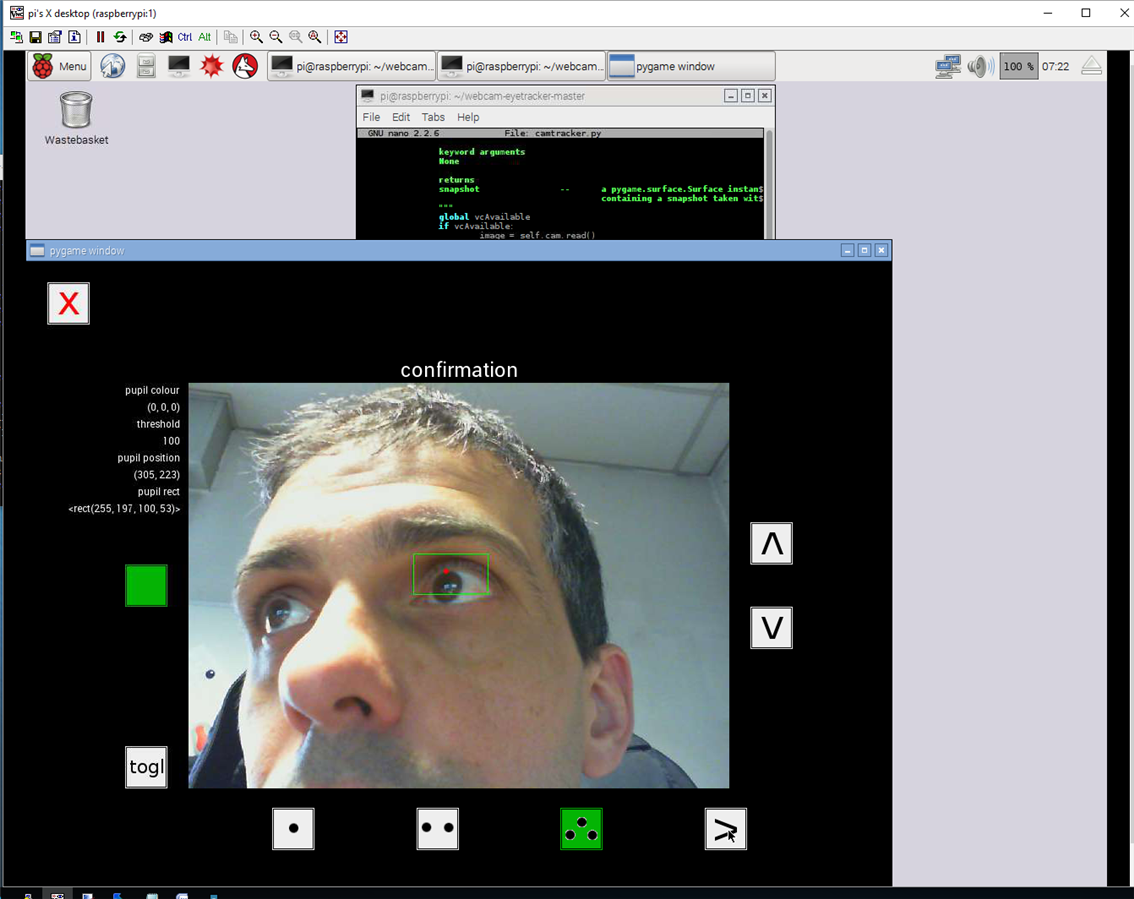
Ambrogio Galbusera (amgalbu) has claimed my top spot this week with his fifth update to Project: Eye Tracking Robot in which he details the methods needed to install WebCam Eye Tracker. This is a library I have attempted to use in the past, but failed to complete due to a bad tutorial I followed. Thankfully, Ambrogio has pointed out the reason I was not successful at my attempt, and it boils down to the source code not being compatible with the Raspberry Pi. For those like myself wanting to play around with this software, Ambrogio has attached a zip file to this post with the now corrected and working source code. Head over to the link above to check it out for yourself.
Project: Smart Storage - Medley Of Musings On Mechanical Movements
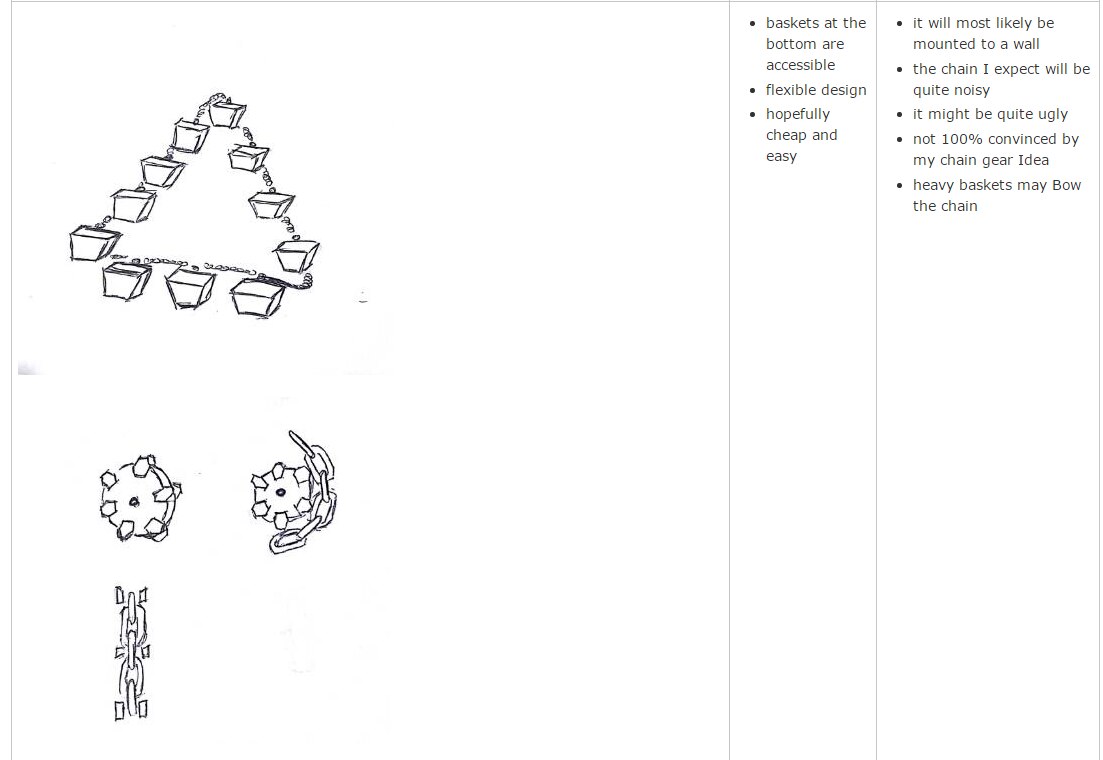
Project Smart Storage claims our number two spot this week with some discussion on various ideas on how to create his “elevator” style shelving system. The post details three different approaches that Graham Webber (grahamwebberjhb) has devised in order to create a series of shelves that are mechanically raised and lowered to make their contents more accessible to those who might not be able to reach the higher shelves. The image above details the third idea which uses a transmission chain and cog system that would have the “shelves” revolve around a circuit. He details two other ideas in this post, so head over to the link above to check them out.
Project: Clear Walk - Mirror Rotation - blog 3

Closing out our summary this week is Douglas Wong’s (dougw) project: Clear Walk. Like many of the projects created by makers, keeping things within budget is a very important, and essential part of the process. Douglass has spent the last week trying to come up with a two-axis rotational assembly that would allow him to mount a substantial mirror, and still retain easy and efficient movement, all while staying as low-cost as possible. The best solution to this turns out to be the front fork from a bicycle, and that is what Douglas plans on using. As you can see in the image above, a mirror will be attached to each side of the forks, allowing the entire system to be easily maneuverable to optimize light collection and reflection. As always, hit up the link above to get the full scoop on how Douglas plans on making this work.
A Quick Note To The Challengers:
I want to commend everyone on their hard work, and awesome progress. I would like to ask that all challengers begin putting their project name in the title of their blog post. It helps me, as well as the readers at home quickly identify the project, and helps to keep things organized. Below is an example of what I consider to be a good title.
Project: “Project Name Here” - “Post # Here” - “Post Title Here”
That is going to wrap things up for this installment of the Design Challenge Weekly Summary here at Element14. If you would like to participate in the next Design Challenge here at Element14, you are in luck! The project idea submission process has just opened up for the PIoT Design Challenge that is sponsored by Duratool, and The Raspberry Pi foundation. Head over to its official landing page for more information on how to submit your idea today! As always, I will be back next week with another installment, until then remember to Hack The World, and Make Awesome!