


Table of Contents
1 Project Introduction: Why Ventilation Motors Need Smart Monitoring
THE project for the On The Line challenge is built around an intelligent edge monitoring system for industrial ventilation motors, with the STM STEVAL-STWINKT1B as industrial sensing node.
Industrial ventilation motors are everywhere as of factories, data centers, and commercial buildings—but unexpected failures cause costly downtime, safety risks, and productivity hits.
Traditional maintenance is often inefficient, reactive, or misses early signs of wear. That’s where this project comes in: a compact, smart monitoring node that keeps an eye on motor health in real time, with edge AI to spot faults before they escalate.
Core Goals of the System:
- Real-time health tracking via vibration, temperature, and humidity sensing
- Edge AI-powered anomaly detection for predictive maintenance
- ️Early warning for common faults: bearing wear, rotor imbalance, overload, and more
- Seamless integration with existing infrastructure
2. Hardware Deep Dive and Labview: The Brain and Sensors
The heart of this system is the STEVAL-STWINKT1B SensorTile wireless industrial node, which packs everything we need into a rugged, industrial-grade package.
Core Sensing Node: STEVAL-STWINKT1B
This kit is purpose-built for industrial IoT condition monitoring, and it’s perfect for this use case:
- MCU: STM32L4R9 (Cortex-M4, 120 MHz, ultra-low power) – handles sensor processing, edge AI inference, and communication with minimal power draw.
- Key Onboard Sensors:
- IIS3DWB: 3-axis high-bandwidth vibration sensor (up to 6 kHz) – Captures high-frequency vibration data critical for detecting bearing defects and rotor imbalance.
- ISM330DHCX: 6-axis IMU – adds auxiliary motion state analysis to cross-validate vibration readings and filter out environmental noise.
CAN integration: Industrial Connectivity
To hook into existing factory systems, paired the STWIN node with the Analog Devices MAX33041ESHLD CAN transceiver. This adds robust CAN bus support, a staple in industrial automation, so the monitoring node can send alerts and health data to information systems over the field bus.
Smart Brain: Arduino Uno Q
Acting as the central control and connectivity hub, the Arduino Uno Q adds a layer of flexible intelligence to the system.
- Role in the System:
- Receives pre-processed sensor data from the STWINKT1B over serial communication.
- Runs higher-level logic, including anomaly detection decision-making and fault classification.
- Manages communication with the CAN transceiver (MAX33041ESHLD) to send alerts and health data to industrial networks.
- Why Uno Q? Its robust ecosystem, ease of prototyping, and compatibility with industrial-grade add-ons make it perfect for rapidly developing and testing the system’s control logic, while the STWINKT1B handles the heavy lifting of high-frequency sensing.
On the line - Online: LabVIEW :
-
Real-Time Data Visualization
- Live plots of vibration, temperature/humidity trends, and motor health metrics.
- Alarms and color-coded indicators for fault conditions (bearing wear, imbalance, overload).
-
On-Site Control & Logging
- The labview connects to the Arduino Uno Q over serial/USB, allowing on-site engineers to view live data, trigger manual checks, and adjust alert thresholds.
- Automated data logging to CSV files for post-analysis and predictive maintenance reporting.
-
Rapid Prototyping with LabVIEW
- The trial version can quickly build the user interface and test communication with the Arduino and CAN bus without writing extensive low-level code.
- If availalbe, LabVIEW Machine Learning Toolkit can add a secondary layer of AI validation, cross-checking the edge AI results from the Arduino/STWINKT1B.
3 How It Works: From Vibration Data to Predictive Insights
Here is the workflow:
- Continuous Sensing: The sample vibration, motion, temperature, and humidity data at high rates directly on the node and send with CAN bus.
- Edge AI Processing: Arduino Uno Q play as intelligent hub for smart processing.
- Alerting & Communication: When a fault is detected, the system triggers early warnings (via local status indicators or the CAN bus) to notify maintenance teams before a failure occurs. It also logs historical health data for trend analysis.
4 What for "On The Line"
The "On The Line" challenge is all about building solutions that integrate seamlessly with existing industrial infrastructure, and this systemy:
- It uses the STWIN node’s industrial-grade sensors and low-power MCU for reliable, long-term operation on the factory floor.
- The CAN transceiver ensures compatibility with standard field bus networks, so it can drop into existing setups without a full overhaul.
- Edge AI brings predictive maintenance to the edge, solving a real pain point for facilities relying on aging ventilation equipment.
5 The kit received and Next Steps
The kit is just arrived
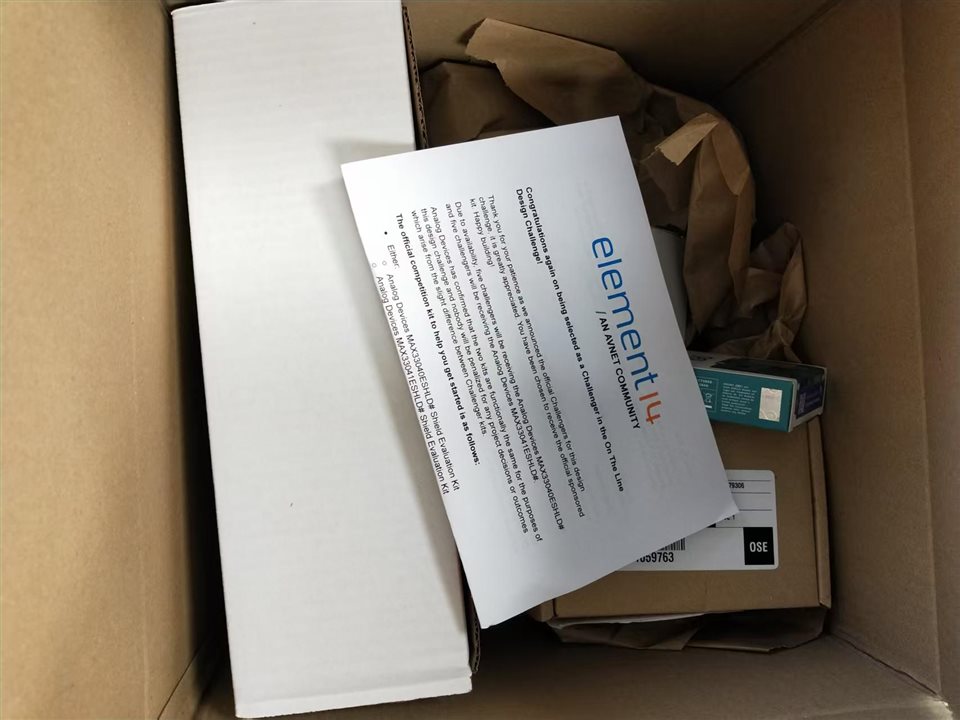
and as
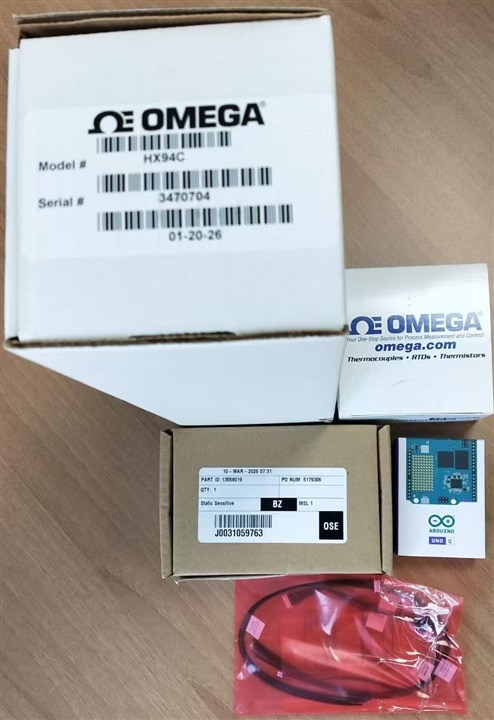
There are some parts not to be used in this project, and I shall try include as many as I can in next steps.