element14 Community
element14 Community
    Register Log In
  • Site
  • Search
  • Log In Register
  • Community Hub
    Community Hub
    • What's New on element14
    • Feedback and Support
    • Benefits of Membership
    • Personal Blogs
    • Members Area
    • Achievement Levels
  • Learn
    Learn
    • Ask an Expert
    • eBooks
    • element14 presents
    • Learning Center
    • Tech Spotlight
    • STEM Academy
    • Webinars, Training and Events
    • Learning Groups
  • Technologies
    Technologies
    • 3D Printing
    • FPGA
    • Industrial Automation
    • Internet of Things
    • Power & Energy
    • Sensors
    • Technology Groups
  • Challenges & Projects
    Challenges & Projects
    • Design Challenges
    • element14 presents Projects
    • Project14
    • Arduino Projects
    • Raspberry Pi Projects
    • Project Groups
  • Products
    Products
    • Arduino
    • Avnet & Tria Boards Community
    • Dev Tools
    • Manufacturers
    • Multicomp Pro
    • Product Groups
    • Raspberry Pi
    • RoadTests & Reviews
  • About Us
    About the element14 Community
  • Store
    Store
    • Visit Your Store
    • Choose another store...
      • Europe
      •  Austria (German)
      •  Belgium (Dutch, French)
      •  Bulgaria (Bulgarian)
      •  Czech Republic (Czech)
      •  Denmark (Danish)
      •  Estonia (Estonian)
      •  Finland (Finnish)
      •  France (French)
      •  Germany (German)
      •  Hungary (Hungarian)
      •  Ireland
      •  Israel
      •  Italy (Italian)
      •  Latvia (Latvian)
      •  
      •  Lithuania (Lithuanian)
      •  Netherlands (Dutch)
      •  Norway (Norwegian)
      •  Poland (Polish)
      •  Portugal (Portuguese)
      •  Romania (Romanian)
      •  Russia (Russian)
      •  Slovakia (Slovak)
      •  Slovenia (Slovenian)
      •  Spain (Spanish)
      •  Sweden (Swedish)
      •  Switzerland(German, French)
      •  Turkey (Turkish)
      •  United Kingdom
      • Asia Pacific
      •  Australia
      •  China
      •  Hong Kong
      •  India
      •  Japan
      •  Korea (Korean)
      •  Malaysia
      •  New Zealand
      •  Philippines
      •  Singapore
      •  Taiwan
      •  Thailand (Thai)
      •  Vietnam
      • Americas
      •  Brazil (Portuguese)
      •  Canada
      •  Mexico (Spanish)
      •  United States
      Can't find the country/region you're looking for? Visit our export site or find a local distributor.
  • Translate
  • Profile
  • Settings
On the Line
  • Challenges & Projects
  • Design Challenges
  • On the Line
  • More
  • Cancel
On the Line
Forum Measuring temperature using Omega K-Type Thermocouple
  • News
  • Projects
  • Forum
  • DC
  • Leaderboard
  • Files
  • Members
  • More
  • Cancel
  • New
Join On the Line to participate - click to join for free!
Actions
  • Share
  • More
  • Cancel
Forum Thread Details
  • Replies 2 replies
  • Subscribers 35 subscribers
  • Views 152 views
  • Users 0 members are here
  • On the line design challenge
  • max6675
  • omega
  • k-type thermocouple
Related

Measuring temperature using Omega K-Type Thermocouple

taifur
taifur 25 days ago

For my project, the measurement of a machine temperature is required. A thermocouple is one of the best sensors for measuring the temperature of an electrical machine. Thanks to Omega for sending several K-type thermocouples as a part of the Challenger kit. These thermocouples are capable of measuring from -200°C to 1250°C. For measuring temperature using any microcontroller, we need to use an amplifier and signal conditioning circuit like MAX31855 or MAX6675. As the thermocouples came without any amplifier module, I managed a MAX6675 module to connect the thermocouple with the ESP32. The following image shows my connection of the thermocouple with the amplifier module.  
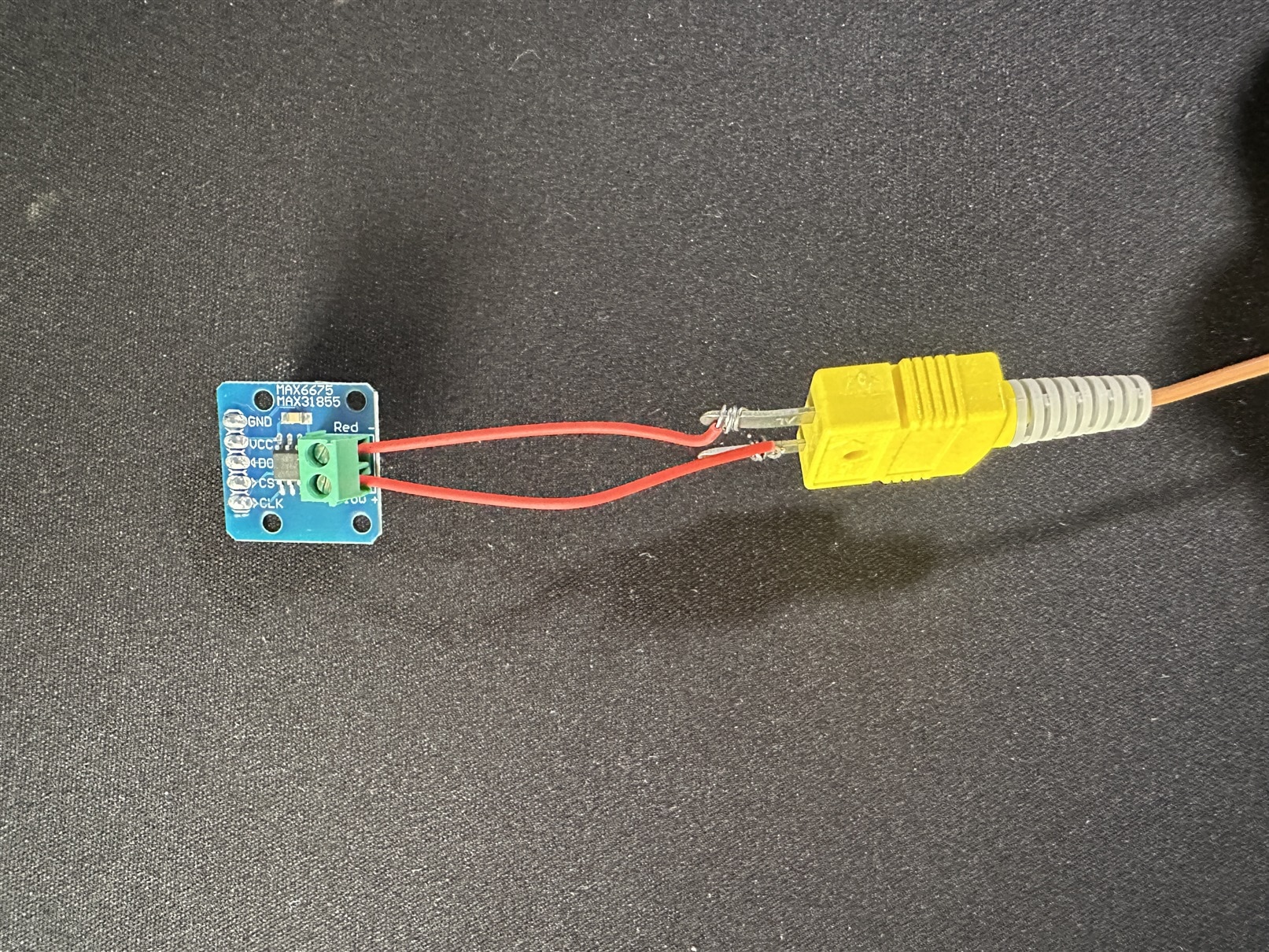
image

Then I connected the ESP32 module with the amplifier module as shown in the following image. 

The image

ESP32 module was programmed using Arduino IDE. I installed the MAX6675 Arduino library. 
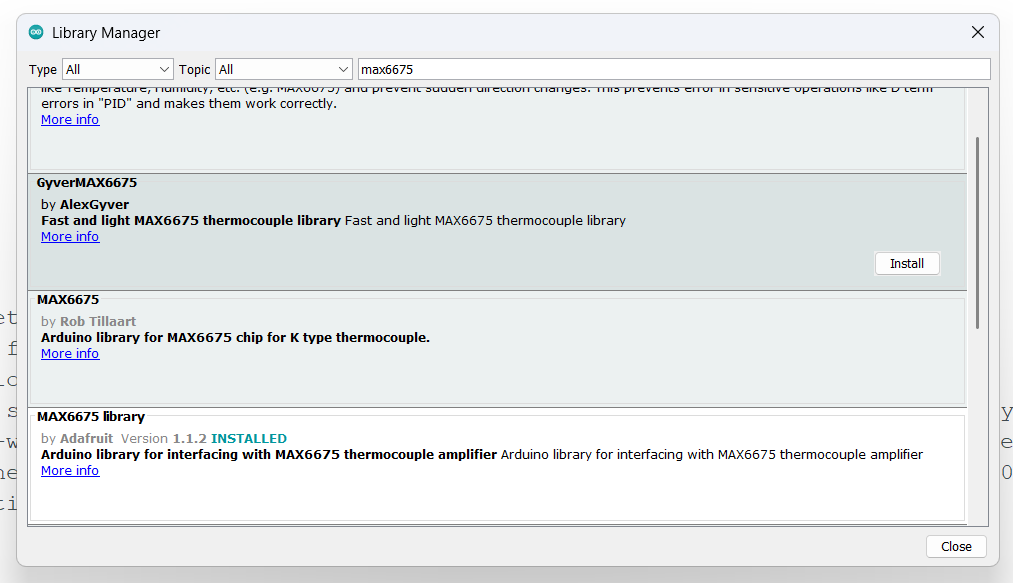
image

Then uploaded the following test code to the ESP32 module:

#include "max6675.h"

int thermoDO = 19;
int thermoCS = 23;
int thermoCLK = 5;

MAX6675 thermocouple(thermoCLK, thermoCS, thermoDO);

void setup() {
  Serial.begin(9600);

  Serial.println("MAX6675 test");
  // wait for MAX chip to stabilize
  delay(500);
}

void loop() {
  // basic readout test, just print the current temp
  
  Serial.print("C = "); 
  Serial.println(thermocouple.readCelsius());
  Serial.print("F = ");
  Serial.println(thermocouple.readFahrenheit());
  
  // For the MAX6675 to update, you must delay AT LEAST 250ms between reads!
  delay(1000);
}

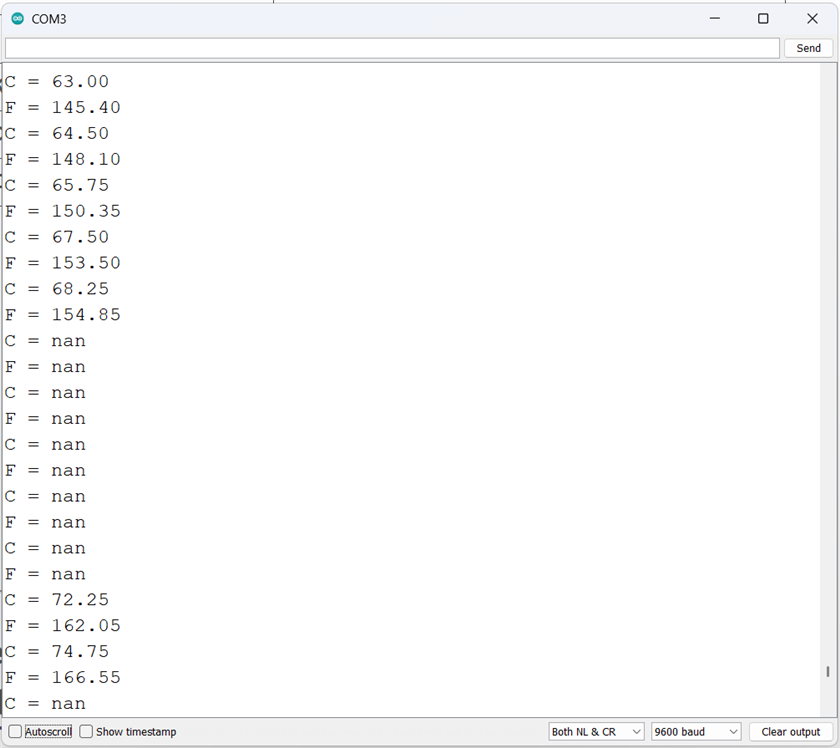
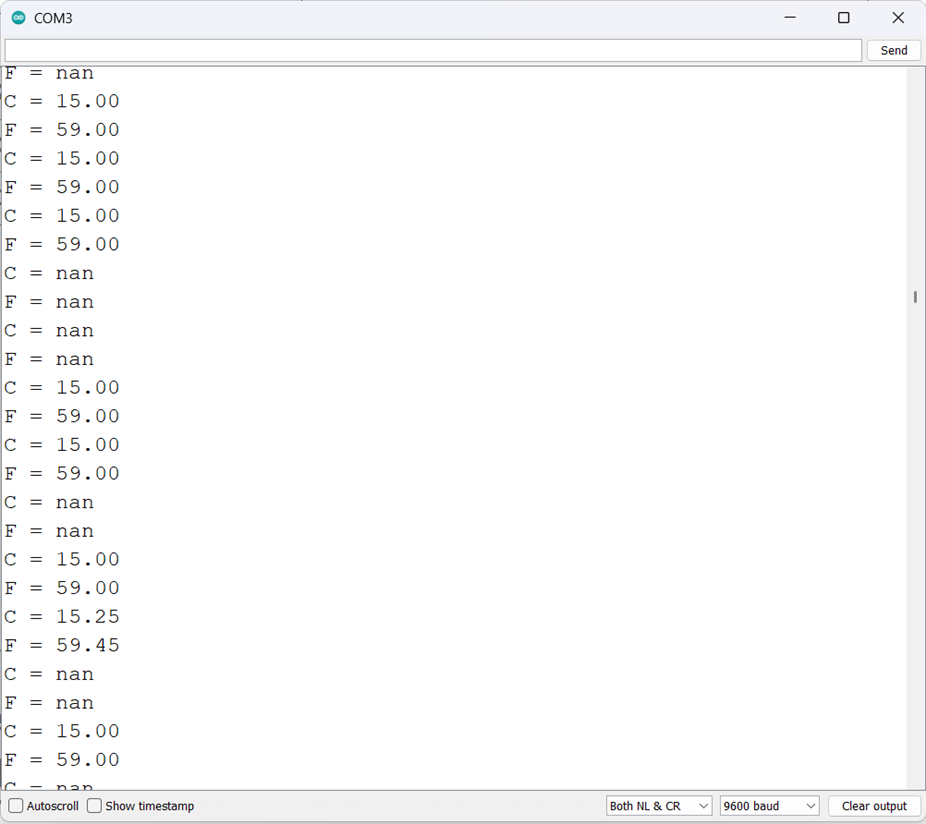
At room temperature, without connecting anything, the thermocouple, I got the following response in the serial terminal:
image

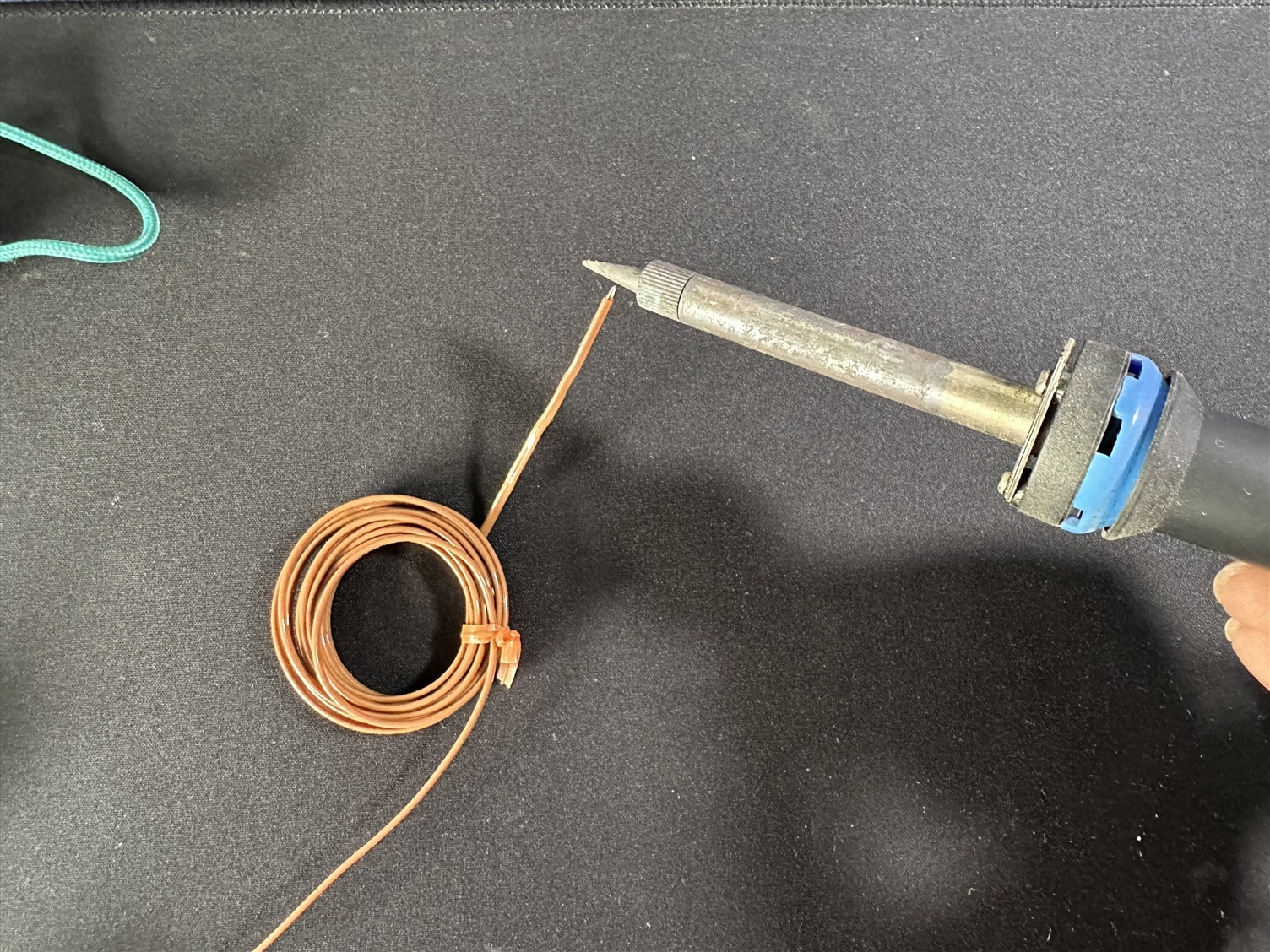
I connected my hot soldering iron tip to the thermocouple and got the following data.
image

image

I noticed the temperature has increased, but I am not sure whether this is the correct temperature or if I need calibration. I will try to find it later. 

  • Sign in to reply
  • Cancel
  • saramic
    saramic 25 days ago

    good post - I just got some MAX6675 and am yet to hook them up - may use this as a reference if I get into any trouble Thumbsup

    • Cancel
    • Vote Up 0 Vote Down
    • Sign in to reply
    • Cancel
  • Jan Cumps
    Jan Cumps 24 days ago

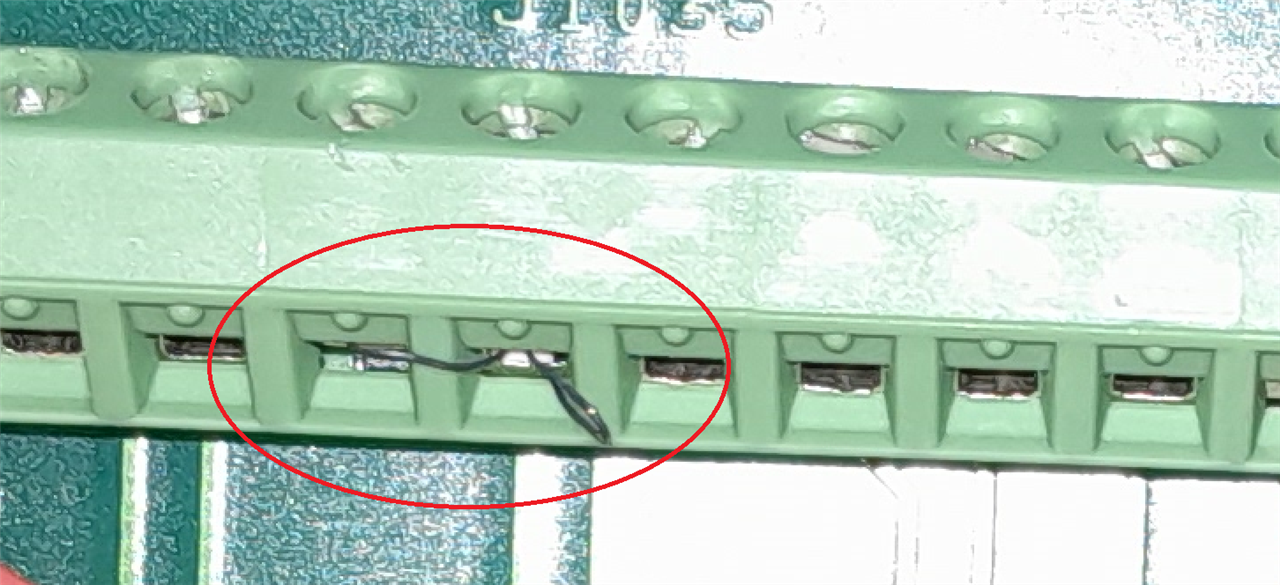
    You will need cold junction compensation for reliable measurements. You need to know the temperature at the yellow connector to be able to determine the temperature at the tip.

     Renesas Solution Starter Kit for RX23E-A: Thermocouple Cold Junction Compensation 

    This is how it's done in a scanner card: a pt100 RTD emmbedded into the connector, close to the thermocouple contacts:

    image

    • Cancel
    • Vote Up 0 Vote Down
    • Sign in to reply
    • Cancel
element14 Community

element14 is the first online community specifically for engineers. Connect with your peers and get expert answers to your questions.

  • Members
  • Learn
  • Technologies
  • Challenges & Projects
  • Products
  • Store
  • About Us
  • Feedback & Support
  • FAQs
  • Terms of Use
  • Privacy Policy
  • Legal and Copyright Notices
  • Sitemap
  • Cookies

An Avnet Company © 2026 Premier Farnell Limited. All Rights Reserved.

Premier Farnell Ltd, registered in England and Wales (no 00876412), registered office: Farnell House, Forge Lane, Leeds LS12 2NE.

Follow element14

  • X
  • Facebook
  • linkedin
  • YouTube