


All around the world, there is overwhelming evidence that pollinator communities are both changing and declining. Key drivers of these changes include land use change, changes in land management including the use of pesticides and genetically modified crops, pollution, disease, exotic species, and climate change.
Land Cover
The primary Reason for the change in pollinator communities is a change in the land cover, and the earth’s surface is affected by human land use. From urbanization to deforestation, the loss and degradation of land have significant negative impacts on pollinators through the modification of nesting and foraging sites. changes in the land, bees create the direct effect of decreasing the floral resources Required for survivorship, growth, and reproduction. Urbanization has varied effects on pollinator diversity and species and is highly disruptive to plant-pollinator networks, especially for bees Not only is there a loss of habitat, but there can be significant shifts in changing temperature through urban heat island effects. Temperature and habitat fragmentation were found to be the best predictors of pollinator distributions.
Climate

Variations in the rain and increased atmospheric CO2 levels are associated with anthropogenic climate change. Much work has focused on asynchronies between plants and pollinators. However, drought and increased CO2 may alter plant-pollinator interactions and the flowering plant’s physiology. Flowers develop less petal color and produce higher volatile compounds when grown under drought stress. However, with elevated CO2, flowers had stronger petal colors and lower volatile compounds. In drought-ridden areas, this may interfere with attraction leading to a cascade effect where plants not getting pollinated enough will die out and pollinators will have to look elsewhere for resources. Variations in the climate can also inhibit plants' nectar and pollen production. When This happens, fewer flowers may be pollinated, leading to a reduction in pollinator abundance that causes plant inbreeding. Climate change also disrupts migratory and spatial dislocation of pollination and changes in flowering plants. Displacement of time in flowering plants due to seasonal changes by climate change can affect current plant–bee networks by the movement of flower species to higher altitudes for sunlight, new species inhabiting the area, and introduction to new competitors.
Disease

There is still little information about the disease and the factors that interact with the disease in non-Apis bees. The role of managed bees is central to disease transmission among pollinators because these bees can harbor harmful pathogens that can cause a potential Spillover to wild bees. Eleven viruses, including the Black queen cell virus (BQCV), and chronic bee paralysis (CBPV) have been documented in wild bees. In Brazil, the honey bee can harbor European foulbrood, a disease that is caused by a bacterium called Melissococcus plutonius. which can cause brood deformities and bee death. There is some evidence that vector-mediated transmission may also play a role. The role of viruses is still not well understood.
Pesticides
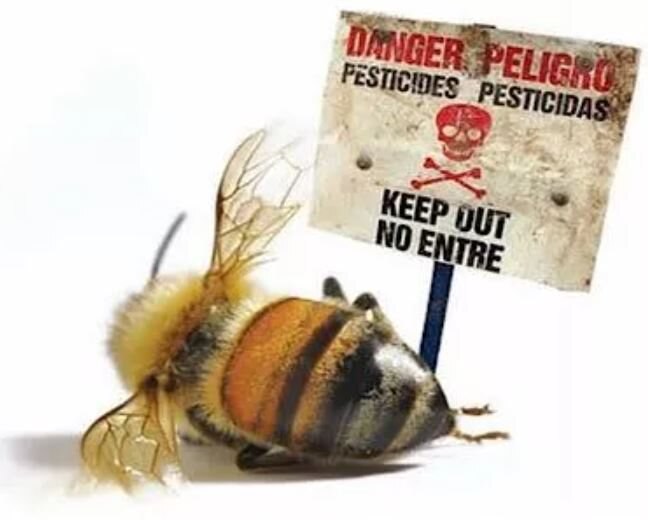
The dramatic global increase in pesticide use and dependence creates difficulties for bees in finding flowers for pollination. studies have found that pesticide usage can affect the immune function of bees which overall affects the fitness and survivability of bumble bees. In addition, neonicotinoid pesticides have been documented to lead to decreased foraging efficiency, declines in cognitive functions, and decreased colony fitness. Pesticide usage is a particular stressor that can cause disease levels to rise, due to this bees have a low immune function, making them susceptible to infectious diseases.
Pollutants
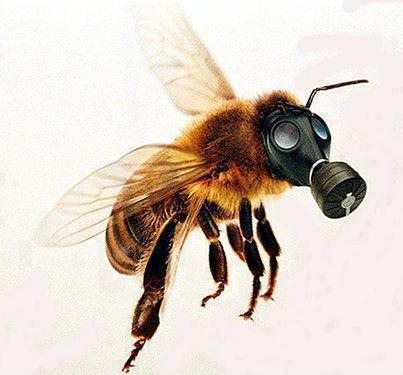
Bee species commonly encounter metal and metalloid contamination in the environment through exposure to air, soil, and water pollution. another main reason is the hyper-accumulation of heavy metals in plants during climate change. Different species use strategies used to cope with the effects of heavy metals and have different susceptibilities, for example, bumble bee microbiomes influence the survival of bees exposed to toxicants. research has found that plants grown in contaminated soil produce less nectar, have stunted growth, and have anthers contaminated with heavy metal which can lead to a reduction in foraging time. Another pollutant, nitrogen, produced small effects on bumble bee nectar consumption and lowered bee longevity when combined with climate warming and elevated CO2. Nitrogen deposition can reduce the diversity and cover of flowering plants that provide pollinator foods. One surprising result of heavy metal contamination is the decrease in nectar robbing.
Varroa mites
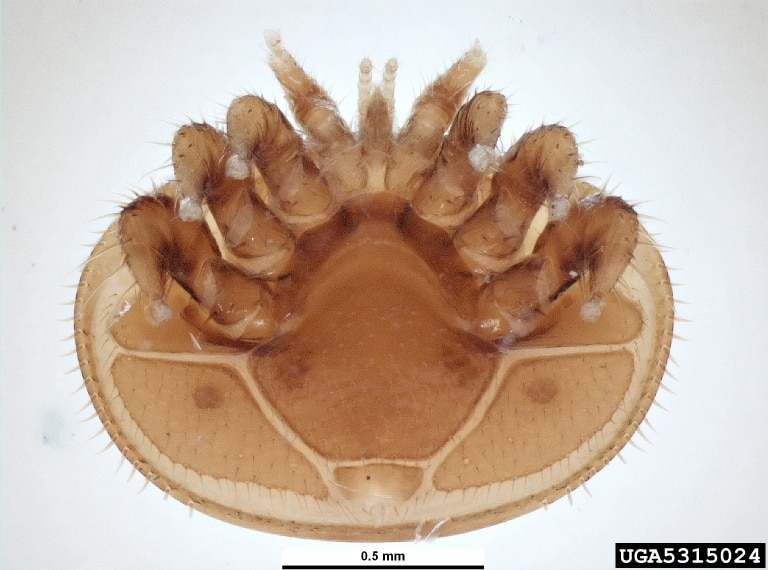
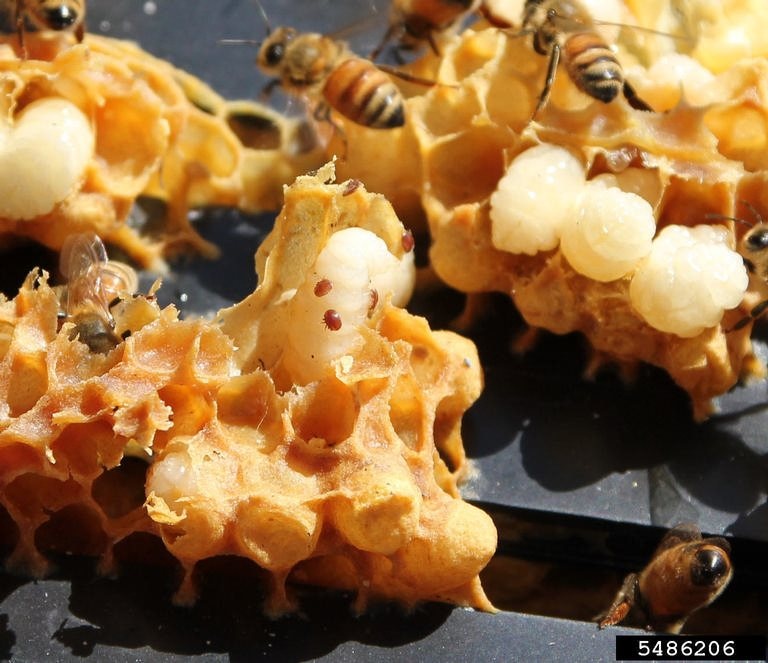
The hematophagous honey bee mite Varroa is still the greatest threat to apiculture. No other pathogen has had a comparable impact on both beekeeping and honey bee research during the long history of apiculture. There are several reasons for this unique status of Varroa mites: Varroa mites are parasitic mites, which require a honey bee host to survive and reproduce. The Varroa mite is only able to reproduce on the honey bee brood, while only adult female Varroa mites can feed on adult honey bees. Therefore, the entire life cycle of Varroa mite occurs within the honey bee colony. Female Varroa mites are more likely to lay eggs on drone brood than on worker brood (10–12 times more frequently). This is due to the drone’s longer brood cycle. For this reason inspection of drone brood provides the best chance of detecting Varroa mite infections, however, worker brood also provides an effective means of detection.
Identifying varroa
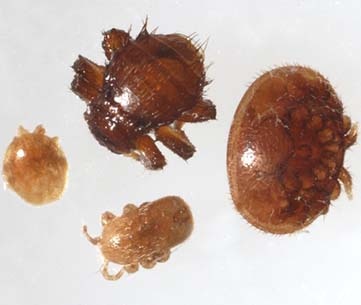
Varroa mites are external parasites of adult honey bees, as well as drone and worker brood. Adult female mites may be seen on larvae, and pupae of adult honey bees, while juvenile and adult male Varroa can be seen on larvae and pupae. Adult female Varroa mites are oval, flat, red-brown colored mites. They are around 1.1 mm long and 1.5 mm wide. Adult males are a lighter color and are smaller than females. Similarly, juvenile Varroa mites are also smaller and lighter colored than adult female mites.
Spread
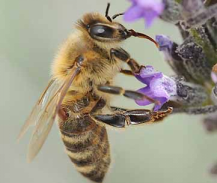
Varroa mites are mobile and can spread easily within a hive. They can readily reproduce on honey bee brood, and emerge and attach themselves to adult bees, or infect other honey bee larvae and pupae. Colonies can also become infected naturally if bees within the colony rob infected hives, or by honey bees drift from infected colonies into non-infected colonies. Swarms and absconding colonies may also spread the mites between areas.
Detection methods
There are a variety of detection methods that beekeepers can use to regularly inspect their hives for Varroa mites. All of the detection methods have advantages and disadvantages and some are more accurate than others. It is important to try and pick a method of surveillance that is easy to conduct, does not take too long, does not require multiple visits to the hive, has good sensitivity, and is reliable.
sugar shaking fact sheet | video
alcohol washing fact sheet | video
drone uncapping fact sheet | video
colony examination fact sheet
sticky mat examination fact sheet | video


