element14 Community
element14 Community
    Register Log In
  • Site
  • Search
  • Log In Register
  • Community Hub
    Community Hub
    • What's New on element14
    • Feedback and Support
    • Benefits of Membership
    • Personal Blogs
    • Members Area
    • Achievement Levels
  • Learn
    Learn
    • Ask an Expert
    • eBooks
    • element14 presents
    • Learning Center
    • Tech Spotlight
    • STEM Academy
    • Webinars, Training and Events
    • Learning Groups
  • Technologies
    Technologies
    • 3D Printing
    • FPGA
    • Industrial Automation
    • Internet of Things
    • Power & Energy
    • Sensors
    • Technology Groups
  • Challenges & Projects
    Challenges & Projects
    • Design Challenges
    • element14 presents Projects
    • Project14
    • Arduino Projects
    • Raspberry Pi Projects
    • Project Groups
  • Products
    Products
    • Arduino
    • Avnet & Tria Boards Community
    • Dev Tools
    • Manufacturers
    • Multicomp Pro
    • Product Groups
    • Raspberry Pi
    • RoadTests & Reviews
  • About Us
    About the element14 Community
  • Store
    Store
    • Visit Your Store
    • Choose another store...
      • Europe
      •  Austria (German)
      •  Belgium (Dutch, French)
      •  Bulgaria (Bulgarian)
      •  Czech Republic (Czech)
      •  Denmark (Danish)
      •  Estonia (Estonian)
      •  Finland (Finnish)
      •  France (French)
      •  Germany (German)
      •  Hungary (Hungarian)
      •  Ireland
      •  Israel
      •  Italy (Italian)
      •  Latvia (Latvian)
      •  
      •  Lithuania (Lithuanian)
      •  Netherlands (Dutch)
      •  Norway (Norwegian)
      •  Poland (Polish)
      •  Portugal (Portuguese)
      •  Romania (Romanian)
      •  Russia (Russian)
      •  Slovakia (Slovak)
      •  Slovenia (Slovenian)
      •  Spain (Spanish)
      •  Sweden (Swedish)
      •  Switzerland(German, French)
      •  Turkey (Turkish)
      •  United Kingdom
      • Asia Pacific
      •  Australia
      •  China
      •  Hong Kong
      •  India
      •  Japan
      •  Korea (Korean)
      •  Malaysia
      •  New Zealand
      •  Philippines
      •  Singapore
      •  Taiwan
      •  Thailand (Thai)
      •  Vietnam
      • Americas
      •  Brazil (Portuguese)
      •  Canada
      •  Mexico (Spanish)
      •  United States
      Can't find the country/region you're looking for? Visit our export site or find a local distributor.
  • Translate
  • Profile
  • Settings
Safe and Sound
  • Challenges & Projects
  • Design Challenges
  • Safe and Sound
  • More
  • Cancel
Safe and Sound
Blog Safe and Sound : Winter Survival Suit Post #4 (Carbon Fiber Tape)
  • Blog
  • Forum
  • Documents
  • Polls
  • Files
  • Events
  • Mentions
  • Sub-Groups
  • Tags
  • More
  • Cancel
  • New
  • Share
  • More
  • Cancel
Group Actions
  • Group RSS
  • More
  • Cancel
Engagement
  • Author Author: dwinhold
  • Date Created: 12 Mar 2017 10:20 PM Date Created
  • Views 747 views
  • Likes 4 likes
  • Comments 5 comments
  • safe and sound
  • carbon fiber
  • safe & sound
  • dwinhold
  • winter survival suit
Related
Recommended

Safe and Sound : Winter Survival Suit Post #4 (Carbon Fiber Tape)

dwinhold
dwinhold
12 Mar 2017

Hello everyone, this post is about carbon fiber tape and how it will be used.


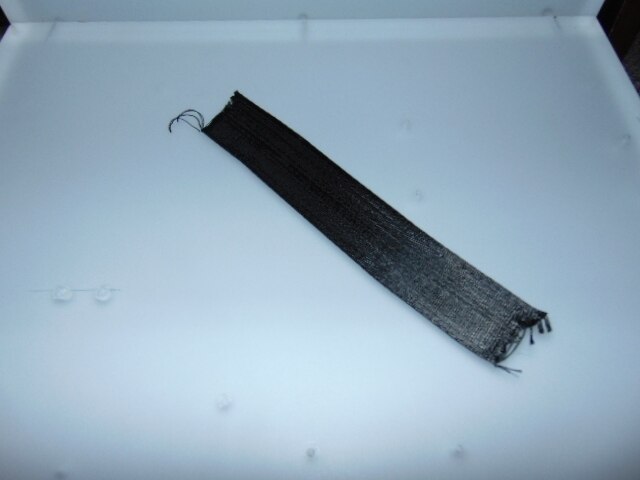
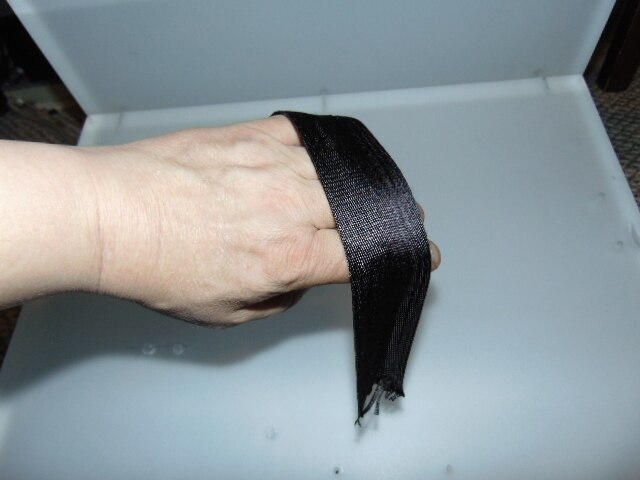
The carbon fiber tape has arrived!! This update is showing how well the carbon fiber works as a heating element. Below are pictures of the carbon fiber. In them you can see that it is like fabric, it feels like silk. I am using 18650 3.7v 2600mAH batteries, I have purchased 8 of them hoping that will be enough for the entire suit to operate; they are rechargeable!!


Here is some interesting fact about carbon fiber:


It’s very soft, thin and flexible which enables it to be used in a wide range of textile applications where it may be subjected to continual movement and bending. The carbon fiber tape has similar characteristics to other heating elements available on the market however it is unique because of its flexibility and softness. In addition, another crucial factor with carbon fiber tape is that, unlike conventional heaters, it emits infrared heat that not only warms the top layer of the body but can also penetrate up to 5cm deep into the body making it far superior to other heating solutions currently on the market.


The maximum temperature is 400 degrees Celsius (752 degrees Fahrenheit). When over 400 degrees Celsius the carbon starts to oxidise into carbon dioxide and will start to evaporate. At 1200 degrees Celsius it'll last for a few hours but this decreases to just minutes when exceeding 1250 degrees Celsius. In a vacuum with no oxygen present it can generate more than 3000 degrees Celsius. When connecting the carbon tape, it is very important to ensure good contact between
the carbon fiber tape and the wires. The surface of the carbon tape will always be a reliable electrical conductor due to the surface oxidation turning into a gas and dispersing. This is unlike the surface of metals, for example copper, where because of oxidation the copper is coated with copper oxide which hinders a good electrical contact because copper oxide does not conduct electricity. Overtime this eventually results in contact failure which leads to power loss and potentially the overheating of contact points.


How to decide on what batteries to use for power. Under laboratory conditions there are batteries with and energy density of 200 (400)Wh/kg, but commercially available batteries are no more than 250 h/kg. Knowing the weight of your battery will give you a rough estimation of the maximum amount of energy it can supply. For example, an 18650 battery weighs about 50 grams so we can estimate that for a good quality, high capacity cell the battery could provide 12 watts of power. (0.25 x 50 = 12.5 watts). This theoretical calculation corresponds to the declared parameters of the Panasonic 3400 which is one of the most expense 18650 batteries commercially available. When selecting a battery, you should choose one that has a greater capacity than the amount of power you expect your heated clothing to use. For example, if your heated vest uses 30 watts it should be able to function for up to 1 hour from three 18650 batteries.


Carbon fiber tape can be washed in the washing machine, but for this application it’s not recommended due to the wiring.


Here are the specs for the tape I am using:


Carbon fiber tape

Specifications:

Material:

Carbon   fiber 100%

Type:

Heating element

Resistance:

18±2 Ohm/m ( 5.5±0.5 Ohm/ft )

Weight

5±0.5 g/m (1.5±0.15 g/ft)

Width:

17±2 mm (0.67±0.08 in)

Thickness:

0.6±0.1 mm (0.024±0.004 in)

Tensile  strength:

50±10 kg


Pictures of the carbon fiber:


image


image


Set up for the temperature test. I wanted to see how hot an 8" length piece of tape would get with 2 - 3.7v 2600mAH batteries for power.
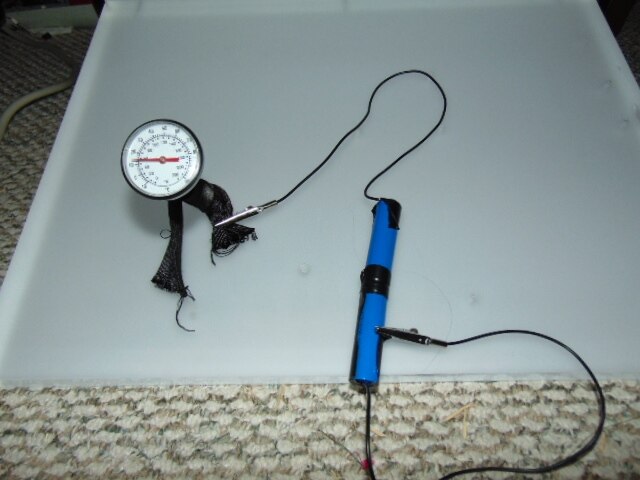
image


Watch the video to see the results (3.5 minutes long). Sorry for it being dark (and me babbling on and on).


You don't have permission to edit metadata of this video.
Edit media
x
image
Upload Preview
image


Thank you for reading and watching


Dale Winhold


  • Sign in to reply

Top Comments

  • mcb1
    mcb1 over 8 years ago in reply to dwinhold +3
    dwinhold Thanks for the link. I did get a fright when I saw the comma after the first number, but then realised that there were only two digits after it. Looks like a great product and site. I do wonder…
  • dougw
    dougw over 8 years ago +2
    Interesting material - thanks for blogging about it. What is the resistance of that strip? I think the thermal coefficient of resistance for carbon is slightly negative. Does this mean the current in your…
  • dwinhold
    dwinhold over 8 years ago in reply to dougw +2
    Thank you dougw for the reply and questions!! I just went and re-ran the test with the volt meter. First I tested the resistance (My sample piece of carbon fiber was bigger then the 15mm wide tape I am…
  • mcb1
    mcb1 over 8 years ago in reply to dwinhold

    dwinhold

    Thanks for the link.


    I did get a fright when I saw the comma after the first number, but then realised that there were only two digits after it. image


    Looks like a great product and site.


    I do wonder about the Ampere Hour v watts...

    image

    12v at 4A/H = 48 Wh (Watt Hours)


    In theory you should be able to show the remaining Wh and allow the user to reduce the heat slightly to get a longer run time.


    Mark

    • Cancel
    • Vote Up +3 Vote Down
    • Sign in to reply
    • More
    • Cancel
  • dwinhold
    dwinhold over 8 years ago in reply to mcb1

    The link is below, I will also include it in my next blog for anyone who missed it here!!


    http://www.carbonheater.us/


    The company is out of Russia, I was impressed it only took 3 weeks to receive the package. Price of the tape included shipping.


    Dale

    • Cancel
    • Vote Up +1 Vote Down
    • Sign in to reply
    • More
    • Cancel
  • mcb1
    mcb1 over 8 years ago

    That's impressive.


    You haven't included a link for the source of the tape (that I can see).

    It seems that there are a few people that might find it worthwhile.


    Thanks

    Mark

    • Cancel
    • Vote Up +2 Vote Down
    • Sign in to reply
    • More
    • Cancel
  • dwinhold
    dwinhold over 8 years ago in reply to dougw

    Thank you dougw for the reply and questions!!


    I just went and re-ran the test with the volt meter. First I tested the resistance (My sample piece of carbon fiber was bigger then the 15mm wide tape I am using (test was on tape 44mm wide and 250mm long). I will run tests on the tape I will be using. Anyway, the resistance is 3.8 ohms. The initial voltage when connected was 2.8v and at 140 deg F it was 2.95v and at 215 deg F was 3.05v. I was using 2 batteries 3.7v 2600 mAH  (7.48v on the volt meter).


    Dale

    • Cancel
    • Vote Up +2 Vote Down
    • Sign in to reply
    • More
    • Cancel
  • dougw
    dougw over 8 years ago

    Interesting material - thanks for blogging about it.

    What is the resistance of that strip?

    I think the thermal coefficient of resistance for carbon is slightly negative. Does this mean the current in your tape goes up as the temperature goes up?

    • Cancel
    • Vote Up +2 Vote Down
    • Sign in to reply
    • More
    • Cancel
element14 Community

element14 is the first online community specifically for engineers. Connect with your peers and get expert answers to your questions.

  • Members
  • Learn
  • Technologies
  • Challenges & Projects
  • Products
  • Store
  • About Us
  • Feedback & Support
  • FAQs
  • Terms of Use
  • Privacy Policy
  • Legal and Copyright Notices
  • Sitemap
  • Cookies

An Avnet Company © 2026 Premier Farnell Limited. All Rights Reserved.

Premier Farnell Ltd, registered in England and Wales (no 00876412), registered office: Farnell House, Forge Lane, Leeds LS12 2NE.

ICP 备案号 10220084.

Follow element14

  • X
  • Facebook
  • linkedin
  • YouTube