


You want to join the Safe and Sound Design Challenge and you're looking for inspiration? Here are a few project ideas....
|

The rich mix of sensors, wireless devices, controllers and displays will help you to design a safety wearable.
You need to use an MSP-EXP432P401R LaunchPad in your build. But check out the kits you 'll get if you submit one of the 15 best proposals:
- MSP-EXP432P401R LaunchPad
- CC3100MODBOOST SimpleLink Wi-Fi CC3100 BoosterPack
- DLP-7970ABP NFC transceiver BoosterPack
- SimpleLink
 Bluetooth
 low energy CC2650 Module BoosterPack
 - BOOSTXL-SENSORS Sensors BoosterPack
- BQ25570EVM-206 Power Management / harvester Kit
- 430BOOST-SENSE1 Capacitive Touch BoosterPack
- 430BOOST-SHARP96 Memory LCD BoosterPack
The kit has enough components to
|
GPS info could be retrieved if coupled with a smartphone. It's also possible to make callouts if the project is paired with a telephone.
The Battery life can be extended by using the power harvesting kit.
Useful components that can be added (not in the kit): a microphone, camera, long range radio, toxic gas sensor, ...
You're allowed to add other components if it helps your design.
Or you can make some parts yourself, such as an antenna, made of conductive thread, woven into an overcoat or felt hat.
Fall Alert for Mountain Climbers

You can use the motion sensor to detect a fall, a sudden movement or absence of movement. The air pressure sensor can indicate that the climber has changed height (too) fast.
The light sensors can be used to check if you've ended up in a cavity.
You could add a sub-1GHz beacon that helps to locate the hiker.
Maybe it's possible to tell the climber that he is at risk for altitude sickness. You could calculate the altitude when he starts to climb or descend.
When he's getting close to the limit of what's a healthy altitude difference, your device can warn the climber or the boot camp.
Monitor People Working in Locations with Shortage of Breathable Air

When you're working in caves, mines, sewers or industrial fridges, you are at risk to run out of fresh air.
It's also a risk for farmers. It's not common that something goes wrong when they work in a stable's cesspit. Farmers know the danger.
Still mishaps happen from time to time.
Our kit could indicate the worker's activity, the position (being horizontal i a bad sign) or the fact that they dropped their lantern.
With the on-board LEDs and radios you can create beacons to help locate the unfortunate person. An additional buzzer can also help.
You don't have to wait until things go wrong. With the RGB LED on the LaunchPad you can give a message to the person how conditions are.
If you want to add an air composition sensor, take in account that they aren't the cheapest components around.
Stolen Handbag Token

Maybe a hidden beacon that activates silently when your handbag is stolen? It helps to find it back.
If you are so unlucky that your smartphone is also nicked, you can use that to retrieve GPS info and send info.
Otherwise an additional low power long range radio can do miracles.
Pro tip: inform the police. Don't go searching for the criminals yourself.
Gunshot Detector

This one is inspired by the elecia. A device that can be hidden in a conflict zone. It sends a signal when it detects the sound of a gun being fired.
It can help to quickly resolve escalations during peace monitoring activities.
In peaceful times, the police can use it to monitor the hotspots for mayhem.
It will require microphones and good analog/digital signal processing skills. This may be the most complex suggestion.
More Inactivity Alerts
Let's move from difficult to easy: Check if a person is inactive or not.
Or control if a guard has made his guard tour and controlled all points.
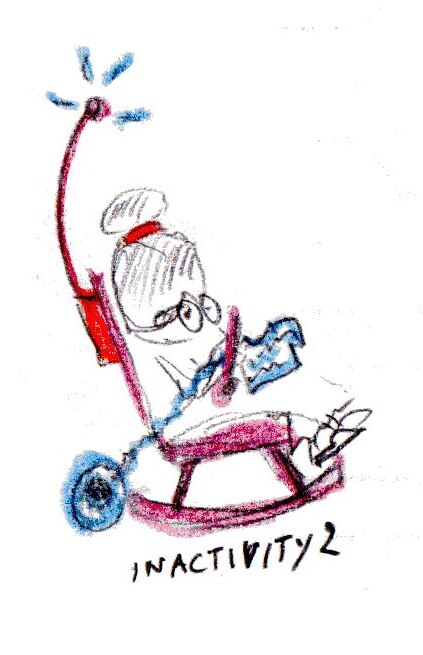
You can make a device that monitors the activity of a person you care for. There are many options here.
Activity or inactivity can mean many things. Inactivity is not per se a bad sign. Activity can be good but may also indicate a fall.
It's up to you to define what you want to monitor and how your design improves the safety.
The motion detectors and position sensors will help.Triggers could be body movement, position changes suddenly from horizontal to vertical, absence of sound.

The internet is filled with pictures of sleeping guards in museums  . We could avoid the situation by checking if the guards tilt their chair backwards.
A 'I haven't fallen asleep' device already exists for operators, lifeguards and security staff (for train drivers, this is called the dead man button).
It tests the alertness of the person to react on a signal, question, buzzer, light flashing, ...
Checkpoint Alert
Another 'security guard' related suggestion is the checkpoint alert: a device that's placed on a location that needs to be visited by security staff at (ir)regular times.
Guards can indicate they've been there by tapping their mobile phone against the NFC kit.

For the young parents: you can make a device that records the sleep pattern of your toddler.
If you make it send a message to you when your baby's activity increases, you can prepare the fruit purée just in time.
Boy Scout Saver
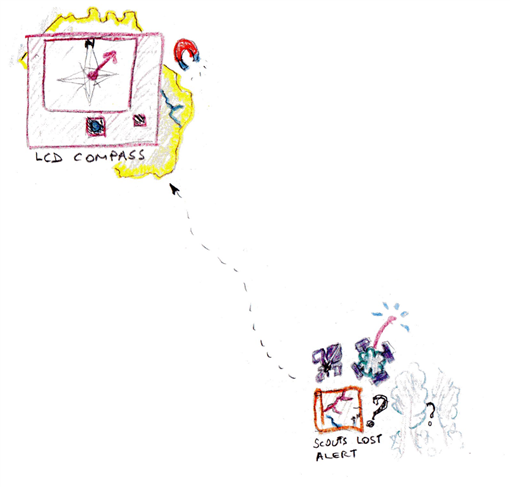
Another option is a 'find-me-back' device for youth groups playing a game in the forrest.
Something that helps trace back group members that got lost during the game.
With the magnetic sensor and the LCD display, you can add an instant compass to the gizmo.
Hearing Aid
One of the first ever wearable electronic devices was the hearing aid. It has much improved since its invention.
Hearing aids work better, are lighter, use way less battery power than in the beginning.
They are truly invisible these days.
Can you find new functions or performance improvements for this type of devices.?
If any of these suggestions inspired you to participate in the Design Challenge, visit the home page and click the Enroll button.
I hope to see your Safe & Sound proposal ! |
Top Comments