element14 Community
element14 Community
    Register Log In
  • Site
  • Search
  • Log In Register
  • Community Hub
    Community Hub
    • What's New on element14
    • Feedback and Support
    • Benefits of Membership
    • Personal Blogs
    • Members Area
    • Achievement Levels
  • Learn
    Learn
    • Ask an Expert
    • eBooks
    • element14 presents
    • Learning Center
    • Tech Spotlight
    • STEM Academy
    • Webinars, Training and Events
    • Learning Groups
  • Technologies
    Technologies
    • 3D Printing
    • FPGA
    • Industrial Automation
    • Internet of Things
    • Power & Energy
    • Sensors
    • Technology Groups
  • Challenges & Projects
    Challenges & Projects
    • Design Challenges
    • element14 presents Projects
    • Project14
    • Arduino Projects
    • Raspberry Pi Projects
    • Project Groups
  • Products
    Products
    • Arduino
    • Avnet & Tria Boards Community
    • Dev Tools
    • Manufacturers
    • Multicomp Pro
    • Product Groups
    • Raspberry Pi
    • RoadTests & Reviews
  • About Us
    About the element14 Community
  • Store
    Store
    • Visit Your Store
    • Choose another store...
      • Europe
      •  Austria (German)
      •  Belgium (Dutch, French)
      •  Bulgaria (Bulgarian)
      •  Czech Republic (Czech)
      •  Denmark (Danish)
      •  Estonia (Estonian)
      •  Finland (Finnish)
      •  France (French)
      •  Germany (German)
      •  Hungary (Hungarian)
      •  Ireland
      •  Israel
      •  Italy (Italian)
      •  Latvia (Latvian)
      •  
      •  Lithuania (Lithuanian)
      •  Netherlands (Dutch)
      •  Norway (Norwegian)
      •  Poland (Polish)
      •  Portugal (Portuguese)
      •  Romania (Romanian)
      •  Russia (Russian)
      •  Slovakia (Slovak)
      •  Slovenia (Slovenian)
      •  Spain (Spanish)
      •  Sweden (Swedish)
      •  Switzerland(German, French)
      •  Turkey (Turkish)
      •  United Kingdom
      • Asia Pacific
      •  Australia
      •  China
      •  Hong Kong
      •  India
      •  Japan
      •  Korea (Korean)
      •  Malaysia
      •  New Zealand
      •  Philippines
      •  Singapore
      •  Taiwan
      •  Thailand (Thai)
      •  Vietnam
      • Americas
      •  Brazil (Portuguese)
      •  Canada
      •  Mexico (Spanish)
      •  United States
      Can't find the country/region you're looking for? Visit our export site or find a local distributor.
  • Translate
  • Profile
  • Settings
Ben Heck Featured Content
  • Challenges & Projects
  • element14 presents
  • element14's The Ben Heck Show
  • Ben Heck Featured Content
  • More
  • Cancel
Ben Heck Featured Content
Documents Winner Announcement: Ben Heck's Raspberry Pi Zero Portable!
  • Blog
  • Forum
  • Documents
  • Events
  • Polls
  • Files
  • Members
  • Mentions
  • Sub-Groups
  • Tags
  • More
  • Cancel
  • New
Join Ben Heck Featured Content to participate - click to join for free!
Actions
  • Share
  • More
  • Cancel
Engagement
  • Author Author: tariq.ahmad
  • Date Created: 28 Jul 2016 6:44 PM Date Created
  • Last Updated Last Updated: 18 Apr 2017 10:39 AM
  • Views 15140 views
  • Likes 5 likes
  • Comments 306 comments
Related
Recommended

Winner Announcement: Ben Heck's Raspberry Pi Zero Portable!

image

element14's The Ben Heck Show

Join the Ben Heck team every week for amazing hacks! Watch them build and mod community-inspired projects using electronics!

Back to The Ben Heck Show homepage image

Connect with TBHS
Featured Bonus Materials
See All Episodes


{tabbedtable} Tab LabelTab Content
Winner Announcement

Congratulations thefalcontype you are the winner of Ben Heck's Portable Raspberry Pi Zero!


Thank you for everyone who participated and sharing your amazing builds with the rest of the community!
Winning Entry

thefalcontype writes:


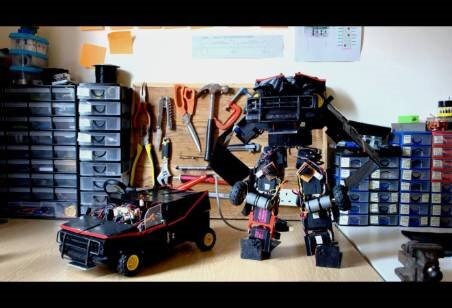
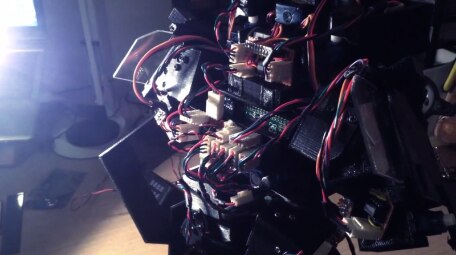
As a university student, i was struggling to decide what project I could do for my third year finals and that's when a lecturer told me, "processing is cheap". At first i thought he meant just small simple micro-controllers, however a week later the raspberry pi zero was announced and launched. I was lucky enough to run to town and managed to pick up the magazine which was giving it away for free. I had never owned or used a raspberry pi before then, but after that, i could not stop talking about it. £4 for a full spec PC with easily controllable gpio's. It truly was and still is an amazing bit of hardware. For that reason i felt i needed to build something that could use the amazing power of the tiny pi and push what had been done with not just the raspberry pi, but any small frame computer. That is why i then built a miniature, fully working transformer that could drive around, then transform to walk around as a fully pi-pedal robot. The raspberry pi really inspired me to realize what could be achieved in the modern day and age if you just put the time and effort into it. You don't need a big budget, you just need both the inspiration and then the dedication to follow through with it.


Video of the raspberry pi zero Transformer:


You don't have permission to edit metadata of this video.
Edit media
x
image
Upload Preview
image


image

image


You don't have permission to edit metadata of this video.
Edit media
x
image
Upload Preview
image


In 2006, Eben Upton and colleagues including Rob Mullins, Jack Lang, and Alan Mycroft came up with the idea of using a cheap, tiny computer to help teach kids how to code. They were concerned with the year-on-year declining popularity and skill set of A Level students applying for Computer Science in each academic year throughout the 2000's.  Something was clearly going on, the situation had changed drastically from what was happening in the early 1990s, when most kids who applied came to interviews as experienced hobbyist programmers as opposed to someone who did just a little bit of web design.


You don't have permission to edit metadata of this video.
Edit media
x
image
Upload Preview
image


A number of problems for why kids interacted differently with computers were identified: combining ICT curriculum with lessons on using Word and Excel, or writing web pages; the dot-com bust; and the rise of home PC and game consoles to replace the Amigas, BBC Micros, Spectrum ZX and Commodore 64 machines that the previous generation had grown up and learned to program on. While the consolidation of curriculum and the end of the .dom era are issues a small group of people could not address, reinvigorating an interest in programming lost on those growing up with modern computers was something they felt they could help with. Unlike modern computers, which were cost prohibitive and did not lend themselves to programming experimentation, the older computers of the previous generation could be booted into a programming environment.


{gallery} My Gallery Title

image

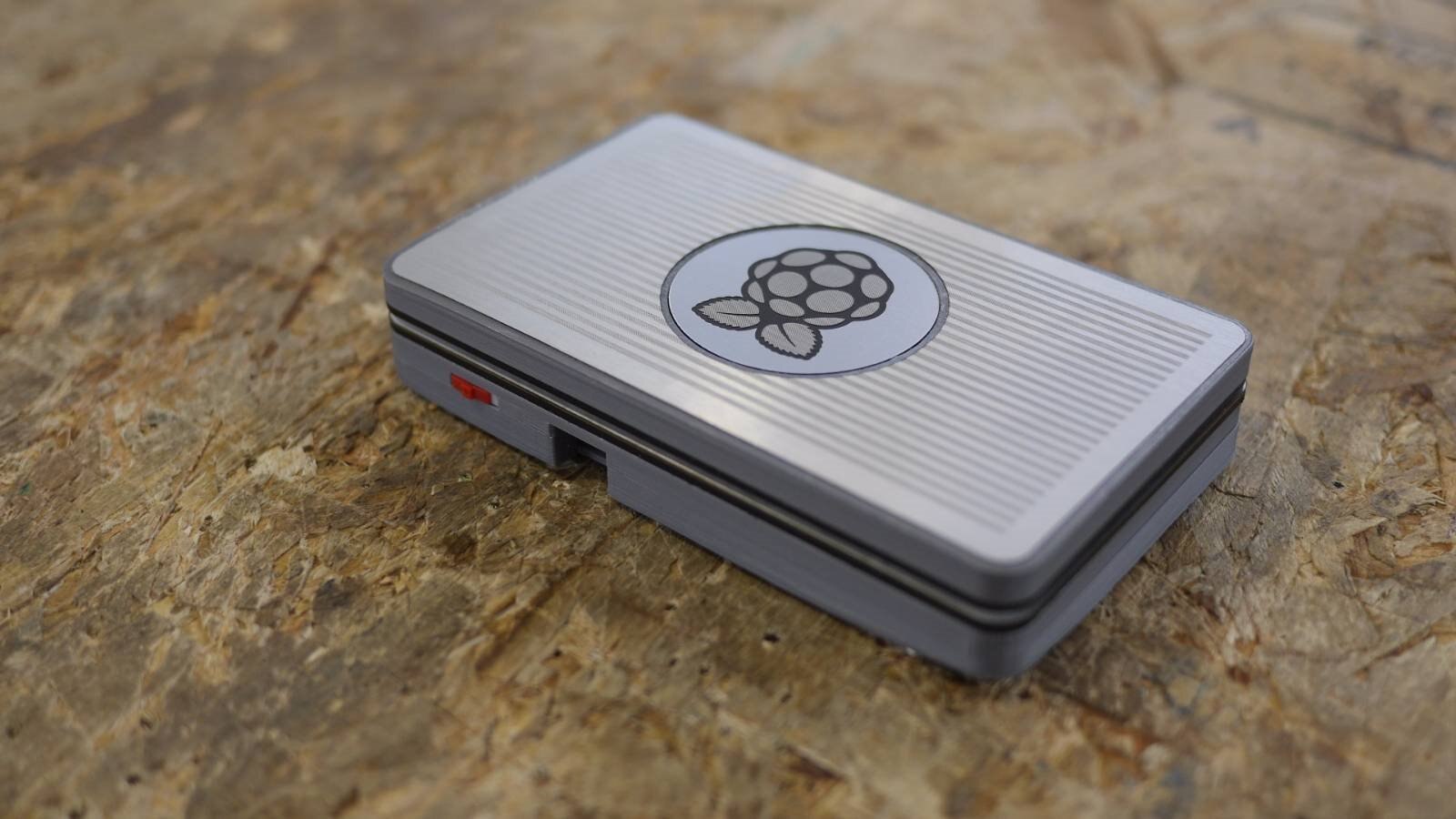
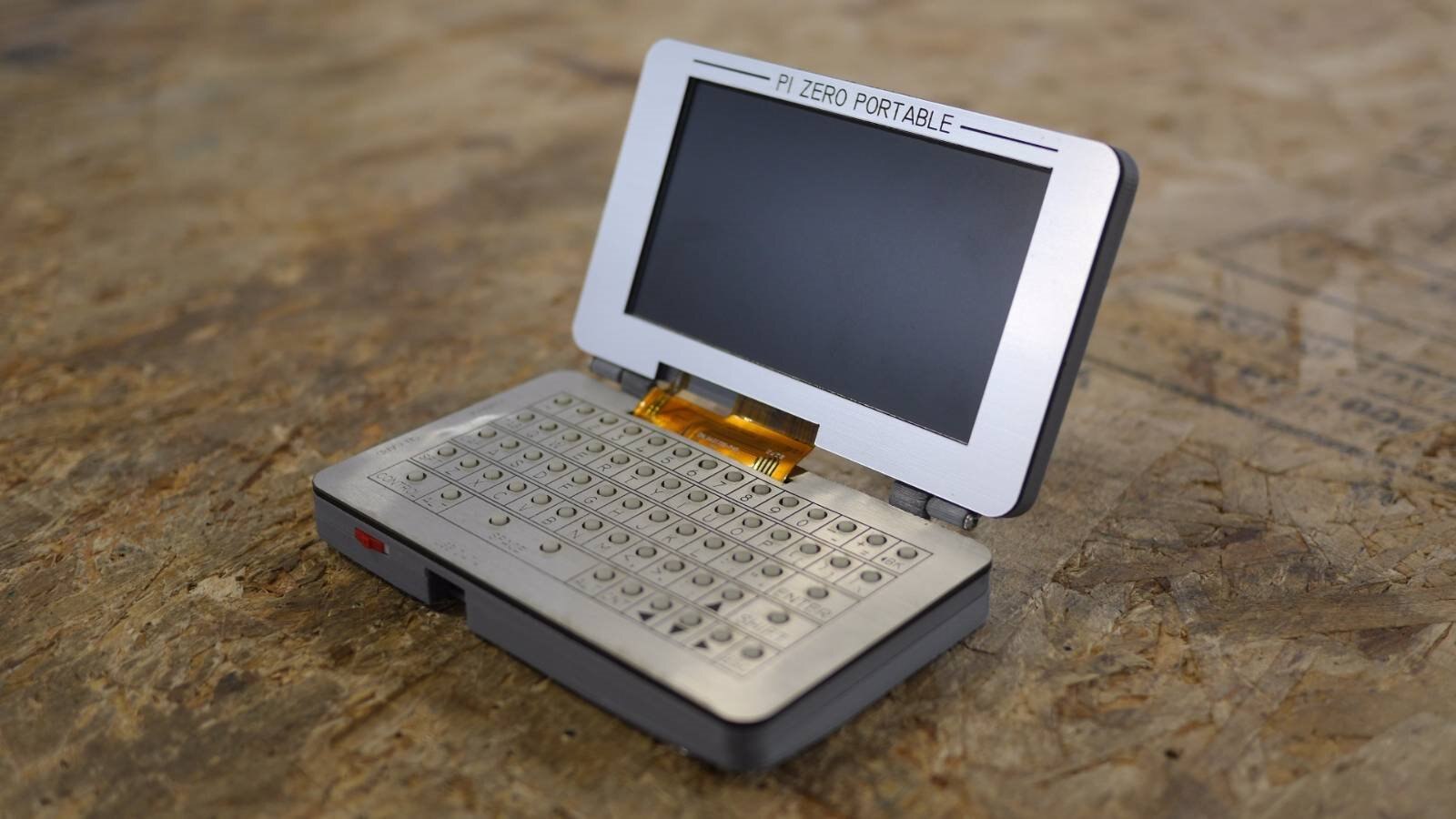
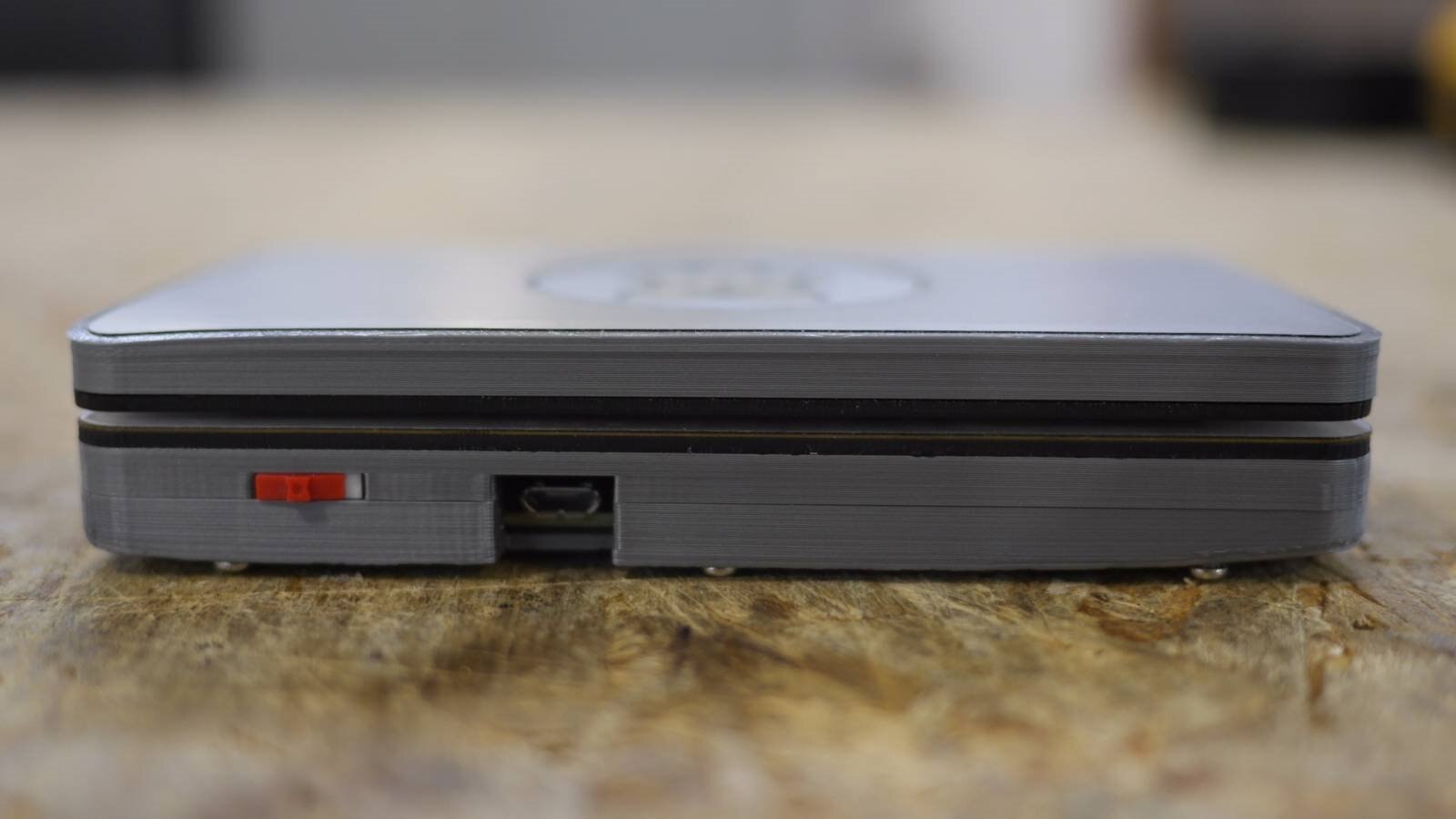
IMAGE TITLE: Raspberry Pi Zero Portable Image 1

image

IMAGE TITLE: Raspberry Pi Zero Portable Image 2

image

IMAGE TITLE: Raspberry Pi Portable Image 3

image

IMAGE TITLE: Raspberry Pi Portable Image 4


Several iterations of what would later be known as the Raspberry Pi were designed from Eben from 2006 to 2008. The idea gain steam until 2008, when processors used in mobile devices became more affordable and powerful enough to deliver a quality multimedia experience, making the boards attractive for kids not interested in a purely programming-oriented device. Eben Upton, Rob Mullins, Jack Lang, and Alan Mycroft teamed up Pete Lomas and David Braben to form the Raspberry Pi foundation and turn their vision into a reality.


The foundation also had several challenges including no manufacturing experience, price points with margins under acceptable levels for contract manufacturers, and volumes that were too low.  The original plan for the Raspberry Pi called for building just 1000 units for new undergraduates at Cambridge University. They figured they could operate at an initial loss by kick starting the project themselves and further develop the platform while early adopters helped with debugging, documentation, and education.


Raspberry Pi Zero Portable Episode
image

Instead, they became victims to their own success when just three weeks before launch, initial demand went well beyond 200,000 units.  It would be impossible for them to subsidize production at a level 200 times beyond what they initially expected and they could not fund demand by normal loan methods because they were registered as a UK charity. As as result, they began searching for a partner with the buying power to keep component prices low, the global presence to handle logistics, and the financial muscle to make it all happen immediately.


According to Pete Lomas: "What we learned is that we had to sell out (a little) to sell (a lot). I'd argue that many makers do this when they want to scale... Holding back schematics altogether troubled us. Not being open would impede people's ability to interface and hack the hardware - defeating the very goals we had set out to accomplish with Raspberry Pi in the first place. Because our remit is education in the broadest sense, we wanted - needed - to provide completely open access to the hardware. And we didn't want to alienate the devoted hacking and open source community that had fueled early interest and would provide much future development. ...But if other manufacturers copied our design, our partners would lose their investment, which was approaching several million dollars. They were spending this time and money optimizing their processes for manufacturing our product, while exploring component alternatives to meet our cost target."


The final design for the Raspberry Pi included what is perhaps its most important feature for the hacker and open source community, access to the General Purpose Input/Output (GPIO). Pete Lomas continues: "The GPIO was the key to unlocking the hardware so successfully developed in the Arduino ecosystem: The stuff people could add to and embed with the Raspberry Pi. The GPIO also meant features that ended up on the cutting room floor could be added back by our ever-inventive community. ...without all these specs, a hardware community could not grow around the Raspberry Pi."


The Raspberry Pi was released by Premier Farnell, the company behind element14, in 2012. According to the CEO at the time: "This partnership brings together the world's biggest online design engineer community with one of the most exciting electronic/embedded computing products to be launched for decades. ...Through our element14 community we will encourage everyone from developers, modders, coders and programmers to discuss, share and develop their ideas and fully (utilize) the game-changing potential of the Raspberry Pi computer."


In the comments below tell us how the Raspberry Pi inspires you!


Let us know and you could win Ben Heck's Portable Raspberry Pi Zero!


Feel free to send us pictures or videos of an invention you've made using it, something you did differently with it that no one else has thought of, how you were able to use it to learn something new, an amazing build you've made with it such as a portable device or a retro gaming machine, something useful that is either not affordable or commercially available, a programming language or a skill it helped you master, or anything else related to the Raspberry Pi.

Directions:

Step 1:  Log in or register on element14, it's easy and free.

Step 2: Post in the comments section below and tell us how the Raspberry Pi inspires you. Videos, pictures and text are all welcomed forms of submission.

Step 3:  Sit back, relax, and enjoy the show!  We will accept entries until 3:00pm CDT August 29th, 2016 and we will announce our winner on YouTube. If you need something to do between now and then make sure to check out what is happening This week on element14 Community, or watch more Ben at element14.com/TBHS.


Bonus points if you also comment and like your favorite Raspberry Pi builds.  Show your enthusiasm by liking or commenting on some or all of his builds:


image

Attachments:
imageGiveaway_TC.pdf
  • give-away
  • tbhs
  • raspi
  • ben heck giveaways
  • raspberry pi zero
  • free stuff
  • giveaway
  • the ben heck show
  • ben heck
  • eejournal
  • raspberry pi
  • pi_zero
  • raspberrypi
  • pi0
  • ras
  • ras_pi
  • rasperry_pi
  • ras pi
  • ben_heck
  • pi zero
  • bh_giveaways
  • Share
  • History
  • More
  • Cancel
  • Sign in to reply

Top Comments

  • vang1
    vang1 over 10 years ago +4
    Hello. Rapsberry pi is a very small and good computer to start your own projects. i started with my portable raspberry pi and made a gaming console using a mobilepower bank and a 5" LCD screen and raspberry…
  • maxdeny
    maxdeny over 10 years ago +2
    I just love how small it is It's tiny in comparison to the type of raspberry pi laptops I'm used to seeing much like this one It reminds me of devices like the open pandora and ben nanonote My experience…
  • richjteel
    richjteel over 10 years ago +2
    Inspired me to join my daughter when she attends cosplay events by making my own working Tricorder from the original Start Trek Series. I purchased a Diamond Selects TOS Tricorder, gutted it and stuffed…
  • ke4est
    ke4est over 10 years ago

    I bought my first pi in  2013 and have bought all iterations since then.  I have two of the zeros I am working with now.  I have built several things with them.  Including Satellite dish moving and decoding to a full featured repeater controller.

    I do not yet have a 3D printer, getting this laptop would help me to really help explain better to my son just what you can do with these things.  I know C/C++ after getting into a pi I taught myself Python.  I have since programmed a pi in both C and Python.

    Thanks for the contest.

    • Cancel
    • Vote Up 0 Vote Down
    • Sign in to reply
    • More
    • Cancel
  • e14 Contributor
    e14 Contributor over 10 years ago

    Oh man i forgot the picture of the only Pie i ever had

    image

    im sorry i couldnt resistor


    heres the real deal

    image

    • Cancel
    • Vote Up +1 Vote Down
    • Sign in to reply
    • More
    • Cancel
  • e14 Contributor
    e14 Contributor over 10 years ago

    My first and jet only Projekt involving a Raspberry Pie was the Algea Reaktor we build in my University.

    It involved a lot of external components and enginuity to get this working with all the restrictions we had.

    image

    And in combination with an Arduino one can do things that look like magic. Or it looks like something a mad scientist would create.


    I have been watching the Ben heck schow for a while now and i find the Portable build most interesting.

    I actually found the Ben heck show because of all the Protable builds they made.

    So much so that i started my first big electronics Project ever. My own Portable GameCube.

    image

    I'd love to get my hands on a custom Porable Device to learn from Ben and to have my own Pie to start all thouse project i allways wanted to but couldnt.


    For my next project id love to do something with servers and custom apps like TinkerNut did:

    image

    Credits to TinkerNut who also inspired me to do electronics projects and makes me want to own a Pie.


    I also loved to programm during school but I cant find much time for that now.

    Sadly i do not have a Portable device with wich i can programm on the go (yes o have neighter a Laptop nor a delicious Pie).

    I wish someone could just send me something that lets me be creative and makes me learn. image


    PS:
    I propose a drinking game (with milk obviously. Alcohol is only for cleaning). For every time i said i dont have *ItemOfYourChoice* take a big sipp of your favourite beverage.


    PPS:
    I loved playing MAME. Therefore my favorite episode on Pies was the Pi MAME


    PPPS:

    Dinking game #2

    1 shot for every Pie used instead of Pi

    • Cancel
    • Vote Up 0 Vote Down
    • Sign in to reply
    • More
    • Cancel
  • e14 Contributor
    e14 Contributor over 10 years ago

    The Raspberry Pi has brought back some of the excitement I had getting a Commodore 64 when I was a kid.  I have built a Sous Vide Machine, a vibration monitor, an Media Center.  Current projects include a wildlife camera and I'm really looking forward to the Raspberry Shake seismograph board coming out.  https://shop.raspberryshake.org/   As a geophysicist, I've always wanted my own backyard seismometer, but could never justify the price.  Now for ~$100 bucks it's possible.


    Bart

    • Cancel
    • Vote Up 0 Vote Down
    • Sign in to reply
    • More
    • Cancel
  • e14 Contributor
    e14 Contributor over 10 years ago

    The raspberry pi is an amazing SoC. Its size, processor power and built in wifi and BLE allowed me to do the great ongoing project i am going to show you. To be honest i could never prototype this as fast as i did if there wasn't for the rpi3. I literally tried other SoCs (Intel edison and Beagblebone black) but they had problems that limited me. For example, Beagblebone black is powerful but it misses wireless communication, adding a wifi receptor increases its size; beaglebone black has an old fedora kernel, thus, it is not compatible with a lot of new webcams or wifi receptors, this is a pain. Another example, Intel Edison is great because it is small, powerful, low power consumption and wireless communication. But, using its breakout board makes me add logic lever converters; besides it does not have video output capabilities, thus, time-consuming to debug computer vision (i had to make a flask app to check the images).


    The project that the rpi3 allowed me to develop is named "Automatic Digital Microscope " (https://hackaday.io/project/10188-automatic-digital-microscope ). It consists of a set of embedded devices that have the goal of automating the diagnostic of Tuberculosis in developing countries by modernizing old laboratory equipment that labs in poor countries already have. So, there are three devices in the project and two of them use the raspberry pi 3.


    The first device is the "automatic digital microscope" itself. It automates an old optical microscope by the coupling of a 3D printed automating part that holds step motors, a ring of white leds and a webcam attached to the microscope's ocular. The device uses as its main core the raspberry pi 3 that controls the 3D printed automating part, the ring of leds and acquires the webcam image. The SoC also performs a computer vision algorithm with the webcam images to automate the diagnostic of the Tuberculosis slides it sees. As a final feature the rpi3 is able to transmit video (using websockets) and control the microscope remotely because it features an MQTT server.


    The second device is something we call "AI Assistant" it features four main components: an

    1. an Eleduino 10.1 inch capacitive touch screen

    2. a rpi3

    3. a 10A powerbank

    4. a webcam

    This device intends to help in retrieving clinical data so that a patient's information can be more organized and easy to report. In this sense, the "AI assistant" has as backend "Open Medical Records" and an Expert System we have developed. This is useful when taking patient's data to compute a partial diagnostic that will be verified later by the "Automatic Digital Microscope". So, this device is connected via MQTT as well, thus, it can be accessed globally or locally as we are doing right now. The rpi3 serves us well because it is a powerful processor that is able to handle the interface we are adding + a webcam to take pictures for clinical data + built-in wifi (no need for external hardware) + 4 USB ports and 1 normal HDMI port.


    In summary, this is an ongoing project that wouldn't be possible if there wasn't for the rpi3 features. Thanks to rpi3 a lot of people in developing countries will have an early diagnostic of Tuberculosis. We hope to make tests of its performance in countryside areas of Bolivia in the following month. Check us at Hackaday https://hackaday.io/project/10188-automatic-digital-microscope and leave us a comment as feedback. Hope you like this.

    Hackaday Imageimage

    You don't have permission to edit metadata of this video.
    Edit media
    x
    image
    Upload Preview
    image

    • Cancel
    • Vote Up 0 Vote Down
    • Sign in to reply
    • More
    • Cancel
  • e14 Contributor
    e14 Contributor over 10 years ago

    I am hobbyist astronomer and I always wanted to have my own little astronomy. Now with Raspberry Pi and NoIR camera I can very easily do it! My knowledge about tinkering and programming is, let's say, developing from scratch. No with Raspberry camera and ssh connection I can just record the night sky and no meteor shower will be out of my range again!

    • Cancel
    • Vote Up 0 Vote Down
    • Sign in to reply
    • More
    • Cancel
  • e14 Contributor
    e14 Contributor over 10 years ago

    I am looking someone or a group that would be willing to donate 5 or 10  Raspberry Pi to help teach young people (Cub Scouts, Boy Scouts and Girl Scouts) in Lexington S.C., coding and about computers and they can earn badges as they learn

    • Cancel
    • Vote Up 0 Vote Down
    • Sign in to reply
    • More
    • Cancel
  • e14 Contributor
    e14 Contributor over 10 years ago

    It inspired me to make a code to make sure no one Breaks into my house and if so text me 12 times just to make sure I found out. it actually worked someone broke into my house sadly but nothing was stolen

    • Cancel
    • Vote Up 0 Vote Down
    • Sign in to reply
    • More
    • Cancel
  • e14 Contributor
    e14 Contributor over 10 years ago

    The Pi and Pi Zero are amazing little computers for the money.  So well supported with a great community!  There's seemingly nothing you can't do.


    I am currently assembling a gaming handheld based on the Pi Zero.  It's so neat, but going slowly.


    Next on the todo:  building a system to tune a home HVAC system.  It'll include the pi, a display, and several(5?) wireless temp/humidity sensors to make sure that all the rooms in your house get to the temperature you want.  Going through this process annoys me twice a year, and this will make it easier.


    Love the creations!


    -Bob

    • Cancel
    • Vote Up 0 Vote Down
    • Sign in to reply
    • More
    • Cancel
  • e14 Contributor
    e14 Contributor over 10 years ago

    I use pi to teach boy and girl scouts technology

    and if I win I can teach even more

    • Cancel
    • Vote Up 0 Vote Down
    • Sign in to reply
    • More
    • Cancel
<>
element14 Community

element14 is the first online community specifically for engineers. Connect with your peers and get expert answers to your questions.

  • Members
  • Learn
  • Technologies
  • Challenges & Projects
  • Products
  • Store
  • About Us
  • Feedback & Support
  • FAQs
  • Terms of Use
  • Privacy Policy
  • Legal and Copyright Notices
  • Sitemap
  • Cookies

An Avnet Company © 2026 Premier Farnell Limited. All Rights Reserved.

Premier Farnell Ltd, registered in England and Wales (no 00876412), registered office: Farnell House, Forge Lane, Leeds LS12 2NE.

Follow element14

  • X
  • Facebook
  • linkedin
  • YouTube