element14 Community
element14 Community
    Register Log In
  • Site
  • Search
  • Log In Register
  • Community Hub
    Community Hub
    • What's New on element14
    • Feedback and Support
    • Benefits of Membership
    • Personal Blogs
    • Members Area
    • Achievement Levels
  • Learn
    Learn
    • Ask an Expert
    • eBooks
    • element14 presents
    • Learning Center
    • Tech Spotlight
    • STEM Academy
    • Webinars, Training and Events
    • Learning Groups
  • Technologies
    Technologies
    • 3D Printing
    • FPGA
    • Industrial Automation
    • Internet of Things
    • Power & Energy
    • Sensors
    • Technology Groups
  • Challenges & Projects
    Challenges & Projects
    • Design Challenges
    • element14 presents Projects
    • Project14
    • Arduino Projects
    • Raspberry Pi Projects
    • Project Groups
  • Products
    Products
    • Arduino
    • Avnet & Tria Boards Community
    • Dev Tools
    • Manufacturers
    • Multicomp Pro
    • Product Groups
    • Raspberry Pi
    • RoadTests & Reviews
  • About Us
    About the element14 Community
  • Store
    Store
    • Visit Your Store
    • Choose another store...
      • Europe
      •  Austria (German)
      •  Belgium (Dutch, French)
      •  Bulgaria (Bulgarian)
      •  Czech Republic (Czech)
      •  Denmark (Danish)
      •  Estonia (Estonian)
      •  Finland (Finnish)
      •  France (French)
      •  Germany (German)
      •  Hungary (Hungarian)
      •  Ireland
      •  Israel
      •  Italy (Italian)
      •  Latvia (Latvian)
      •  
      •  Lithuania (Lithuanian)
      •  Netherlands (Dutch)
      •  Norway (Norwegian)
      •  Poland (Polish)
      •  Portugal (Portuguese)
      •  Romania (Romanian)
      •  Russia (Russian)
      •  Slovakia (Slovak)
      •  Slovenia (Slovenian)
      •  Spain (Spanish)
      •  Sweden (Swedish)
      •  Switzerland(German, French)
      •  Turkey (Turkish)
      •  United Kingdom
      • Asia Pacific
      •  Australia
      •  China
      •  Hong Kong
      •  India
      •  Japan
      •  Korea (Korean)
      •  Malaysia
      •  New Zealand
      •  Philippines
      •  Singapore
      •  Taiwan
      •  Thailand (Thai)
      •  Vietnam
      • Americas
      •  Brazil (Portuguese)
      •  Canada
      •  Mexico (Spanish)
      •  United States
      Can't find the country/region you're looking for? Visit our export site or find a local distributor.
  • Translate
  • Profile
  • Settings
element14's The Ben Heck Show
  • Challenges & Projects
  • element14 presents
  • element14's The Ben Heck Show
  • More
  • Cancel
element14's The Ben Heck Show
Forum A Chimney of the Future from 1700:ish
  • Blog
  • Forum
  • Documents
  • Polls
  • Files
  • Members
  • Mentions
  • Sub-Groups
  • Tags
  • More
  • Cancel
  • New
Join element14's The Ben Heck Show to participate - click to join for free!
Actions
  • Share
  • More
  • Cancel
Forum Thread Details
  • Replies 3 replies
  • Subscribers 29 subscribers
  • Views 459 views
  • Users 0 members are here
  • chimney
Related

A Chimney of the Future from 1700:ish

Former Member
Former Member over 11 years ago

A single rising chimney is inefficient because the smoke does not have time delivery the heat to the chimney walls.

Instead make a wrinkly chimney that goes up and down inside a heat absorbing (usually heavy) material. :-) Like this:


KAKELUGN - SCANDINAVIAN STOVES - vkvvisuals.com/blog
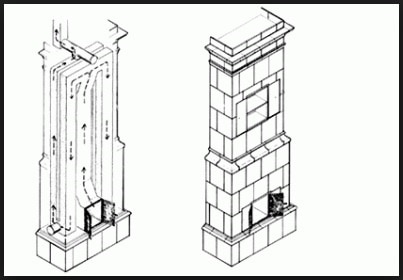
image

The smoke/warm air goes up, down on both sides, up on both sides and merges into the chimney. The outside is usually glaced ceramic tiles, on the inside brick and clay mortar. The clay mortar is necessary because when the stove gets warm, and its a lot of heat stored in the stove which can weigh up to 2000 pounds, the stove expands, an inch our so in circumference. The glaced tiles do not expand, but the space between them do. If normal mortar is used, the stove will crack. Its non-trivial to build such a stove.


However there is a modern version of this stove which is brilliant. Imagine a standing cylinder, in the bottom, there is a fireplace, then you create a chimney of normal metal pipes, going up and down in the cylinder. Then you fill the cylinder with sand! Presto, a heat absorbing stove.


Here is a description from a newspaper:

http://www.dn.se/bostad/varmande-hemmabygge-med-hog-mysfaktor/

and here is the translation in English:

https://translate.google.com/translate?sl=auto&tl=en&js=y&prev=_t&hl=en&ie=UTF-8&u=http%3A%2F%2Fwww.dn.se%2Fbostad%2Fvar…

  • Sign in to reply
  • Cancel

Top Replies

  • Former Member
    Former Member over 11 years ago in reply to phoenixcomm +1
    Thanks! Here is the company selling the sand oven: SKAB - Sandugnen And here is the patent describing how it is constructed, if you want to build your own. The patent only seems to be valid in Sweden.…
  • Former Member
    Former Member over 11 years ago +1
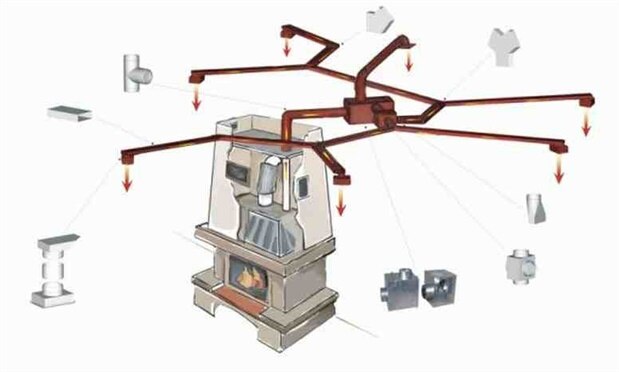
    HI there, ALso you could make C form tubes from clay tiles above and from the sides of fire place, in that case Heat would move air in the room.
  • phoenixcomm
    phoenixcomm over 11 years ago

    your link is brilliant!! I have done a few energy collection builds.. I have done power shedding, solar hot water, and a stream driven generator... thanks Cris H.

    • Cancel
    • Vote Up 0 Vote Down
    • Sign in to reply
    • Cancel
  • Former Member
    Former Member over 11 years ago in reply to phoenixcomm

    Thanks! Here is the company selling the sand oven:

    SKAB - Sandugnen


    And here is the patent describing how it is constructed, if you want to build your own. The patent only seems to be valid in Sweden.

    Espacenet - Original document


    Google translate is your friend! :-)


    --------


    Also note that the small circular openings at the botton are used for two things.

    1) Clean out accumulated ashes, and 2) to kickstart the draft. This is necessary if the

    stove is really cold in a cold house. Cold air inside the stove can block the up/down draft,

    preventing the draft to even get started. The trick is to open the small circular opening at

    the bottom side, insert a burning paper to get the draft going. Then you can fire up the main fire.

    • Cancel
    • Vote Up +1 Vote Down
    • Sign in to reply
    • Cancel
  • Former Member
    Former Member over 11 years ago

    HI there,

    ALso you could make C form tubes from clay tiles above and from the sides of fire place, in that case  Heat would move air in the room. image

    image

    • Cancel
    • Vote Up +1 Vote Down
    • Sign in to reply
    • Cancel
element14 Community

element14 is the first online community specifically for engineers. Connect with your peers and get expert answers to your questions.

  • Members
  • Learn
  • Technologies
  • Challenges & Projects
  • Products
  • Store
  • About Us
  • Feedback & Support
  • FAQs
  • Terms of Use
  • Privacy Policy
  • Legal and Copyright Notices
  • Sitemap
  • Cookies

An Avnet Company © 2026 Premier Farnell Limited. All Rights Reserved.

Premier Farnell Ltd, registered in England and Wales (no 00876412), registered office: Farnell House, Forge Lane, Leeds LS12 2NE.

ICP 备案号 10220084.

Follow element14

  • X
  • Facebook
  • linkedin
  • YouTube