element14 Community
element14 Community
    Register Log In
  • Site
  • Search
  • Log In Register
  • Community Hub
    Community Hub
    • What's New on element14
    • Feedback and Support
    • Benefits of Membership
    • Personal Blogs
    • Members Area
    • Achievement Levels
  • Learn
    Learn
    • Ask an Expert
    • eBooks
    • element14 presents
    • Learning Center
    • Tech Spotlight
    • STEM Academy
    • Webinars, Training and Events
    • Learning Groups
  • Technologies
    Technologies
    • 3D Printing
    • FPGA
    • Industrial Automation
    • Internet of Things
    • Power & Energy
    • Sensors
    • Technology Groups
  • Challenges & Projects
    Challenges & Projects
    • Design Challenges
    • element14 presents Projects
    • Project14
    • Arduino Projects
    • Raspberry Pi Projects
    • Project Groups
  • Products
    Products
    • Arduino
    • Avnet & Tria Boards Community
    • Dev Tools
    • Manufacturers
    • Multicomp Pro
    • Product Groups
    • Raspberry Pi
    • RoadTests & Reviews
  • About Us
    About the element14 Community
  • Store
    Store
    • Visit Your Store
    • Choose another store...
      • Europe
      •  Austria (German)
      •  Belgium (Dutch, French)
      •  Bulgaria (Bulgarian)
      •  Czech Republic (Czech)
      •  Denmark (Danish)
      •  Estonia (Estonian)
      •  Finland (Finnish)
      •  France (French)
      •  Germany (German)
      •  Hungary (Hungarian)
      •  Ireland
      •  Israel
      •  Italy (Italian)
      •  Latvia (Latvian)
      •  
      •  Lithuania (Lithuanian)
      •  Netherlands (Dutch)
      •  Norway (Norwegian)
      •  Poland (Polish)
      •  Portugal (Portuguese)
      •  Romania (Romanian)
      •  Russia (Russian)
      •  Slovakia (Slovak)
      •  Slovenia (Slovenian)
      •  Spain (Spanish)
      •  Sweden (Swedish)
      •  Switzerland(German, French)
      •  Turkey (Turkish)
      •  United Kingdom
      • Asia Pacific
      •  Australia
      •  China
      •  Hong Kong
      •  India
      •  Japan
      •  Korea (Korean)
      •  Malaysia
      •  New Zealand
      •  Philippines
      •  Singapore
      •  Taiwan
      •  Thailand (Thai)
      •  Vietnam
      • Americas
      •  Brazil (Portuguese)
      •  Canada
      •  Mexico (Spanish)
      •  United States
      Can't find the country/region you're looking for? Visit our export site or find a local distributor.
  • Translate
  • Profile
  • Settings
element14's The Ben Heck Show
  • Challenges & Projects
  • element14 presents
  • element14's The Ben Heck Show
  • More
  • Cancel
element14's The Ben Heck Show
Forum Idea for a new Show
  • Blog
  • Forum
  • Documents
  • Polls
  • Files
  • Members
  • Mentions
  • Sub-Groups
  • Tags
  • More
  • Cancel
  • New
Join element14's The Ben Heck Show to participate - click to join for free!
Actions
  • Share
  • More
  • Cancel
Forum Thread Details
  • State Not Answered
  • Replies 8 replies
  • Subscribers 34 subscribers
  • Views 892 views
  • Users 0 members are here
  • raspberrypi
  • idea
  • mouse
  • sensor
Related

Idea for a new Show

e14 Contributor
e14 Contributor over 12 years ago

I've been busy on this same problem for some time now, and I can't get it to finish.


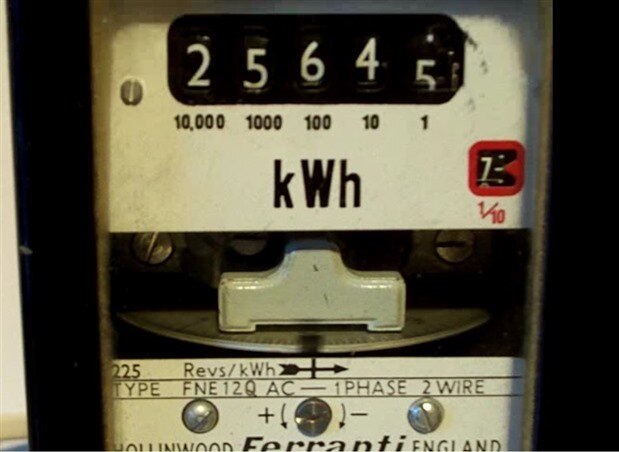
My idea in short is; use a sensor from a optical mouse and a raspberry pi, to count the rotation frequency of your kwh meter to determine how much power you are using in your house.


I've been busy on idea like this for a while, and found out that a common mouse sensor (adns 2610) can be used as a 'tiny' scanner. (Sprites mods - Optical mouse-cam - Optical mouse cam)


So it should be possible to use the mouse sensor to find out if the little black dot of your Kwh meter is flying pass.


I'm stuck on two problems;

-I'm not very handy on programming in Linux

-because the wheel is behind glass, you need a different lens for a clear image.  But maybe thats not so much of a problem because, you have to only detect the black spot.


I allready have a Pi near to my Kwh meter for my home automation.

image


image

  • Sign in to reply
  • Cancel

Top Replies

  • colecago
    colecago over 12 years ago in reply to PaulMakesThings +1
    I would look into using the Pi camera and looking at the digits if you already have a Pi. There might already be things out there for reading digits from video or pics.
  • ckraft
    ckraft over 12 years ago in reply to colecago +1
    I was going to say the same thing. A webcam or pi camera module with a machine vision library might be the easiest way to get consistent output while dealing with the access limitations.
Parents
  • PaulMakesThings
    0 PaulMakesThings over 12 years ago

    It might be easier to stick it on the digit read out. I see some little white tick lines on the 1/10 dial, they are distinct and evenly spaced. You might have better luck placing your sensor on that. But here's an alternative idea; I wouldn't be surprised if you can get a measurable variance if you stick a photo diode right up against the glass where the white tick lines are for the 1/10 dial and hit them with a cheap laser pointer.


    Here's an example circuit for a photodiode from LetsMakeRobots:

    http://letsmakerobots.com/files/userpics/u1533/Photodetector.jpg

    if you search for photo detector circuit you will find many that either use op amps or transistors.


    That would give you a signal that would go higher and lower as a line passed under it, but it likely wouldn't be logic level high and low, unless you're just lucky. It may be for example 3.1-3.7V in one state and 1.6-2.2V in the other. From there you could either use an analog input and logically separate out these states, or use a comparator IC against a voltage divider potentiometer to chop your analog singal into a digital readable high low.


    Like this (copy pasted, not mine)

    http://4.bp.blogspot.com/-cvKWtb9BmUc/Tvk2p1s813I/AAAAAAAAAXA/OSBWjQrjcc4/s1600/voltage+divider+with+comparator+circuit.…

    but of course the two resistors are the pins of the potentiometer.


    Hope this idea helps

    • Cancel
    • Vote Up 0 Vote Down
    • Sign in to reply
    • Verify Answer
    • Cancel
  • colecago
    0 colecago over 12 years ago in reply to PaulMakesThings

    I would look into using the Pi camera and looking at the digits if you already have a Pi.  There might already be things out there for reading digits from video or pics.

    • Cancel
    • Vote Up +1 Vote Down
    • Sign in to reply
    • Verify Answer
    • Cancel
  • ckraft
    0 ckraft over 12 years ago in reply to colecago

    I was going to say the same thing. A webcam or pi camera module with a machine vision library might be the easiest way to get consistent output while dealing with the access limitations.

    • Cancel
    • Vote Up +1 Vote Down
    • Sign in to reply
    • Verify Answer
    • Cancel
  • e14 Contributor
    0 e14 Contributor over 12 years ago in reply to ckraft

    I've seen projects with camera's before...


    But the 'fun'/'challange' of this project would be; hardware needed; a 'old mouse'


    Also just counting the frequency of the spinning disc is much easyer to implement than OCR-ing the digits on the meter.


    Your Pi would also be working quite hard to process all the images.

    • Cancel
    • Vote Up 0 Vote Down
    • Sign in to reply
    • Verify Answer
    • Cancel
Reply
  • e14 Contributor
    0 e14 Contributor over 12 years ago in reply to ckraft

    I've seen projects with camera's before...


    But the 'fun'/'challange' of this project would be; hardware needed; a 'old mouse'


    Also just counting the frequency of the spinning disc is much easyer to implement than OCR-ing the digits on the meter.


    Your Pi would also be working quite hard to process all the images.

    • Cancel
    • Vote Up 0 Vote Down
    • Sign in to reply
    • Verify Answer
    • Cancel
Children
No Data
element14 Community

element14 is the first online community specifically for engineers. Connect with your peers and get expert answers to your questions.

  • Members
  • Learn
  • Technologies
  • Challenges & Projects
  • Products
  • Store
  • About Us
  • Feedback & Support
  • FAQs
  • Terms of Use
  • Privacy Policy
  • Legal and Copyright Notices
  • Sitemap
  • Cookies

An Avnet Company © 2026 Premier Farnell Limited. All Rights Reserved.

Premier Farnell Ltd, registered in England and Wales (no 00876412), registered office: Farnell House, Forge Lane, Leeds LS12 2NE.

Follow element14

  • X
  • Facebook
  • linkedin
  • YouTube