

Table of contents

Abstract
A Halloween edit of an existing DORO ultrasonic piano. Archival footage shows a reflector card selecting buzzer notes by distance. Ghost graphics and narration are new; no new physical build or firmware test is claimed.
Project
PROJECT SUMMARY
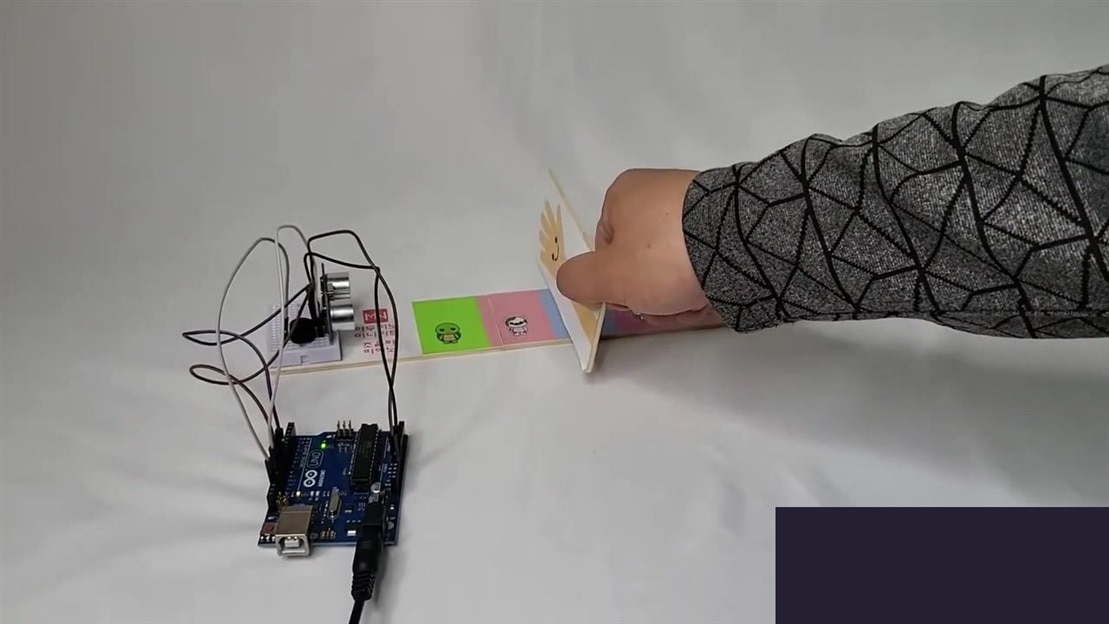
Ghost Notes is a Halloween presentation of an existing DORO ultrasonic-piano project. It brings together archival prototype footage, a kit assembly animation, documented electronics, and a new ghost-themed video edit. A moving card acts as a reflector: changing its distance from an ultrasonic sensor provides an input for selecting notes on a buzzer.
PROJECT STATUS AND SCOPE
The electronics and the prototype shown in the demonstration already existed before this entry. The Halloween graphics, English narration, and background score belong to the new presentation. No new physical ghost enclosure, firmware upload, or hardware test was performed for this entry. The prototype in the archive footage and the later DOZZART kit shown in the assembly illustration have different physical layouts.
- THE IDEA: AN INSTRUMENT WITH AN INVISIBLE KEYBOARD
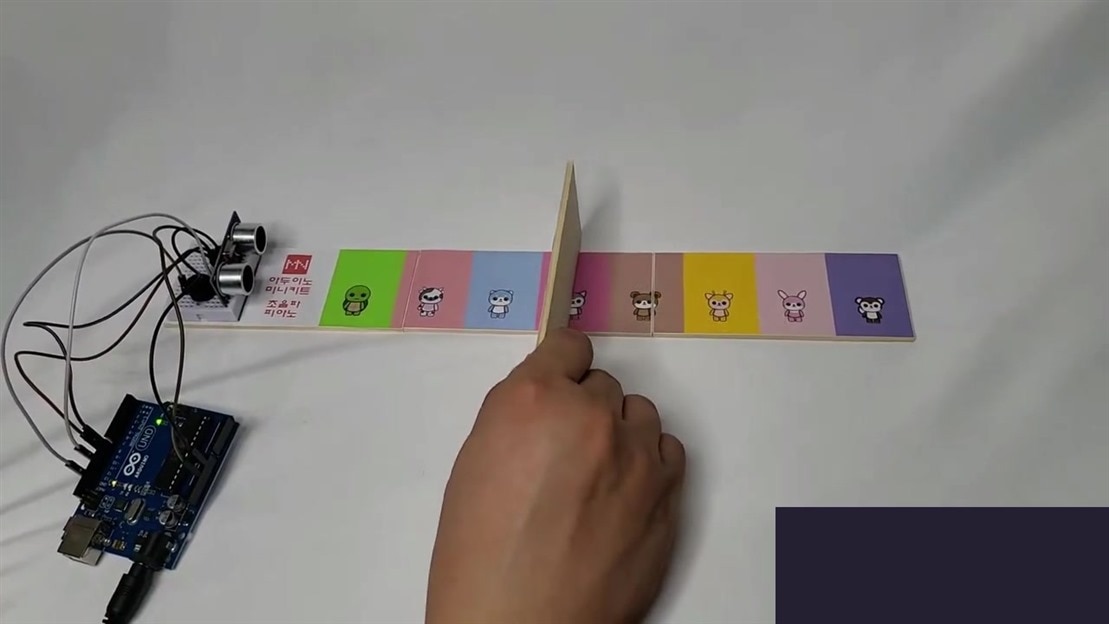
An ultrasonic piano is an appealing starting point for a ghost story: a note can change without pressing an electrical key. In this project, a card moves along a printed scale in front of the sensor. The electronics translate distance into a choice of notes.
The Halloween connection is a presentation theme built around that invisible interaction. Ghost imagery frames the existing hardware footage; it is not a physical modification to the instrument. This distinction is part of the project description and the video itself.
- ELECTRONICS AND MATERIALS
The documented DORO kit uses:
- An Arduino Uno-compatible board and USB power/programming connection.
- A four-pin ultrasonic distance sensor, with VCC, GND, TRIG, and ECHO connections.
- A buzzer, mini breadboard, and jumper wires.
- MDF base, board supports, printed piano-key strip, and sensor-related structure for the later kit.
- A movable card or similar reflector for the interaction demonstrated in the archive footage.
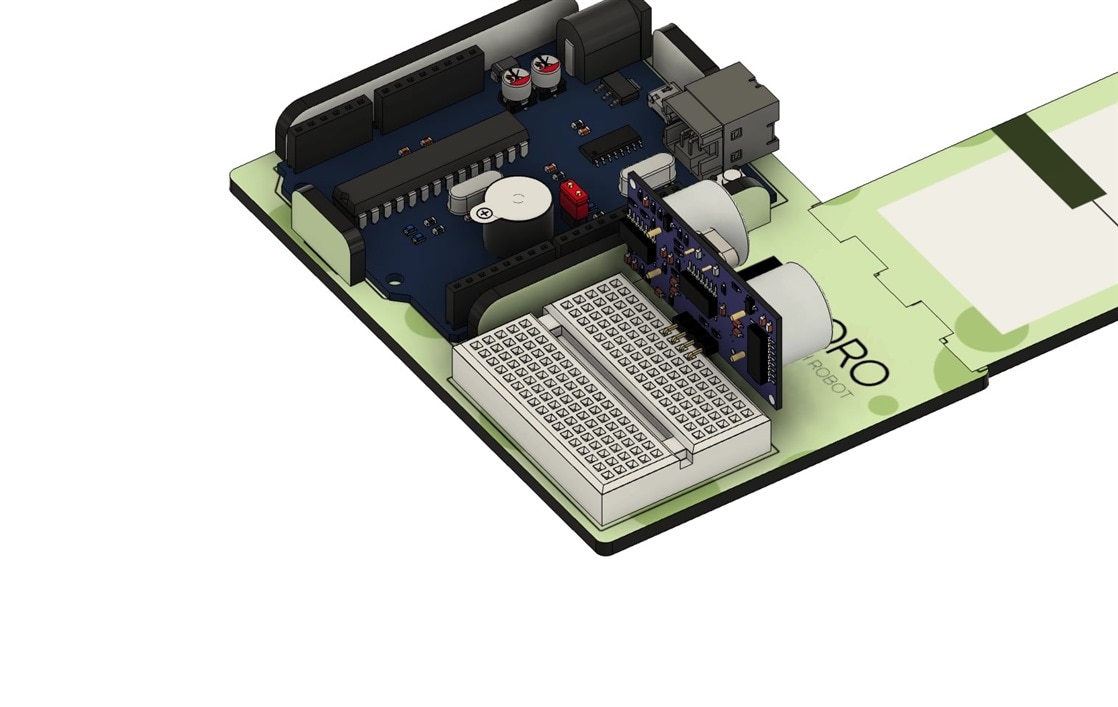
The original prototype uses a printed colour scale and a different physical arrangement. The kit illustration should therefore be read as a later construction reference, not as a frame-by-frame record of the prototype assembly.
- DOCUMENTED ASSEMBLY AND WIRING
The DORO instructions describe the following sequence:
- Fit the key strip and board supports to the base.
- Position the Arduino board, breadboard, and ultrasonic sensor.
- Connect the grounds and check the buzzer polarity.
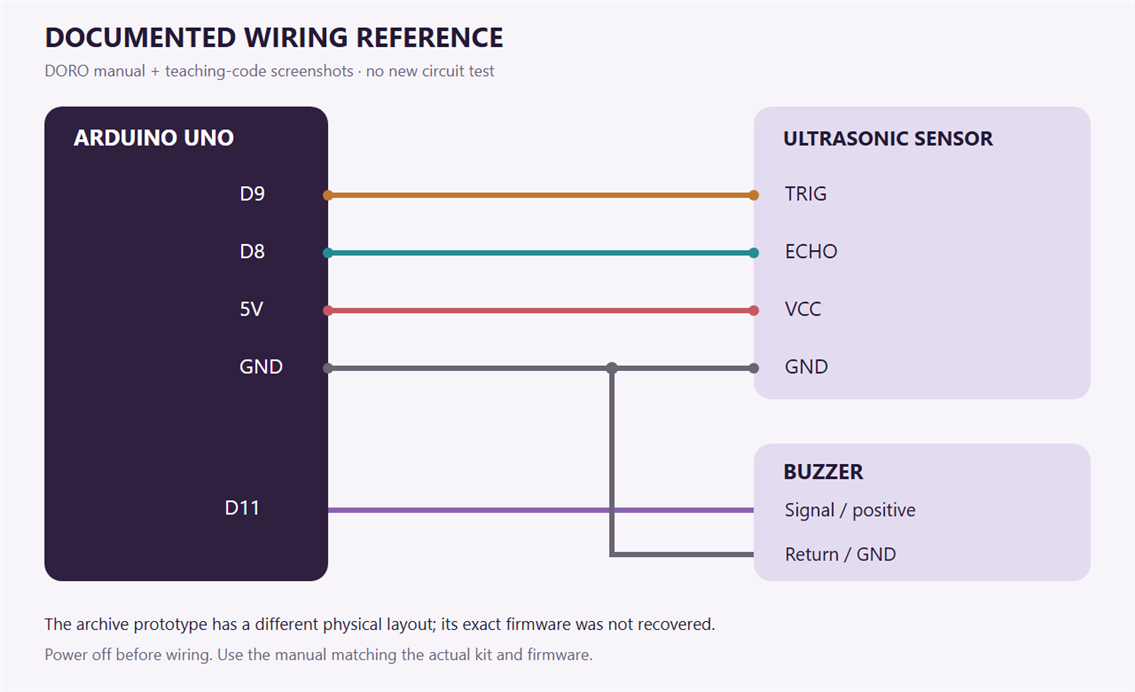
- Wire the documented kit: sensor VCC to 5V, GND to GND, TRIG to D9, ECHO to D8, and buzzer signal to D11; the buzzer return connects to GND.
- Check connections before applying USB power.
These pin assignments come from the DORO manual and teaching-code screenshots. The archived prototype's uploaded firmware has not been independently recovered or checked against these assignments for this entry. The supplied wiring diagram is a documentation reference, rather than a new hardware test result.
- HOW DISTANCE BECOMES A NOTE
The controller triggers the ultrasonic sensor and measures the return-pulse duration. Dividing the round-trip travel time by two gives the one-way distance after converting time into distance.
The teaching example uses discrete distance bands rather than a continuously sliding pitch: 1–6 cm: C; 7–9 cm: D; 10–13 cm: E; 14–16 cm: F; 17–20 cm: G; 21–23 cm: A; 24–27 cm: B; 28–31 cm: upper C. Outside the listed bands, the example stops the buzzer.
These are documented example settings, not newly measured accuracy results. The intended mapping is described here without claiming that the exact archived firmware has been recovered.
- DEMONSTRATION AND EVIDENCE
The archive clip shows a real Arduino-based setup, a sensor, and a reflector card moved along the colour scale. Its original audio is retained in the separate evidence clip. The edited showcase labels this as archival prototype footage. The assembly sequence is separately labelled as a 3D animation.
The supplied images distinguish the prototype overview, reflector interaction, assembly illustration, and documented wiring reference. A product-reference photograph shows the later DOZZART kit; it is not presented as a newly built Halloween version.
- LIMITATIONS AND WHAT THE PROJECT TAUGHT US
This entry does not include a new distance-accuracy test, latency measurement, success-rate count, or live hardware verification. The precise firmware running in the archival recording has not been independently checked. Sensor alignment, reflector angle, and boundaries between distance bands would need direct testing before making performance claims.
The main lesson from preparing this presentation was to separate three different types of material: real prototype footage, construction illustrations, and newly added storytelling. The Halloween edit changes how the project is presented, while the physical evidence remains archival.
- CREDITS AND DISCLOSURE
Hardware project, teaching materials, and archival demonstration: DORO Co., Ltd. DORO confirmed that the demonstration was filmed by DORO and may be publicly used and edited. Personal name labels in the demonstration have been obscured.
AI assistance was used to prepare English text and synthesized narration. Ghost graphics and captions are post-production elements. The background music is an original synthesized score made for this video, with no third-party recorded samples. Narration and music are presentation audio, not sounds produced by the hardware. Generative video was not used to recreate the electronics or the demonstration.
Attachments
References
REFERENCES
- DORO DOZZART learning guide: https://kit.doroedu.co.kr/programs/6-ultrasonic-piano/index.html
- DORO English assembly manual: https://drive.google.com/file/d/1yeVoWnxn0F4E9a0yJHGJCXq4vpEYoQH_/view
- DORO teaching slides, Ultrasonic Piano Assembly Instructions: documented wiring and code examples, pages 17–23 of the 24-page Korean version; archive demonstration embedded in slide 2.
- DORO assembly animation and archived prototype demonstration supplied with this entry.