element14 Community
element14 Community
    Register Log In
  • Site
  • Search
  • Log In Register
  • Community Hub
    Community Hub
    • What's New on element14
    • Feedback and Support
    • Benefits of Membership
    • Personal Blogs
    • Members Area
    • Achievement Levels
  • Learn
    Learn
    • Ask an Expert
    • eBooks
    • element14 presents
    • Learning Center
    • Tech Spotlight
    • STEM Academy
    • Webinars, Training and Events
    • Learning Groups
  • Technologies
    Technologies
    • 3D Printing
    • FPGA
    • Industrial Automation
    • Internet of Things
    • Power & Energy
    • Sensors
    • Technology Groups
  • Challenges & Projects
    Challenges & Projects
    • Design Challenges
    • element14 presents Projects
    • Project14
    • Arduino Projects
    • Raspberry Pi Projects
    • Project Groups
  • Products
    Products
    • Arduino
    • Avnet & Tria Boards Community
    • Dev Tools
    • Manufacturers
    • Multicomp Pro
    • Product Groups
    • Raspberry Pi
    • RoadTests & Reviews
  • About Us
  • Store
    Store
    • Visit Your Store
    • Choose another store...
      • Europe
      •  Austria (German)
      •  Belgium (Dutch, French)
      •  Bulgaria (Bulgarian)
      •  Czech Republic (Czech)
      •  Denmark (Danish)
      •  Estonia (Estonian)
      •  Finland (Finnish)
      •  France (French)
      •  Germany (German)
      •  Hungary (Hungarian)
      •  Ireland
      •  Israel
      •  Italy (Italian)
      •  Latvia (Latvian)
      •  
      •  Lithuania (Lithuanian)
      •  Netherlands (Dutch)
      •  Norway (Norwegian)
      •  Poland (Polish)
      •  Portugal (Portuguese)
      •  Romania (Romanian)
      •  Russia (Russian)
      •  Slovakia (Slovak)
      •  Slovenia (Slovenian)
      •  Spain (Spanish)
      •  Sweden (Swedish)
      •  Switzerland(German, French)
      •  Turkey (Turkish)
      •  United Kingdom
      • Asia Pacific
      •  Australia
      •  China
      •  Hong Kong
      •  India
      • Japan
      •  Korea (Korean)
      •  Malaysia
      •  New Zealand
      •  Philippines
      •  Singapore
      •  Taiwan
      •  Thailand (Thai)
      • Vietnam
      • Americas
      •  Brazil (Portuguese)
      •  Canada
      •  Mexico (Spanish)
      •  United States
      Can't find the country/region you're looking for? Visit our export site or find a local distributor.
  • Translate
  • Profile
  • Settings
Project14
  • Challenges & Projects
  • More
Project14
Blog Inrush Current Limiter (Soft Starter) for AC/DC Loads
  • Blog
  • Forum
  • Documents
  • Theme Suggestions
  • Polls
  • Members
  • More
  • Cancel
  • New
Join Project14 to participate - click to join for free!
  • Share
  • More
  • Cancel
Group Actions
  • Group RSS
  • More
  • Cancel
Engagement
  • Author Author: Hesam.M
  • Date Created: 9 Jun 2020 3:24 PM Date Created
  • Views 1822 views
  • Likes 4 likes
  • Comments 1 comment
  • ac soft starter
  • inrush current limiter
  • dc soft starter
  • soft starter
Related
Recommended

Inrush Current Limiter (Soft Starter) for AC/DC Loads

Hesam.M
Hesam.M
9 Jun 2020

You don't have permission to edit metadata of this video.
Edit media
x
image
Upload Preview
image


Inrush current/Switch-ON surge is the maximal instantaneous input current drawn by an electrical device when first turned on. Inrush current is much higher than the load’s steady-state current and that’s the source of many problems such as fuse blowing up, load failure, load’s lifetime reduction, sparks at the switch contacts … etc. The figure below shows the inrush current phenomenon captured on the Siglent SDS1104X-E oscilloscope. The long spike is clear. In this article, I tried to address this problem with an easy, however an effective solution. I have introduced two circuits for both AC and DC loads.

image

Inrush current spike captured on the SDS1104X-E DSO (Single-Shot mode)


AC Soft Starter

Figure-1 shows the schematic diagram of the device. P1 is used to connect the 220V-AC input and the ON/OFF switch to the circuit. C1 is used to reduce the AC voltage. The value of the C1 also determines the current handling rate for the transformer-less supply to be used by the rest of the circuit. In this application, 470nF was adequate. R1 discharges the C1 to avoid any unwanted high voltage shock when the user disconnects the device from the mains. R2 is a 1W resistor that has been used to limit the current.

image

Figure 1, Schematic diagram of the AC soft starter


BR1 is a DB107-G bridge rectifier [1] that has been used to convert the AC voltage to DC. C2 reduces the ripple and R3 discharges the C2 at Switch-OFF. Also, it provides a minimum load to keep the rectified voltage at a reasonable level. R4 reduces the voltage and limits the current for the rest of the circuit. D1 is a 15V Zener diode and has been used to limit the voltage below 15V. C3, R5, and R6 build a timer network for the relay. It means it makes a delay for the relay activation. The R6 value is essential, it should not be too low to drop the voltage too much and it should not be too high to reduce the network response time. 1K provided a satisfactory discharge rate for relatively high ON/OFF switching speed. With my experiments, this network provides enough delay and response time, of course, you are free to modify them based on your applications.

Q1 is the NPN BD139 [2] transistor to activate/deactivate the relay. D2 protects the Q1 from the relay’s inductor reverse currents. R7 is a 5W series resistor that limits the turn ON inrush current. After a short delay, the relay does short circuit the resistor, and the full power applies to the load. The value of the R7 has been set to 27R. You can modify it depending on your load or application.


DC Soft Starter

Figure 2 shows the schematic diagram of the DC soft starter. It is a simpler version of the AC soft starter with some minor modifications.


image

Figure 2, Schematic diagram of the DC soft starter


P1 is used to connect the 12V supply and the ON/OFF switch to the board. R2, R3, and C2 make the delay network for the relay. R4 is the current limiting resistor. The same as the AC soft starter, you are free to modify the delay network and R4 values for your specific load or application.


PCB Layout

Figure 3 shows the PCB layout of the AC soft starter. All component packages are DIP. The board is a single layer and pretty easy to build.

image

Figure 3

PCB Layout of the AC Soft Starter


Figure 4 shows the PCB layout of the DC soft starter. The same as above, all component packages are DIP, and the board is a single layer.

image

Figure 4

PCB Layout of the DC Soft Starter


For both designs, I used the SamacSys schematic symbols and PCB footprints. Specifically, for the DB107 [3] and BD139 [4]. These libraries are free and follow industrial IPC standards. I used Altium Designer CAD software, so I used the SamacSys Altium Plugin [5] (Figure 5).

image

Figure 5

SamacSys Altium plugin and used component libraries


Figure 6 shows a 3D view of the AC soft starter and figure 7 shows a 3D view of the DC soft starter.

image

Figure 6

A 3D view of the AC soft starter

image

Figure 7

A 3D view of the DC soft starter


Assembly

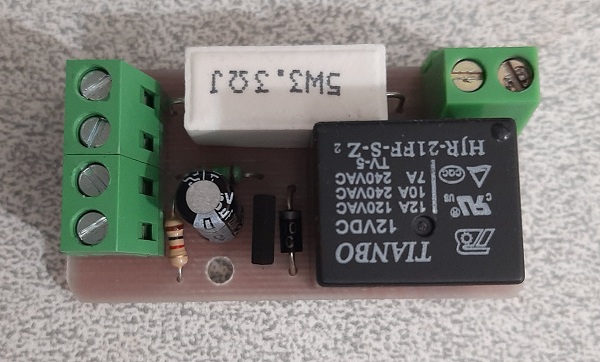
Figure 8 shows the assembled AC soft starter board and figure 9 shows the assembled DC soft starter.

image

Figure 8

Assembled AC soft starter board (First Prototype – R1 is on the backside)
image

Figure 9

Assembled DC soft starter board


Wiring Diagram

Figure 10 shows the wiring diagram of the AC soft starter and figure 11 shows the wiring diagram of the DC soft starter.

image

Figure 10

Wiring diagram of the AC soft starter

image

Figure 11

Wiring diagram of the DC soft starter


Bill of Materials

image

image


References

Article:https://www.pcbway.com/blog/technology/Inrush_Current_Limiter__Soft_Starter__for_AC_DC_Loads.html

[1] DB107 Datasheet: https://www.diodes.com/assets/Datasheets/products_inactive_data/ds21211_R5.pdf

[2] BD139 Datasheet: https://www.onsemi.com/pub/Collateral/BD139-D.PDF

[3] DB107 Schematic Symbol and PCB Footprint: https://componentsearchengine.com/part.php?partID=771938

[4] BD139 Schematic Symbol and PCB Footprint: https://componentsearchengine.com/part.php?partID=971726

[5] CAD Plugins: https://www.samacsys.com/library-loader-help

  • Sign in to reply

Top Comments

  • three-phase
    three-phase over 5 years ago +2
    It is an interesting solution for reducing inrush current, the one comment I would pass, is that your design would keep the load at its reduced running voltage in event of a failure in the circuit that…
  • three-phase
    three-phase over 5 years ago

    It is an interesting solution for reducing inrush current, the one comment I would pass, is that your design would keep the load at its reduced running voltage in event of a failure in the circuit that prevented your relay from operating.


    For that 220V circuit, you have used a 22 Ohm, 5 Watt resistor, anything above a 0.5A load, which isn't much for mains power, is going to overheat that resistor should your relay circuit fail.


    You may want to look at your circuit so that under a failure, it just puts the supply straight onto the load without going through the resistor.


    Kind regards.

    • Cancel
    • Vote Up +2 Vote Down
    • Sign in to reply
    • More
    • Cancel
element14 Community

element14 is the first online community specifically for engineers. Connect with your peers and get expert answers to your questions.

  • Members
  • Learn
  • Technologies
  • Challenges & Projects
  • Products
  • Store
  • About Us
  • Feedback & Support
  • FAQs
  • Terms of Use
  • Privacy Policy
  • Legal and Copyright Notices
  • Sitemap
  • Cookies

An Avnet Company © 2025 Premier Farnell Limited. All Rights Reserved.

Premier Farnell Ltd, registered in England and Wales (no 00876412), registered office: Farnell House, Forge Lane, Leeds LS12 2NE.

ICP 备案号 10220084.

Follow element14

  • X
  • Facebook
  • linkedin
  • YouTube