


Hi - This post is a brief overview of my R/C Aircraft Project.
For some context, I'm currently 18 years old, and OBSESSED with planes - I'm about to start Aerospace Engineering as a first year student in 2027. This project was one of my ways of living that dream.
Of course, this post is only a brief overview, and doesn't do justice to development process as I would, so please do read the full project documentation, it has LOTS of extra photos and videos of the plane itself, and the development process especially.
Full Documentation (PLEASE VIEW): https://docs.google.com/document/d/1p95Gw9RSehM7hzlSXKpY6OVUv5XQJgGPxgiL5c8U9YU/edit?usp=sharing
The main project, and documentation is broken down as such:
- Section A: Analysis: Why am I doing this? What am I building? What am I trying to solve? What inspired me?
- Section B: Design: CAD, wiring, circuit diagrams, material choices and why I've done what I've done.
- Section C: Implementation: The process of actually building the aircraft and transmitter and documenting problems I faced and how I overcame them.
- Section D: Post-Development Testing: Testing the project, has it achieved what it should?
- Section E: Project Evaluation: Did I meet my goals? What mistakes did I make and how can I improve? What are the limitations?
Here is a brief overview of each stage:
Analysis: Despite the many limitations of electric aircraft, Heart Aerospace, on 12th August 2026 completed a successful test flight of their experimental aircraft, the Heart X1, acting as a testbed for their upcoming production aircraft, the ES-30, and being the current largest battery powered aircraft built to date. The development of the Heart X1 was particularly influential in the conception of this project. While an experimental radio-controlled aircraft is clearly vastly different in scale and complexity from a commercial electric aircraft demonstrator, many of the underlying engineering principles remain the same.
These are some of the reasons I decided to build an electric aircraft from scratch - to replicate a small portion of the challenges that come with building a functioning aircraft.
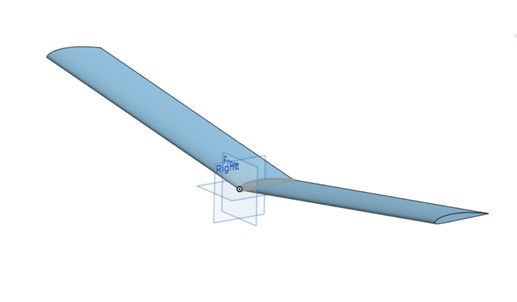
Design: This phase was where a lot of different choices needed to be made. One of the biggest choices was the wing. After running some CFD and drawing rough dimensions for the plane, I came up with the best aerofoil choice and wing dimensions, and also designed the electronics systems and fuselage. A small part of the process is shown below. See the full documentation for all the details:


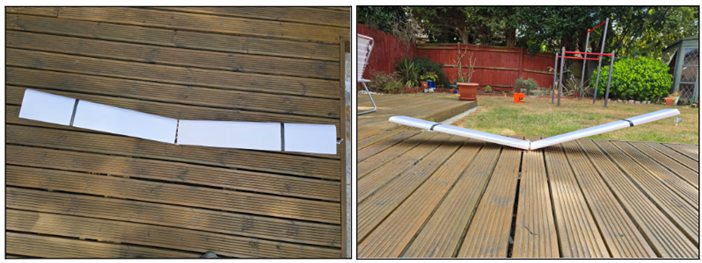
Implementation: This was one of the longest stages, as I ran into many different issues. Please see the end of Section C in my documentation for a full breakdown. This was the stage where the aircraft went from being a design to being tangible and complete. A few photos from the implementation stage:



Post-Development Testing: This was the final testing phase, where I thoroughly tested all the systems. Here is a short video to summarise what I did:
Evaluation: The project successfully produced a functional RC aircraft and integrated electronics system, but several limitations remain. The foam-board airframe limits structural strength and durability, while the relatively high weight and large dihedral may affect flight performance. The current control and telemetry systems also require further flight testing and tuning, particularly for sensor filtering and stability. Despite these limitations, the project provides a strong working foundation for future improvements.
Please see documentation for a more thorough evaluation of the project.
Completed Plane Showcase (It was quite windy, apologies for the bad video) :
That's all for this post. Of course, please do look at the documentation attached, as this small post doesn't do justice to the project and the entire development process.
Thanks for reading! Have a great day :)