


For interesting STEM demonstrations at schools, I had built a small hobby robot called the Orange Giraffe Hunter.
Its job was to look around , lock in, and chase down a plastic Orange Giraffe
The prototype build used an Arduino Uno, H bridge ,ping sensors, and a PixyCam object detection system on a hobby tank chassis.
https://www.youtube.com/watch?v=LphKr1IjpIM&t=2s
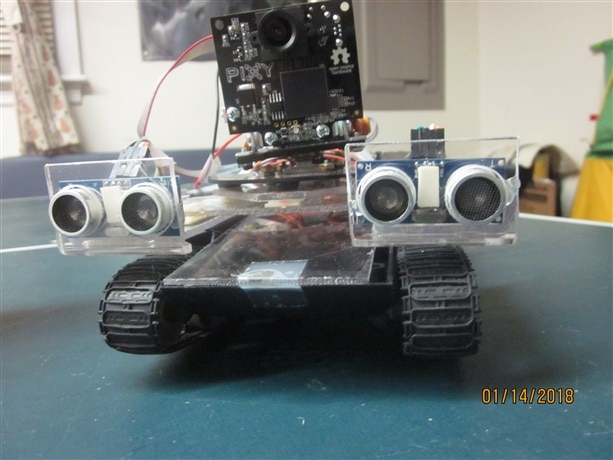
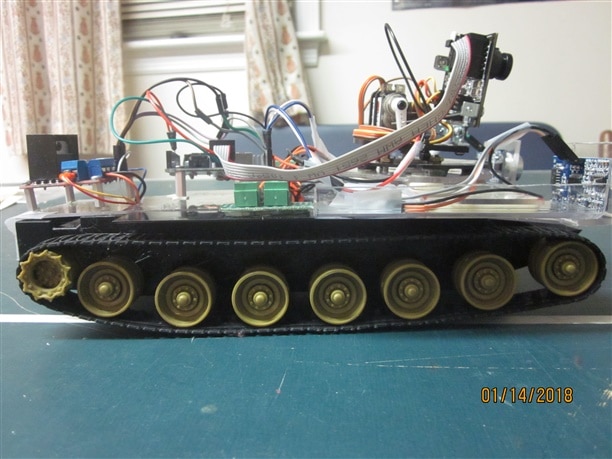
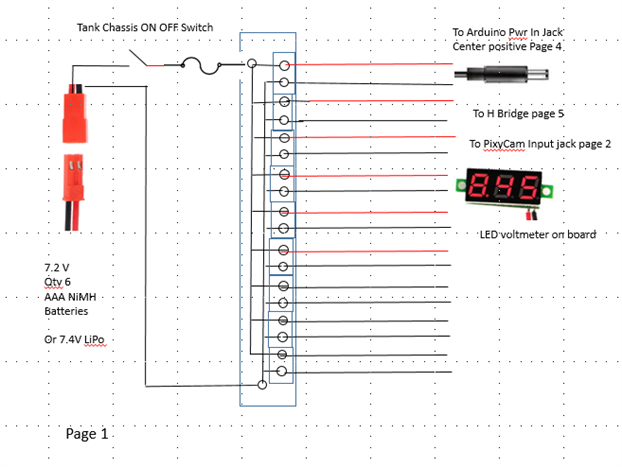
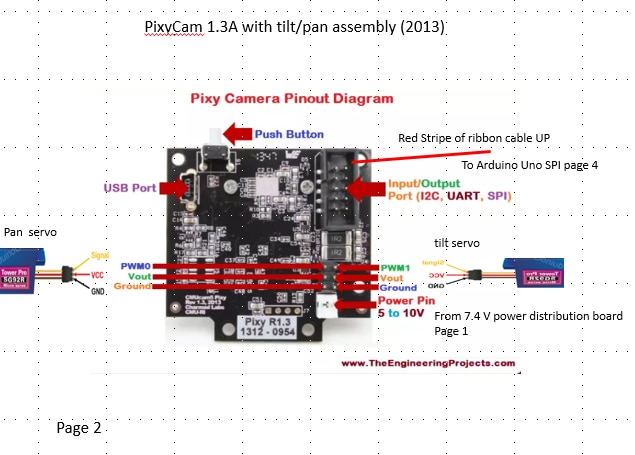
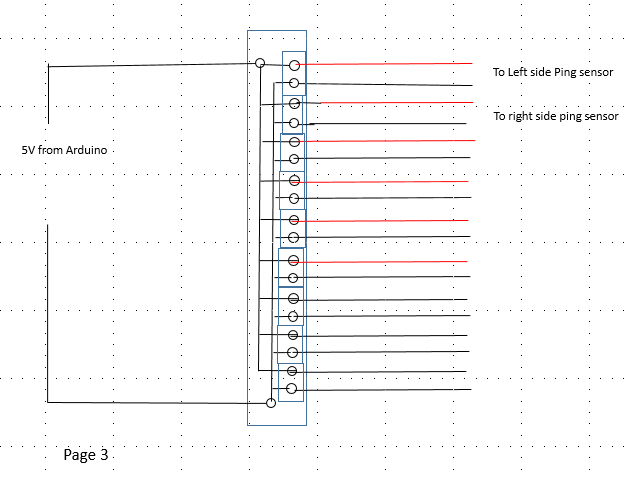
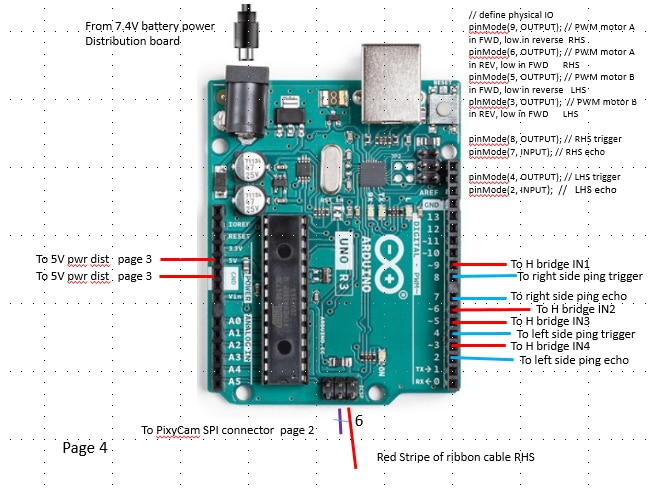
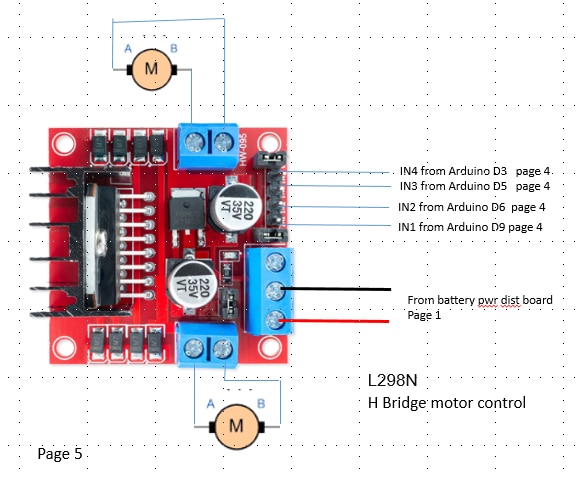
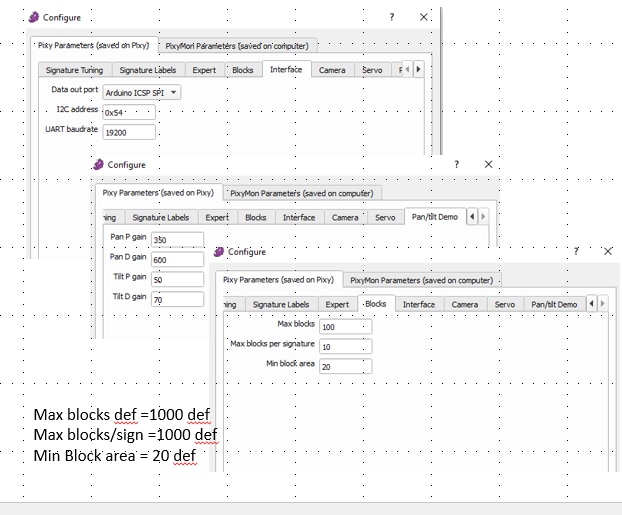
Operation : couple things: this robot is supposed to find a specific object , whose size and color is constant and supposedly unique.
The tilt and pan servos are 180 degrees servos. The camera pan cant point backwards, and the tilt itself cant go past 90 degrees.
The code first checks for a specific target (color and mimimum pixel size)..... The "hunt" sequence.
If the object is "seen", it is tested to be left of the center field of view, or the right side for steering, i.e. speed reference to the left and right side motors. The object's pixel size identifies how close the object is. If the object is small pixelwise, the steering correction is also small. The code trims the speed reference to keep the object centered in the field of view.
The robot continues on target until the ping sensors stop it a few inches away.
if no object was detected, the tilt and pan servos go to fixed predefined angles with respect to the tanks "straight ahead" to find the object. The Pixy would take a snapshot, if no object detected, would sequence to the next tilt and pan angle reference.
If an object was detected, the tank treads would pivot to that pan heading, and restart the detection sequence.
If the "hunt" sequence doesnt find the object, the tank pivots 90 degrees clockwise, and restarts a "hunt" sequence.
In later code versions, the camera tilt servo is omitted because the field of view is pretty wide.
The PixyCam "snapshot" was unreliable. Timers were provided after a servo move before taking a snapshot, and some time allowed for the SPI to update the detection (in spite of the spec ), but still there were misses. The later code versions took 5 snapshots after each servo move before declaring "object found" . It only took 1 positive out of the 5 to declare "found" . I lacked the tools to see pixycam data frame by frame and check spi timing.
Id hoped to make the "hunt" sequence fast and smooth, but it was a bit clunky with the timers and multiple redundant camera shots.
The last hardware update moved the ping sensors to a separate Arduino Nano. That change seemed to help PixyCam reliability, possibly the ping code interfering with spi communications. I'm not 100% sure, because it was then that I fried the PixyCam by plugging it in the spi backwards.
The PixyCam detection itself was highly dependant on ambient light intensity and hue. The color detection was fairly broad , if tuned too tight, the object wouldn't been seen in a room with different lamps. If a person entered the room with a shirt colored like the target, the "hunter" would chase that larger object.
The Arduino Uno control software had semi-annual upgrades to significantly improve the collision avoidance using ping sensors and object searching strategy.
------ several years of code progression -------
An attempt was made to upgrade to the Arduino Rev 4 , but the software SPI driver for the PIXYCAM 1 was not compatible.
The target object was reprogrammed via the PixyCam PixyMon tool to chase down a yellow rubber duck.
The performance PixyCam uses blob detection to locate an object and tell the arduino its position in the field of view. There are lots
of misidentifications, detection reliability is highly dependent on the ambient light hue and intensity.
The "blob" size has to be big to avoid finding other smaller like color objects. It cant tell a yellow duck from a banana.
While making code and improvements and external diagnostic LEDs, I decided to change from Arduino Uno to Qty 2 Arduino Nanos.
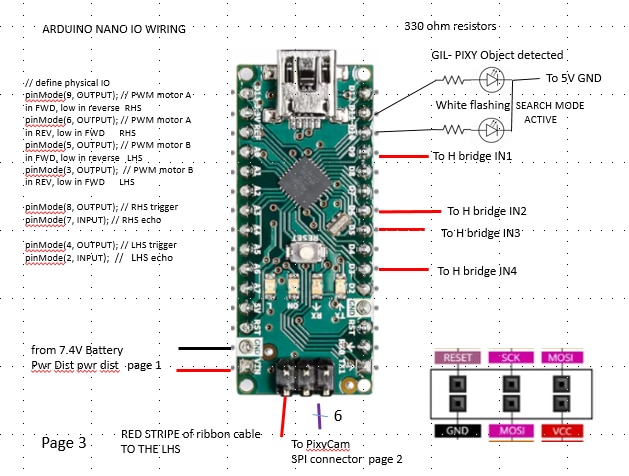
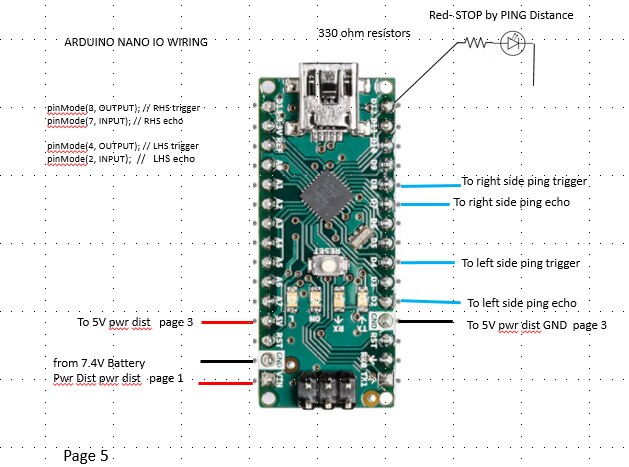
Opps, the SPI wiring on Nano is different than the Uno - The PixyCam let out some bad smoke. Oh well farewell to my Pixy friend
The Autonomous hunter robot is now off line.
https://www.youtube.com/watch?v=iIGEVzC9s5w
** Since the project original inception, technology and performance expectations have changed alot. **
My STEM fans expect reliable object detection from the hunter robots.
Heck Ring Cameras do it. Tolls booths read license plates and bill the vehicle owner. Traffic Cams issue speeding ticket fines.
Sure , object detection is everywhere.
In the movie "Clash of the Titans", 3 blind Stygian Witchs share a magical orb that gives them sight, one "eye" for all, when held to their forehead. Sinbad takes their eye to get them to help him.

Likewise, the Autonomous Hunter Robot has no sight , so it is on the shelf awaiting a new eye from its creator.
Could an Arduino Q be in its future to help bring its object detection back to life and restore its sight ?


