


Hello, My name is Brayden and I am new to element 14, please excuse my messy desk.
Context
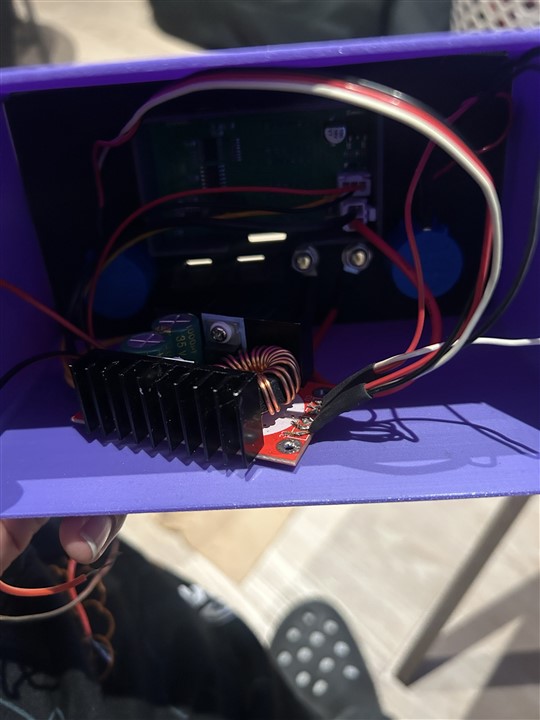
For the Spring Clean competition I am finishing a project that I started back in November. I wanted to make a Lab bench power supply to try to power an ESC for a onewheel project that I have been planning for about a year. For my first version I tried to make it so that I had a low voltage range output (1-35v) and a higher voltage range output (15-80v). I ended up setting the higher voltage output to the side because implementation would mean a power source change and I really liked the convenience of using a laptop charger to supply DC power so I decided to leave it as a lower voltage compact power supply. The project itself was based on this video https://www.youtube.com/watch?v=qPQiKtDgDCg in which Sorin designed his power supply with a buck/ boost converter and had a usb-c port to power whatever he wanted to plug into it. My main difference being the difficulty with wiring the variable ammeter and wiring the usb-c off of the buck/ boost converter instead of straight from power which is probably why the usb-c has some problems. I had stopped working on it after I made my second version and confirmed that I was able to change the voltage.
Fast forward a few months and I found out about this competition on the 26th so I decided to rush and try to finish and upload this project.
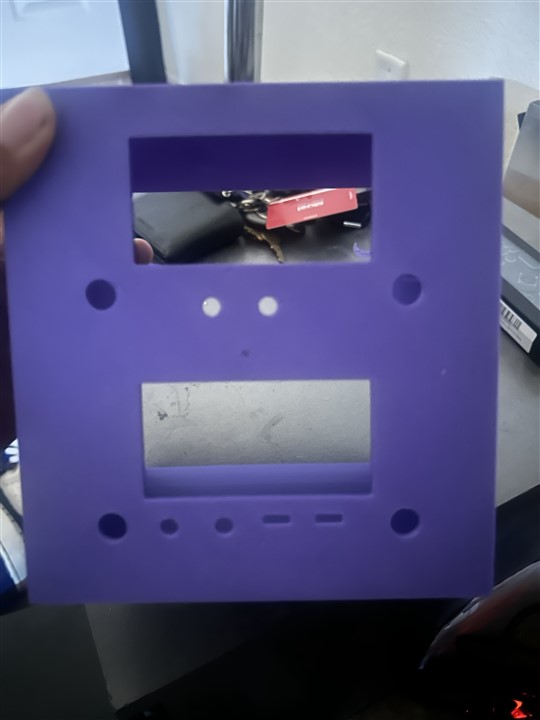
Parts list:
QS-1212CCBD-80W - 80W 1-35v, DC-DC buck/ boost converter
LM2596S - 4.5v-40v, DC-DC buck converter
PD Trigger Board - Type-C fast charging voltage protocol module 9-20v
3590S-2-103L 3590S 500R 1k and 100k Ohm - multiturn potentiometer
15*21mm Boat Type 3 pin on/ off switch
4mm Banana plug socket and cables
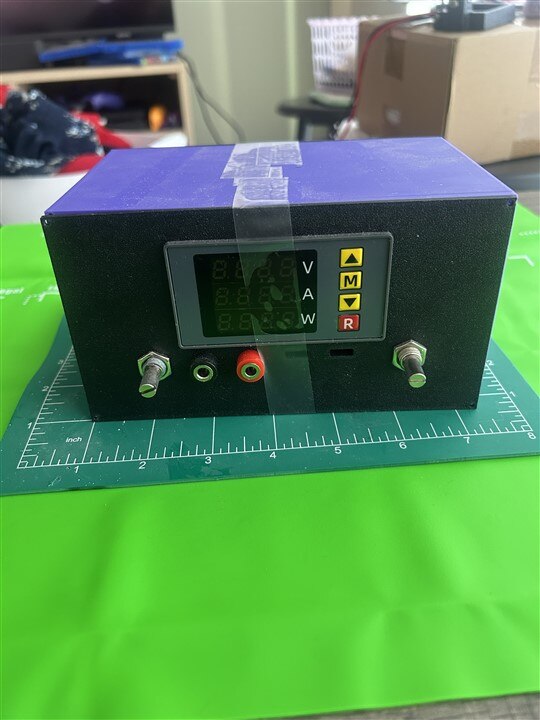
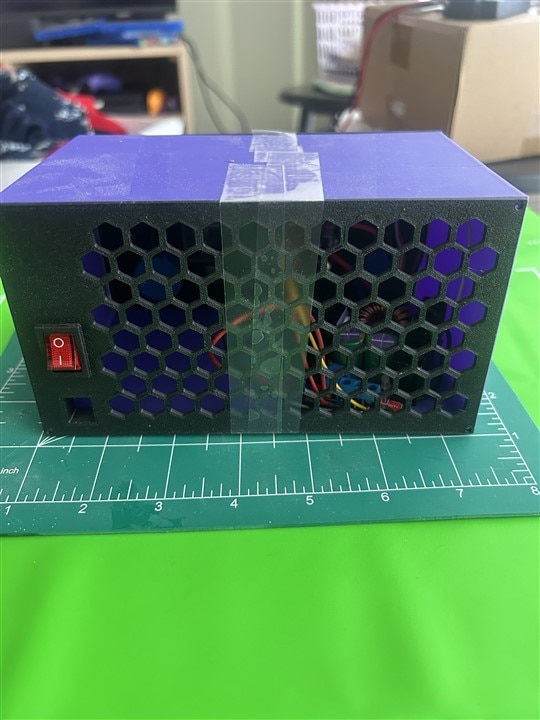
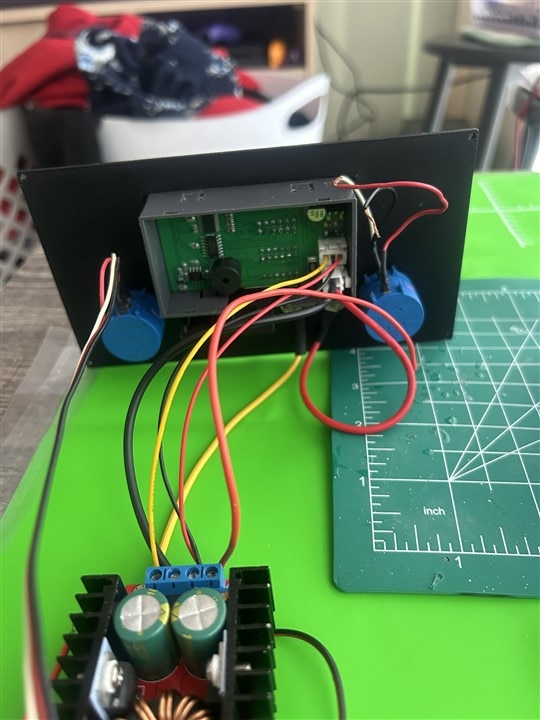
Redesign
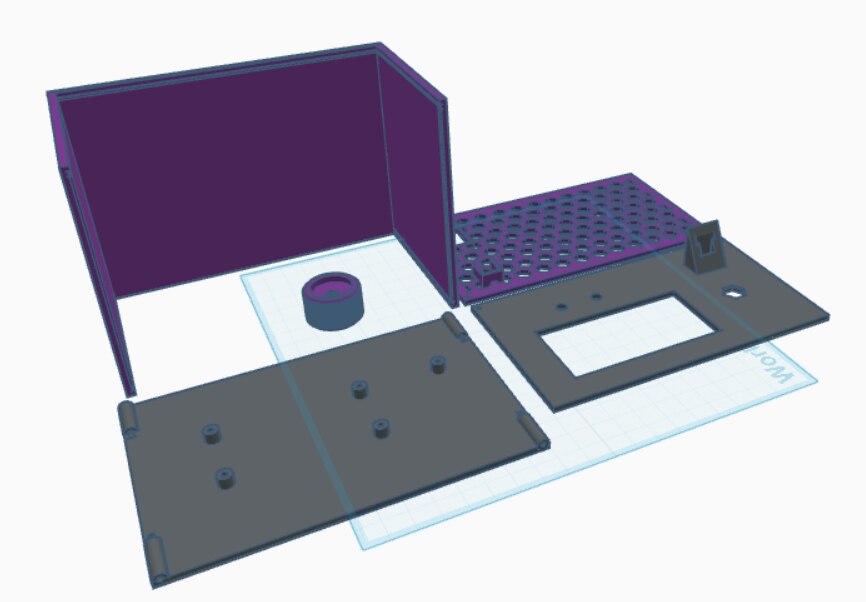
Looking at my previous version, the main issues were parts moving, the case being annoying to open, and the variable ammeter still not working. Unfortunately I have been so busy in the past few days and was not able to sit down and test wiring to fix the ammeter so I put some heat shrink on the wires and tied it up to be used again in the next version. I was however, able to fix the other two issues, I redesigned the case making it far more accessible and more convenient to open and assemble as well as tweaking tolerances for the snap fit parts. I tried to incorporate standoffs into the 3d print but i realised when assembling that 3d printed standoffs do not work well when designed incorrectly especially when you accidentally don't make a deep enough hole for the screws. in this stage I also wired the usb-c to its own buck converter with a max voltage of 20v, the thought behind this was to make the usb-c voltage change depending on the voltage displayed on screen but never go over 20v. I also decided to only use one usb-c to keep simplicity and try to keep it more compact.
Building
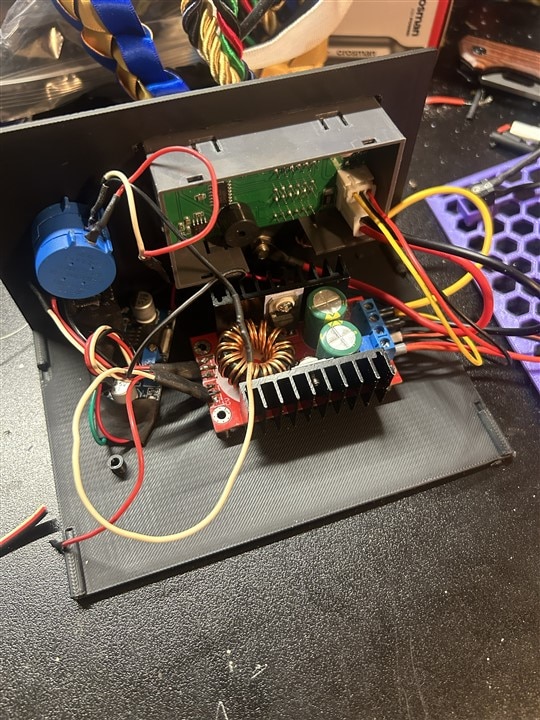
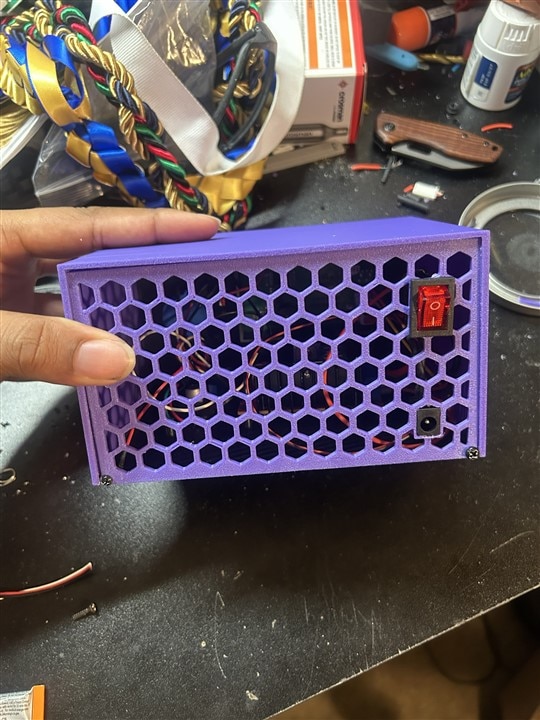
While building there were a few things that I noticed that could've been avoidable if I had taken my time. First being the standoffs, I did not plan the circuit board placement well nor did I make proper standoffs. When screwing in the buck/ boost converter, I realized that the hole was blind and the screws were too long for the standoffs. I am currently away from my main work station so I did not have any proper screws to fix this so I ended up bending one of the standoffs but at least its staying in place. Then I realized that I didn't use long enough wires to put the smaller buck converter in place so it kinda just sits there off to the side but it doesn't go anywhere because of the usb-c placement it stays in one place and out of the way. The next issue was the rigidity of the case. The way I had designed the case its somewhat sandwich style on the bottom with the front and back plates screwed into the base and a shell piece to go in top and cover everything. This allowed me to be able to slide off the cover and check the electronics but I had not accounted for the flimsiness of the top of both front and back plates. Whenever I would squeeze it to turn it on, it would flex inward and kinda just cave in so in the future I am going to design an exaggerated back lip on the inside to give some rigidity to the top of the device.
Testing
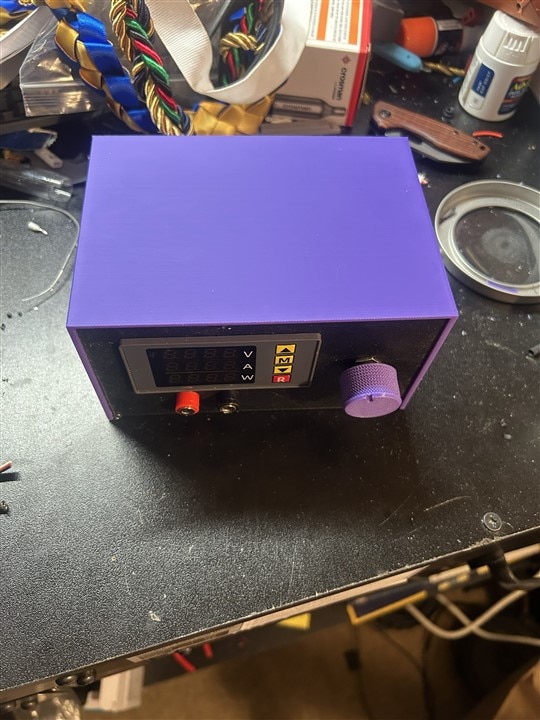
While testing everything seemed to be in order. Live voltage output wasn't the most accurate but it got the job done. I was able to power an RC car ESC and show the amperage and wattage. However, when I plugged in a soldering iron, the entire system would shut down and reboot when I tried powering it on. I suspect that being a safety feature of the buck/ boost converter in order to protect from power spikes. I plan on further testing if the issue replicates from either a lower voltage or wired directly to the 19v laptop charger. If anyone knows why this happens or has any tips or recommendations please let me know. Other than that, my testing concluded as it was 3:00am PST and I needed to sleep.
Future iterations
For future iterations I plan on designing better standoffs or at least make holes to put in proper standoffs, configure wires for variable ammeter, make case more rigid, plan component placement before soldering, put rubber feet on the bottom, make either a standalone higher voltage power supply or find a way to properly incorporate the higher voltage buck/ boost converter without major power supply changes, and design a holder for my soldering iron and eventually have a soldering station with built in helping hands. I also want to explore the idea of making it even more compact so that I can have a mobile power supply/ soldering station.
This was all very last minute but next time this competition comes around I plan on actually taking the time to cover all of the bases. Again if anybody has any tips or recommendations on how I can make things better please let me know.


