


I wasn't going to participate this year because I didn't have a project idea, but as they say "necessity is the father of invention". My son is renovating his master bedroom. He's replaced the carpet, got a new bed, and purchased two of those IKEA style lighted wardrobe kits from Wayfair for his closet. The lighting setup in the wardrobe is fairly simple. A long continuous white LED strip snakes through the various compartments with a manual toggle switch for power. The wardrobe has 6 glass paneled doors (3 small ones on top and 3 tall ones on the bottom). My son asked if I could help him modify the light activation so that the strip would turn on when any of the doors are open. The conception of a Spring Clean project  .
.



There already exist IR sensor switches designed just for this specific type of door application. The switch has barrel connectors that allow it to be inserted between the power supply and LED strip.
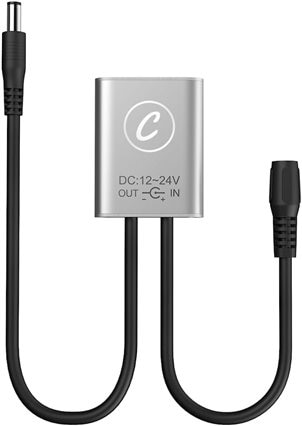
These switches are ideal for switching for a single door or location, but are cumbersome to aggregate for multiple locations because of their in-line configuration. It is possible to implement with these sensors, but for 6 doors per wardrobe this is somewhat expensive (~$10 per sensor) and lots of wiring (need to aggregate 6 pairs of cables).
I have some obsolete Everlight ITR20001T IR sensors that would seem ideal for this application. I also have a leftover coil of 4 conductor cable that I could use for wiring. The birth of a Spring Clean project...
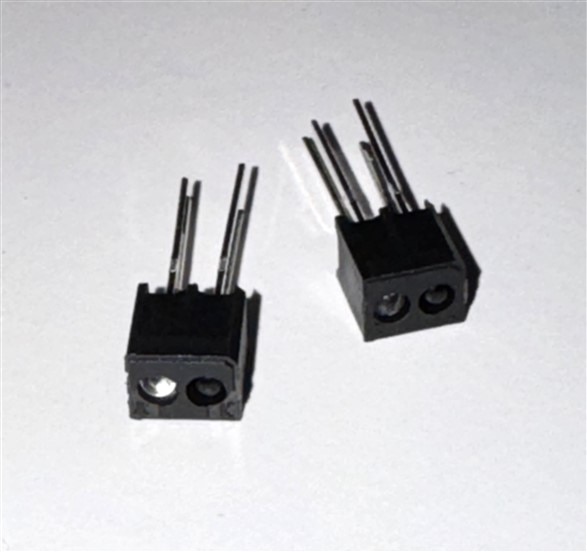
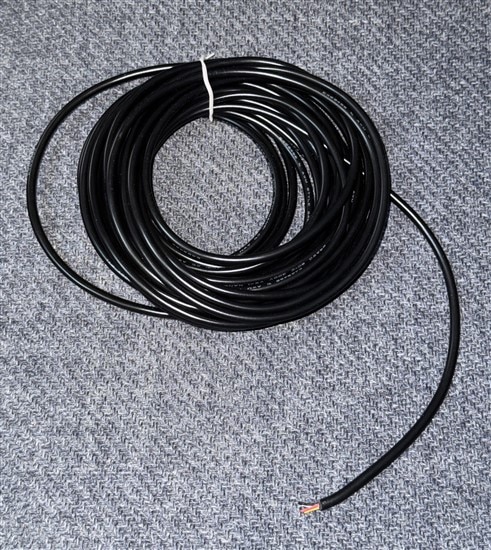
My initial thought is that I would route the individual sensor cables back to a central control board and diode "OR" the sensors to control an optocoupled relay to switch the LED power.

My son has most of his lights and blinds controlled using a Nest Hub, so I am also thinking about adding remote control using a Xiao ESP32 module since I have lots of them. And I also have LM1117-5 Voltage Regulators to step down the 12V for the Xiao. It's nice to find a use for these leftover parts.
