


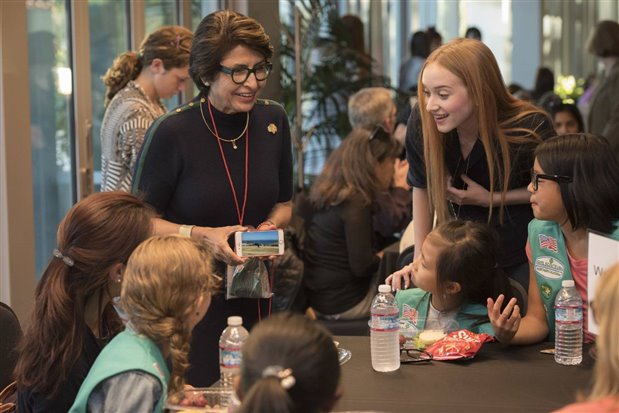
A partnership between Netflix and the Girl Scouts aims to get girls interested in science early on-and stay there. Girl Scouts meet accomplished women from a variety of companies at Netflix headquarters to learn more about STEM opportunities(via GirlScouts)
Since the late 1980s, the number of women undergraduates pursuing careers in computer science and technology has dropped nearly 20 percent, from 37 percent in 1984 to just 18 percent today. And this despite the fact that computer science and technology fields are booming, with more jobs and higher wages than many other industries. Why is this? Melinda Gates, renowned philanthropist and tech veteran herself, has set out to study the problem. She’s developing a personal office outside of the Foundation to specifically study the issue of declining numbers of women in technology.
Like the Bill and Melinda Gates Foundation, the beginning of her philanthropic enterprise starts with research and data-gathering. Understanding the problem is key to implementing a solution. The decline of women in technology has been compared to a leaky pipeline-multiple leaks means more women leave tech or become disinterested earlier. Another reason may be the male-centric gaming industry, which designs video games directed to a predominantly male population. There appears to be a correlation with the advance of male-centric gaming with the decline in women seeking careers in programming.
Another reason could be the lack of role models and resources available to very young girls, who may simply not even consider careers in STEM because it seems so foreign and inhospitable to them. That’s one thing that a new partnership between Netflix and the Girl Scouts is seeking to address. With the premiere of its network-original show Project Mc2, which features girls who solve problems with their science and technology skills, Netflix invited Girl Scout troops to its headquarters to meet with accomplished women from a variety of technology companies. Girl Scouts got to watch the new show and meet representatives with surprising stories about how they found their careers.
By providing examples of women in STEM career paths, it’s hoped that younger girls will think of those vocations as possible and accessible to themselves. In addition, the Girl Scouts has launched an ongoing campaign of connecting interested girls with STEM opportunities across the country. For parents and mentors, they’ve published a guide online with suggestions on how to cultivate curiosity and confidence in science and technology in girls at a young age. Regardless of what career someone ultimately chooses, that can only be a good thing.
Have a story tip? Message me at: cabe(at)element14(dot)com