element14 Community
element14 Community
    Register Log In
  • Site
  • Search
  • Log In Register
  • Community Hub
    Community Hub
    • What's New on element14
    • Feedback and Support
    • Benefits of Membership
    • Personal Blogs
    • Members Area
    • Achievement Levels
  • Learn
    Learn
    • Ask an Expert
    • eBooks
    • element14 presents
    • Learning Center
    • Tech Spotlight
    • STEM Academy
    • Webinars, Training and Events
    • Learning Groups
  • Technologies
    Technologies
    • 3D Printing
    • FPGA
    • Industrial Automation
    • Internet of Things
    • Power & Energy
    • Sensors
    • Technology Groups
  • Challenges & Projects
    Challenges & Projects
    • Design Challenges
    • element14 presents Projects
    • Project14
    • Arduino Projects
    • Raspberry Pi Projects
    • Project Groups
  • Products
    Products
    • Arduino
    • Avnet & Tria Boards Community
    • Dev Tools
    • Manufacturers
    • Multicomp Pro
    • Product Groups
    • Raspberry Pi
    • RoadTests & Reviews
  • About Us
  • Store
    Store
    • Visit Your Store
    • Choose another store...
      • Europe
      •  Austria (German)
      •  Belgium (Dutch, French)
      •  Bulgaria (Bulgarian)
      •  Czech Republic (Czech)
      •  Denmark (Danish)
      •  Estonia (Estonian)
      •  Finland (Finnish)
      •  France (French)
      •  Germany (German)
      •  Hungary (Hungarian)
      •  Ireland
      •  Israel
      •  Italy (Italian)
      •  Latvia (Latvian)
      •  
      •  Lithuania (Lithuanian)
      •  Netherlands (Dutch)
      •  Norway (Norwegian)
      •  Poland (Polish)
      •  Portugal (Portuguese)
      •  Romania (Romanian)
      •  Russia (Russian)
      •  Slovakia (Slovak)
      •  Slovenia (Slovenian)
      •  Spain (Spanish)
      •  Sweden (Swedish)
      •  Switzerland(German, French)
      •  Turkey (Turkish)
      •  United Kingdom
      • Asia Pacific
      •  Australia
      •  China
      •  Hong Kong
      •  India
      • Japan
      •  Korea (Korean)
      •  Malaysia
      •  New Zealand
      •  Philippines
      •  Singapore
      •  Taiwan
      •  Thailand (Thai)
      • Vietnam
      • Americas
      •  Brazil (Portuguese)
      •  Canada
      •  Mexico (Spanish)
      •  United States
      Can't find the country/region you're looking for? Visit our export site or find a local distributor.
  • Translate
  • Profile
  • Settings
STEM Academy
  • Learn
  • Learning Center
  • STEM Academy
  • More
  • Cancel
STEM Academy
Blog MIT scientists figure out how to break spaghetti noodles – perfectly
  • Blog
  • Forum
  • Documents
  • Events
  • Polls
  • Files
  • Members
  • Mentions
  • Sub-Groups
  • Tags
  • More
  • Cancel
  • New
Join STEM Academy to participate - click to join for free!
  • Share
  • More
  • Cancel
Group Actions
  • Group RSS
  • More
  • Cancel
Engagement
  • Author Author: Catwell
  • Date Created: 21 Aug 2018 3:47 PM Date Created
  • Views 1014 views
  • Likes 5 likes
  • Comments 0 comments
  • Experiment
  • mit
  • on_campus
  • cabeatwell
  • learning
  • school
  • university
Related
Recommended

MIT scientists figure out how to break spaghetti noodles – perfectly

Catwell
Catwell
21 Aug 2018

image

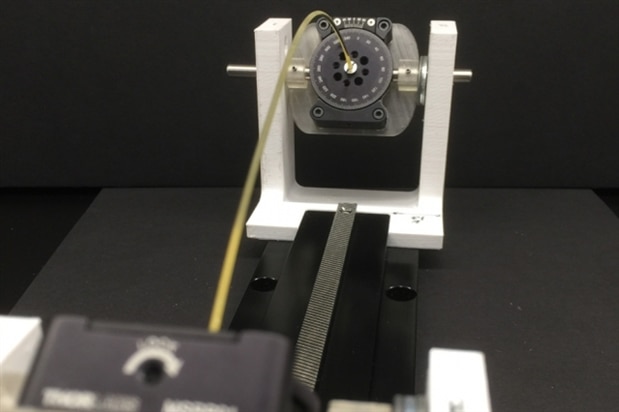
Researchers at MIT created a machine to bend and twist noodles to snap them in two equal halves. This machine was specially designed to twist and break noodles. (All photo via MIT)


MIT is usually at the forefront of groundbreaking science and technology. And they’ve done it again, but this time it involves spaghetti. Breaking spaghetti noodles in half is easier than it sounds. Sure, you’ll get two halves, but they never break off into clean pieces. This issue has stumped scientists for decades. Even famed physicist Richard Fenman spent a night breaking pasta to figure out why the sticks won’t snap in two. It puzzled scientists at MIT too, but they may have figured out the secret: twisting the noodles first.


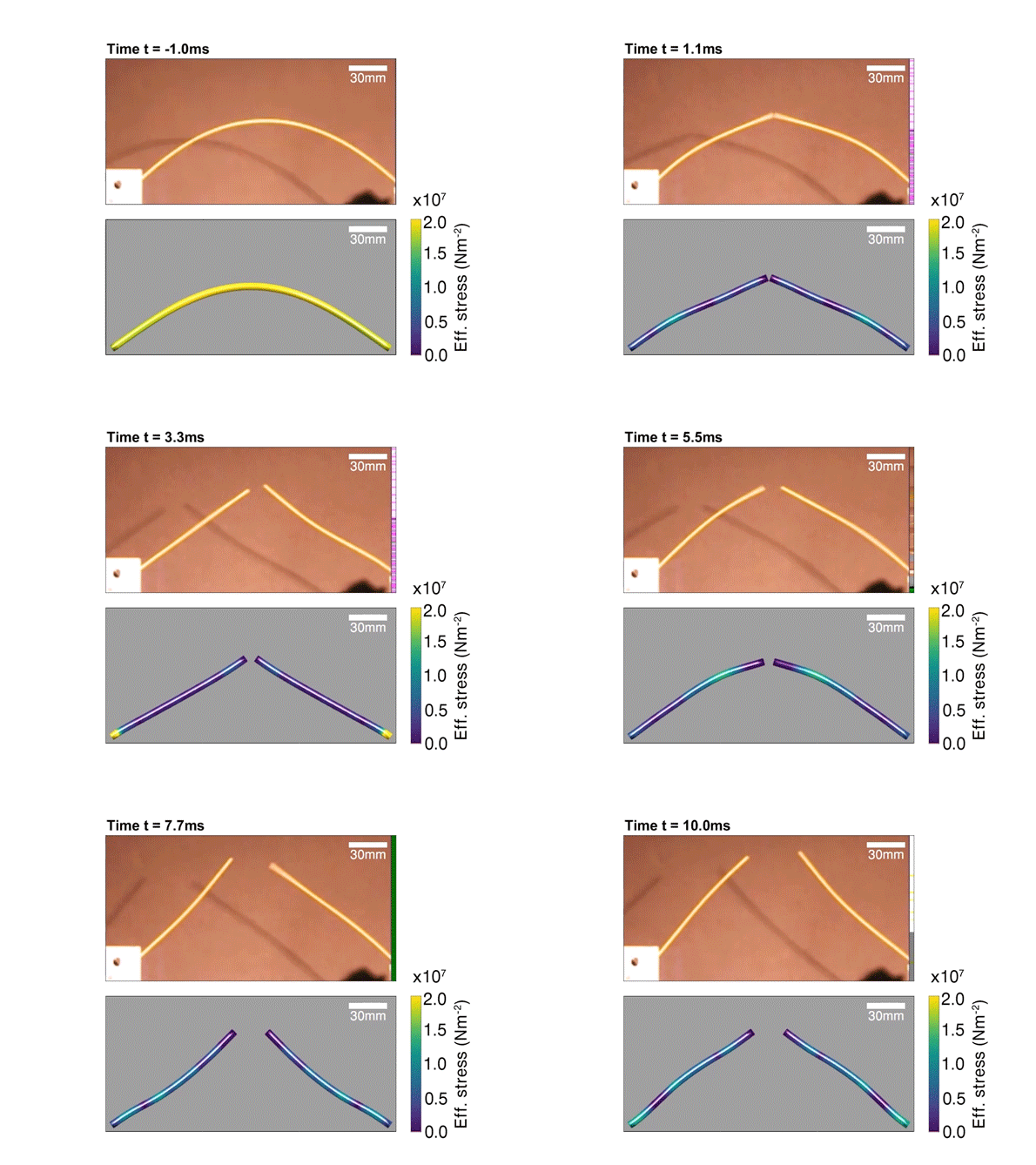
When you bend a spaghetti noodle, it breaks in the middle but sends another wave back along each side; this known as “the snap-back effect.” To combat this, researchers found a way to break noodles into two, by bending and twisting the dry noodles. The team made a special machine for the experiment. Each end has a clamp that holds a stick of spaghetti in place. One clamp rotates and twists the dry noodle by different degrees, while the other clamp slides towards the twisting one to make the spaghetti bend. After various experiments, the team found the noodles have to be twisted at 270 degrees and slowly bent at the speed of 0.11 inch (3 millimeters) per second, it will snap into two equal pieces.


Whereas snap back creates a bending wave, which makes the stick wobble back and forth, the unwinding creates a twist wave where the stick corkscrews back and forth before it comes to rest. Twisting the noodle creates a wave that travels faster than the bending wave, which dissipates energy so that additional stress accumulations, which could cause fractures, don’t happen.
 

image


So, what’s the point of this experiment? Is it geared toward foodies and chefs? There’s more to it than that. The team believes their research can help scientists figure out how to control fractures in other spaghetti shaped materials, like “engineered nanotubes or microtubules in cells,” multi-fiber structures, or even microtubules found in your cells.


"It will be interesting to see whether and how twist could similarly be used to control the fracture dynamics of two-dimensional and three-dimensional materials," said co-author Jörn Dunkel in a statement. "In any case, this has been a fun interdisciplinary project started and carried out by two brilliant and persistent students — who probably don't want to see, break, or eat spaghetti for a while."


Their findings were recently published in the Proceedings of the National Academy of Sciences and can be found here.


Have a story tip? Message me at: cabe(at)element14(dot)com

http://twitter.com/Cabe_Atwell

  • Sign in to reply
element14 Community

element14 is the first online community specifically for engineers. Connect with your peers and get expert answers to your questions.

  • Members
  • Learn
  • Technologies
  • Challenges & Projects
  • Products
  • Store
  • About Us
  • Feedback & Support
  • FAQs
  • Terms of Use
  • Privacy Policy
  • Legal and Copyright Notices
  • Sitemap
  • Cookies

An Avnet Company © 2026 Premier Farnell Limited. All Rights Reserved.

Premier Farnell Ltd, registered in England and Wales (no 00876412), registered office: Farnell House, Forge Lane, Leeds LS12 2NE.

ICP 备案号 10220084.

Follow element14

  • X
  • Facebook
  • linkedin
  • YouTube