


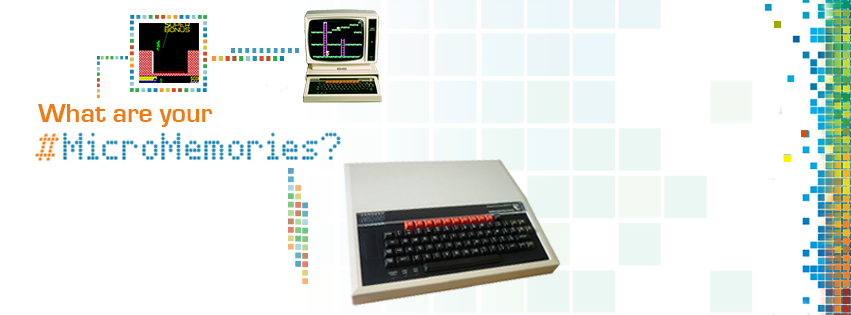
Remember the BBC Micro? Tom Hargreaves does. Were they in your school, or maybe in your home? Thirty years ago these silicon stalwarts marked the first time computers became a common sight in the schools of Great Britain, and provided an introduction to coding that spawned many of the industry leaders in the current games and software arenas.
And now it's happening again. The BBC is gearing up to send out 1 million Micro Bit single-board-computers to schools around the country to give kids their first taste of coding delight. We're equally excited about the program, particularly because many us of were there the first time around and can vouch, personally, for the benefits of such initiatives.
Tell us about your memories of the Micro, ZX Spectrum or Commodore 64 and the early days of your computing awakening.
Step 1: Register or Login and comment below or share on social using #MicroMemories
Step 2: By sharing, you are automatically entered with a chance of winning a C64 plug 'n' play game, so put your thinking gear to work and we'll see you in the past!
Computer Illiteracy
It began with a TV series. The class was ushered into the library and dropped in front of the school's TV at a very specific time one morning. It's not like we were watching a streaming video or DVD. The Computer Programme was on BBC2 in the mornings, and there was no other option than watching it during broadcast. That's just how media was consumed back then.
Actually, with the help of Google, I now know that it didn't begin with this dry and slightly confused TV show. The BBC’s Computer Literacy Project was a much broader and more ambitious initiative than a 10-part show squirreled away in the least prime time slot the BBC had to offer. I just didn't know this until a couple of years later, when I begrudgingly arrived at high school. (By the way, I love the phrase “computer literacy,” and mourn its loss. What a great way of mentally positioning the development of computer skills within an educational environment, right?)

I’m peering 25 years over my shoulder, as I write this. We were still reeling from the wreckage of a country in recession, and schools had suffered a decade and a half of under funding. My school was only a few padlocks away from becoming a borstal. If you were kicked out of any other school in the town, they sent you to ours.
I only attended because it was the closest to my house, you understand…
Anyway, I only tell you this because the condition of the school was in stark contrast to the progressive nature of its computing department. At the back end of the 80s, most schools housed their computers the same way they did a TV and VCR; mounted on a wheeled trolley that could be ferried between classrooms for communist-style technology sharing.
Not us. At the back of the library and on the fifth floor of the humanities department were fully stocked computing rooms. Each gave asylum to at least 20 computers, not to mention a massive 20MB Winchester networked hard drive. And the computers? They were made by a company called Acorn, on order from the BBC (yep, the same BBC that now spends all its money on Doctor Who).
The 8-Bit Educator
This wasn’t a computer anyone had at home. Google might have you believe otherwise as we look back through a rose tinted monitor at the early days of home computing, but these were pure educational machines. Sure, one or two people had an Acorn micro, and a few unfortunate kids had wound up with an Amstrad CPC after their tech-blind parents failed in their Christmas research, but most of us either had a Commodore 64 or a ZX Spectrum (I proudly possessed the latter).
So it’s not a simple matter to divine the importance of the BBC Micro computer from 30 years hence. It might have been comparable in terms of hardware (superior, even), but in terms of its intended use, this was a very different beast. It’s remembered as an advanced teaching tool, rather than a home games system, and that’s an important differentiation to make when looking back at the BBC’s first foray into the world of silicon and software.
It sounds like I had no love for the BBC Micro, but that’s not the case. A computing class was like time off from the daily dentistry of 20th Century high schooling. It wasn’t learning, and it wasn’t a chore. Even the classroom didn’t feel like a classroom, because we weren’t facing a blackboard in regimented ranks, and we weren’t spending the lesson staring down at a desk. We each had our own pixels and cursors to lock eyes with, and a keyboard in place of a dog-eared textbook.

Computing That Doesn't Quit
I don’t entirely remember the lessons themselves, or the undoubtedly creative ways we put the BBC Micro to use (it wasn’t cool to pay attention, and as you’ve surely figured out by now, I was pretty damn cool). After all, I had a Speccy at home to play games on. What I realise now, and only in retrospect, is that the bucket loads of additional use I wrung from those rubber keys was due, in no small part, to the few school hours each week that I sat in front of the BBC Micro. It’s openness and accessibility leaked into my digital subconscious at that early age, and it’s stayed with me ever since. I’ve no doubt it’s the reason I can’t get comfortable with an iPhone, and opt for the more tinker-able Android instead.
What I also remember about the Micro, that’s always stuck with me -- and what makes me think the new Micro Bit is going to be a success of its grandfather’s equal -- is how indestructible those damn things were.
This was some seriously rugged kit, which took way more abuse from heavy handed miscreants than any piece of revolutionary hardware deserves. And this wasn’t just for a couple of hours a day; these things worked 40-hour weeks beneath the abrasive fingers of 2,000 hostile teenagers.

The delicious, mechanical keyboard could take an impressive hammering, and still the keys never bounced or broke off. The casing was more like armour plating than delicate computer equipment, and the monitor could have been used to bludgeon a water buffalo.
Your MicroMemories of the Memorable Micro
Think what you will about the anachronistic BBC institution, and show the back of a derisive shoulder to the entertainment value of its 1980s Micro computer, but no one can argue that this was a machine built to last. If only all hardware was this durable we’d only have upgraded a couple of times since the BBC Micro was quietly retired.
Obviously the forthcoming Micro Bit is considerably smaller and probably more susceptible to cans of Coke and the frustrations of puberty, but it represents an equally robust way to introduce kids to a new world of computing. There are clear parallels between this new BBC campaign and that of my own distant youth, and it’s exciting to see if the effects will echo for as many years to come.
Keep the nostalgia boiling with your own micromemories right here on element14, and tell the world about your days at the incorrigible keyboard of the BBC Micro.
Top Comments