element14 Community
element14 Community
    Register Log In
  • Site
  • Search
  • Log In Register
  • Community Hub
    Community Hub
    • What's New on element14
    • Feedback and Support
    • Benefits of Membership
    • Personal Blogs
    • Members Area
    • Achievement Levels
  • Learn
    Learn
    • Ask an Expert
    • eBooks
    • element14 presents
    • Learning Center
    • Tech Spotlight
    • STEM Academy
    • Webinars, Training and Events
    • Learning Groups
  • Technologies
    Technologies
    • 3D Printing
    • FPGA
    • Industrial Automation
    • Internet of Things
    • Power & Energy
    • Sensors
    • Technology Groups
  • Challenges & Projects
    Challenges & Projects
    • Design Challenges
    • element14 presents Projects
    • Project14
    • Arduino Projects
    • Raspberry Pi Projects
    • Project Groups
  • Products
    Products
    • Arduino
    • Avnet & Tria Boards Community
    • Dev Tools
    • Manufacturers
    • Multicomp Pro
    • Product Groups
    • Raspberry Pi
    • RoadTests & Reviews
  • About Us
    About the element14 Community
  • Store
    Store
    • Visit Your Store
    • Choose another store...
      • Europe
      •  Austria (German)
      •  Belgium (Dutch, French)
      •  Bulgaria (Bulgarian)
      •  Czech Republic (Czech)
      •  Denmark (Danish)
      •  Estonia (Estonian)
      •  Finland (Finnish)
      •  France (French)
      •  Germany (German)
      •  Hungary (Hungarian)
      •  Ireland
      •  Israel
      •  Italy (Italian)
      •  Latvia (Latvian)
      •  
      •  Lithuania (Lithuanian)
      •  Netherlands (Dutch)
      •  Norway (Norwegian)
      •  Poland (Polish)
      •  Portugal (Portuguese)
      •  Romania (Romanian)
      •  Russia (Russian)
      •  Slovakia (Slovak)
      •  Slovenia (Slovenian)
      •  Spain (Spanish)
      •  Sweden (Swedish)
      •  Switzerland(German, French)
      •  Turkey (Turkish)
      •  United Kingdom
      • Asia Pacific
      •  Australia
      •  China
      •  Hong Kong
      •  India
      •  Japan
      •  Korea (Korean)
      •  Malaysia
      •  New Zealand
      •  Philippines
      •  Singapore
      •  Taiwan
      •  Thailand (Thai)
      •  Vietnam
      • Americas
      •  Brazil (Portuguese)
      •  Canada
      •  Mexico (Spanish)
      •  United States
      Can't find the country/region you're looking for? Visit our export site or find a local distributor.
  • Translate
  • Profile
  • Settings
microbit
  • Learn
  • Learning Center
  • STEM Academy
  • microbit
  • More
  • Cancel
microbit
Documents The Great micro:bit Education Giveaway!
  • Blog
  • Forum
  • Documents
  • Events
  • Polls
  • Files
  • Members
  • Mentions
  • Sub-Groups
  • Tags
  • More
  • Cancel
  • New
Join microbit to participate - click to join for free!
Actions
  • Share
  • More
  • Cancel
Engagement
  • Author Author: danzima
  • Date Created: 9 Aug 2018 8:57 PM Date Created
  • Last Updated Last Updated: 17 Dec 2018 10:22 PM
  • Views 10169 views
  • Likes 20 likes
  • Comments 135 comments
Related
Recommended

The Great micro:bit Education Giveaway!

image
imageThe Great micro:bit Education Giveaway

About Giveaway Contest | micro:bit | STEM Academy


Hello Community!


WINNERS HAVE NOW BEEN SELECTED! SEE THEM HERE:


The Great micro:bit Education Giveaway - Winners!


Back to School season is upon us! For many students and educators, the month of August signifies a return to school, and to shopping for the classroom. This past June, members of the element14 Community team were able to attend the ISTE (International Society for Technology in Education) convention, which took place this year in Chicago. We stood guard at the micro:bit booth, not only to help the great people from the foundation handle the onslaught of questions about the micro:bitmicro:bit, but also to learn more about this wonderful SBC.


One of the most impactful things we learned while we were in attendance was that teachers of all grade-levels and experience were keen to integrate the micro:bit into their curriculum, but many voiced that they did not have the budget nor the technical expertise to do so. While the micro:bit Educational Foundation provides a wide array of resources to get started, they unfortunately cannot give the boards away for free.


image


This is where we come in! We were so inspired by all of the educators we got to speak with that our fearless leader, Dianne Kibbey, the Global Head of the element14 Community tasked us to come up with a program to get micro:bit into the hands of as many learners as possible.


So, with that in mind, we bring you our Great micro:bit Education Giveaway!


image


Phase 1:


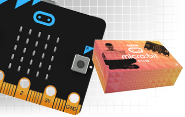
We will be giving our 25 selected contestants micro:bit Clubmicro:bit Club packs, which each contain 10 micro:bit boards, battery adapters, batteries, and USB cables. The micro:bit is a global product, so this contest is open to all countries!


Phase 1 is now complete! Thank you so much for all your entries, they're amazing and we can't wait to read them (we've gotten a head start on that, to tell the truth). Please feel free to continue discussing the contest in the comments section here, but unfortunately we can no longer accept new applications. Everyone who has submitted prior to this note being added is considered an applicant.


To enter, please:


1) Register on the Community, if you are not yet a member.


2) In the comments section below on this document, post your answers to the following questions:


• Who are you? What is your background as an educator? And don't worry, we're welcoming educators of all levels of experience. If you're trying to help students learn about coding and working with electronics, we want you! (Please do not post your address or other personal information in your application here, just general information about your background. Feel free to use your username if you'd prefer not to post your full name.)


• How would you use these micro:bits in your classroom, after school club, or wherever you might be trying to help others learn to code?


Enrollment begins August 20th, 2018. You will have until September 19th to submit your application as a comment on this document, after which our team will review the applications and select the participants on September 24th. We've chosen to place these applications in the comments on this document so that you can discuss your plan with other educators, give tips to those whose work is similar to yours, and so you can potentially be inspired by them!


Selected Winners:


rxtx

ienjoyteaching

straytech

tguellich

nsouthwell

julianrendell

joeczar-scde

gusmerckel

heathmacnelson

bfvillaluna

andyforeverest

yg@ap

atomclub

ahobbs

darrell.little

davelnewton

gevans@hoover.k12.al.us

tinalf

mrsdlloyd

onespacez

rancell

petersvedman

dasoussan

lrjones

monsieurblamoureux


Congratulations to our selected winners! We have decided to give away 25 micro:bit Club packs due to how many amazing entries we received. We will be contacting the selected members via email shortly about the next steps, so please respond no later than October 1st, 2018. Due to trade regulations, it is possible that certain countries will be disallowed for shipping, but this is (thankfully!) very rare.

We have also selected alternates should those listed above not respond or if we are not able to ship to their countries. Once you receive your Club pack you can get started on Phase 2!


Phase 2:


Once you are selected as a winner, you will have 10 weeks to implement you project plan and document it on the Community. Your blogs / vlogs must be posted to the community by December 3rd. The documentation requirements will be the following:


1) Write up a blog (or do a video blog) about your project.


2) Your blog or vlog must have a syllabus/lesson plan that includes the following information:


• what ages and/or grade-level(s) it's aimed toward

• what subject/s does it cover

• what are the project goals

• step-by-step instructions including any print-outs, bill of materials (BOM)

• photos and/or videos


On December 10th we will select three (3) educators who have completed their documentation on the Community to win a prize pack of micro:bit accessories and other items that will expand the potential of this powerhouse little board. To be eligible as a contestant and to potentially receive prizes you must submit your comments and blogs according to the schedule of dates below. Also, see below for prize details.


Important Dates


Enrollment BeginsAugust 20th, 2018
Enrollment EndsSeptember 19th, 2018
Contestants AnnouncedSeptember 24th, 2018
All Blogs DueDecember 3rd, 2018
Winning Blogs AnnouncedDecember 10th, 2018


Prizes


We're also RoadTesting some great micro:bit accessories and expansion kits, including some of the prizes offered here. Check them out!


BOSON Starter Kit + micro:bit


:MOVE mini buggy kit + microbit


:GAME ZIP 64 for the BBC micro:bit


micro:bit wear:it Development Kit


image


element14 Minode Kitelement14 Minode Kit


image


element14 Wear:it Kitelement14 Wear:it Kit


image


Kitronik Inventor's KitKitronik Inventor's Kit


image


Kitronik Move mini Robot KitKitronik Move mini Robot Kit


image


Proto-Pic Micro:Pixel LED Expansion BoardProto-Pic Micro:Pixel LED Expansion Board


Our goal for the Great micro:bit Education Giveaway is to help teachers get micro:bit in the hands of their students and, in doing so, help other educators to do the same. As everyone knows, often the best way to teach something is by example. So get your ideas together and let us know -- What would you do with micro:bit in the classroom?


micro:bit Resources


http://microbit.org/guide/


10 micro:bit Projects in 10 Days


An Introduction to Computer Science with BBC micro:bit: The Full Curriculum


BBC micro:bit Poster | Free Download for your Classroom


See Projects by our VCP micromonsters


micro:bit Basics for Teachers

Attachments:
imageGMG-Terms and Conditions.pdf
  • micro:bit
  • stem
  • education
  • bbc micro:bit
  • microbit
  • giveaway
  • past_contest
  • contest
  • bbc microbit
  • Share
  • History
  • More
  • Cancel
  • Sign in to reply

Top Comments

  • shabaz
    shabaz over 8 years ago +15
    This is a really nice giveaway, and the outcome blogs/vlogs could generate some great ideas on how to use this with kids. While I'd played with a micro:bit briefly in the past, I'd not used it with kids…
  • e14mindi
    e14mindi over 8 years ago in reply to shabaz +11
    Hello Shabaz, You are so quick with catching these posts that you caught us while we were finalizing the details on this one! Thank you so much for the feedback. One of the things that I found the most…
  • cnlow
    cnlow over 8 years ago +5
    I'm trained in STEM, currently I'm a volunteer in coaching high school students in the making of STEM projects. I just initiated a Code Club (according to Raspberry Pi Foundation) that teaches students…
  • jlmounts
    jlmounts over 7 years ago

    I am a 6-8 grade Computer Science teacher. This is my first year! For the past 12 years I have been a special education teacher specializing in mathematics and behavior. This is my first year taking on this assignment and I am so excited. I have been tasked with starting a Technology Student Association from scratch. This will be the first in my district. I can't wait to compete against other schools from around the nation. These kids have the desire to change the world and I want to be a part of that!


    • Cancel
    • Vote Up +1 Vote Down
    • Sign in to reply
    • More
    • Cancel
  • samubranco
    samubranco over 7 years ago

    I'm fine thank you! I have been a computer teacher for 22 years, in a school with students between the ages of 12 and 19. Despite being a computer teacher, in recent years I have been teaching electronics and programming through Arduino. At school we have since 2013 a robotics club, of which I am one of the coordinating teachers. Through the Erasmus + projects we noticed that the schools of the northern European countries have opted for the use of micro: bit. We would also like to experiment with and use the micro: bit in our classes and in the club, because it is possible to program it with a block language or with a more advanced language such as python. If we are to receive one of the sets, we want our students from the robotics club to stimulate an activity for the other students of the school within the framework of the European Code week. Thank you!

    • Cancel
    • Vote Up +1 Vote Down
    • Sign in to reply
    • More
    • Cancel
  • mapnz
    mapnz over 7 years ago

    Kia ora from New Zealand, I'm Mel,  I have a BE (Automation and Control) but this is my first year teaching. We have been transitioning to more play/create/make activities in our year 1-2 class which the children love as well as doing lots of simple science experiments. They are starting to talk about themselves as scientists and thinking up their own experiments. The children are amazing and eager and so easy to please but it is really hard to supply all the materials for the class because we have no budget for this... yet. We have to show that it works first image

    I would love to "play" with micro:bits in our class. We would learn together about what these micro:bits are and dream up things we could do with this cool tool. We might even learn some coding on the way imageWhat a great opportunity.

    Thank you !

    • Cancel
    • Vote Up +1 Vote Down
    • Sign in to reply
    • More
    • Cancel
  • bfvilla
    bfvilla over 7 years ago

    Hi! i am bfvilla, I am a registered electronics engineer and a university instructor at N.E.U.T. College of Engineering. I handle Microcontroller and Microprocessor based system subjects. Most of my students are future engineer major in electronics and communications. I also conduct short course programs for Arduino and Raspberry pi.


    We can use micro:bits as a demo kit for our student to built amazing projects. Projects or applications that will give impact to manufacturing, agriculture, and building management. We started with Arduino, and then Raspberry pi, it would be appreciated if our student can also experience another board kit that they can apply in their studies and research project.


    Another thing that I can use micro:bits is for my training module. We are conducting Arduino and Raspberry pi training for MSMEs and Academe. We can embed the micro:bit module to Iot course training.


    Thanks and more power.


    Bernie

    • Cancel
    • Vote Up +1 Vote Down
    • Sign in to reply
    • More
    • Cancel
  • gevans@hoover.k12.al.us
    gevans@hoover.k12.al.us over 7 years ago

    I am Geri Evans, a STEAM teacher from Hoover, Alabama. I teach K-5th grade students. I have been teaching for 25 years and this is my third year as a STEAM teacher. Our state has recently adopted new Computer Science Standards and I plan to implement the microbits to help meet those standards. I would use the kits in grades 2-5 and have the older students demonstrate all they learn with the K-1 students. Students will take on the role of teacher once they feel confident using the kits. Digital Citizenship Ambassadors at our school wll help to make sure all students have an opportunity to program the microbits and learn to use them as their level.  I will also use the kits to have our ambasssadors assist in teaching parents about coding and how to use the microbits during an innovation night our school will host later in the year.


    Who are you? What is your background as an educator? And don't worry, we're welcoming educators of all levels of experience. If you're trying to help students learn about coding and working with electronics, we want you! (Please do not post your address or other personal information in your application here, just general information about your background. Feel free to use your username if you'd prefer not to post your full name.)


    • How would you use these micro:bits in your classroom, after school club, or wherever you might be trying to help others learn to code?

    • Cancel
    • Vote Up +1 Vote Down
    • Sign in to reply
    • More
    • Cancel
  • yg@ap
    yg@ap over 7 years ago

    Hello,

    We are STEM trainers in Robotics, Infocomm and Innovation Clubs, mainly serving the Singapore public school system.


    Our company also conducts volunteer at-risk youth engagement through STEM workshops at various youth homes in Singapore.  The work of Seymour Papert and Gary Stager with at-risk children in the Maine Youth Center (USA) is a guide and inspiration...


    In one of our own recent engagements with a welfare home here in Singapore, we taught a micro:bit course to a group of 12-14 year olds.  As a new startup operating on a shoestring, it is difficult for us to provide free services, let alone free materials.  We collected our micro:bits back from the children at the end of that session, but we wish to do more for them in the future.


    Any material gained from such giveaway will be used:
    1) To conduct volunteer STEM workshops with at-risk youth in Singapore and the South-East Asia region

    - We create our own component kits and curricula, so we will share our original work with the children based on our experience with them
    2) To provide materials for at-risk youth, and their welfare homes and youth centers, in an attempt to create MakerSpace-type environments for the kids.

    - We have two youth centers in mind that we've worked with, and I am sure they would be thrilled with a mild investment into an electronics and making corner in their institutions.  We would share what final home these Giveaway micro:bits ended up in and some multi-:bit project we did with it - ideally, we would share a blog about at-risk youth sharing their micro:bit based projects at the next local Maker Faire.


    Sincerely,
    The A Posteriori Team

    • Cancel
    • Vote Up +1 Vote Down
    • Sign in to reply
    • More
    • Cancel
  • zren
    zren over 7 years ago

    Hi! My name is René Cardona and I have been a teacher for the last 23 years. I have reinvented myself as an educator, many times. In this latest reinvention I am in charge of the computer lab at a K-6 school in Tijuana, México, and, therefore, I am the IT teacher. This has been a very interesting journey. I have had to meet different challenges. The first one was the fact that I am a philosophy major, an ESL teacher and I also have a masters in education, none of which had properly prepared me to become a computer science teacher. Although a challenge, it was a welcome opportunity to explore a new area of knowledge, one I noticed, it is sorely needed in my country. 


    Not only did I have to educate the students, but also the school administrators as well as the parents, both weary of the challenges technology poses nowadays.


    So I jumped in and I introduced coding through Code.org, and for the last two years we have participated in The Hour of Code. We have learned about typing, digital citizenship (Be internet awesome), the need of physical activities during the lessons (I am a GoNoodle Ambassador, for the second consecutive year), the need to have some fun while learning and being evaluated (I am a certified Kahoot teacher), I try to motivate their creativity, and to allow them the freedom to play in a safe environment, and to choose which activities they enjoy the most. They have created memes, and this year they will create their first GIFs. 


    All I have mentioned leads me to my new goal which is to start a maker space or similar experience in the classroom. So when I found out about this giveaway I was greatly surprised by its timing.


    Micro:bits are already in the Code.org curriculum and I intend to use them (when I win!) as the natural expansion of the subjects we are already seeing in class, also as the first step towards the maker space or robotics lab. Micro:bits would give my students the opportunity to see how their coding comes to life, and how their choices have an effect on others.


    I am always trying to improve myself. I am attending the Code.org professional development workshop on October in San Diego, CA. So I would have another oportunity to ask the organizers how to better put the micro:bits to use.


    • Cancel
    • Vote Up +1 Vote Down
    • Sign in to reply
    • More
    • Cancel
  • monsieurblamoureux
    monsieurblamoureux over 7 years ago

    I am a classroom teacher in the Canadian prairies who is working to integrate and thus, normalize computer coding and digital learning methods into the curriculum.


    Our kindergarten to grade 8 students learn programming with LearntoCode.org and Skratch and some of our students move on to learning Python and Javascript.


    We have a Raspberry Pi in our classroom which we use to blog, search up the meaning of French and English words, and conduct science experiments (tracking weather) with a Sense HAT.


    I am very much a beginniner learner with programing . Having a Micro:bit interface would be familiar way to learn from moving visual blocks of code and students could more easily transition into programming microcontrollers.  If selected, my class would use the club kit to build (2):


    (1) a digital watch

    (2) a robot


    as a part of our grade 6 science module on electronics and to make comparisons between the programming techonology we are already using. Given their coding experience, I understand the Mico:bit as being the next step to have future creators being motivated by the fruits of their labour in their projects.

    • Cancel
    • Vote Up +1 Vote Down
    • Sign in to reply
    • More
    • Cancel
  • andyforeverest
    andyforeverest over 7 years ago

    Hello!


    I have been teaching STEM classes in Romania in the past two and half years.


    With each group of students I start with Scratch as introductory classes and then move on to Arduino ecosystem. I have developed a curriculum for Arduino consisting of 6 modules (each is 8 lessons long). Each module ends with a project, so that, by the end of the program, the students will have built

    - a digital clock (hour, minute and date setting, alarm setting);

    - a control access module with LCD and 4 x 4 keypad;

    - a weather station;

    - a obstacle sensing robot;

    - games on graphic LCDs.


    So far it is going very well for students above 6th grade. However, I do find it challenging to make the transition from Scratch (they all love it) to Arduino. I have used S4A (Scratch for Arduino) as transition tool, but it lacks in flexibility.


    That is where Micro:bit would come into play! Because of the visual programming option (Blocks) it would be a much gentler approach to robotics compared to Arduino. Then it can naturally grow into text programming (Python would be my choice).


    If I received this package, I would create:

    - a short tutorial to Blocks;

    - ten one-hour long lessons aimed at beginner level students (with option for in-depth discussion and applications for more advanced students).


    Best regards.

    • Cancel
    • Vote Up +1 Vote Down
    • Sign in to reply
    • More
    • Cancel
  • jonan
    jonan over 7 years ago

    Buenos días.

    Soy un chico que ha trabajado de monitor de robótica varias veces con alumnos de entre 6 y 10 años. He aprendido a usar microbit, tanto como EV3 y elementos similares por lo que la idea que tengo es impartir clases para niños con problemas sociales y que no puedan permitirse pagar por aprender en este tipo de clases.


    Daré las clases en 3 sitios diferentes de forma benéfica, de modo que la gente que le interese, pueda ofrecerles dinero para que puedan permitirse comprar más material de robótica y puedan así ampliar sus conocimientos. De esta forma, esa gente que no tiene posibilidad de pagar por aprender, podrá obtener conocimientos que les puedan ayudar a encaminar sus vidas.


    Muchas gracias.


    --------------------------------------


    Good Morning.

    I am a guy who has worked as a robotics monitor several times with students between 6 and 10 years old. I have learned to use microbit, as well as EV3 and similar elements so the idea that I have is to teach classes for children with social problems and who can not afford to pay to learn in this type of classes.

    I will give the classes in 3 different sites in a charitable way, so that people who are interested, can offer them money so that they can afford to buy more robotics material and they can expand their knowledge. In this way, those people who do not have the possibility of paying to learn, will be able to obtain knowledge that can help them to direct their lives.

    Thank you very much.

    • Cancel
    • Vote Up +1 Vote Down
    • Sign in to reply
    • More
    • Cancel
<>
element14 Community

element14 is the first online community specifically for engineers. Connect with your peers and get expert answers to your questions.

  • Members
  • Learn
  • Technologies
  • Challenges & Projects
  • Products
  • Store
  • About Us
  • Feedback & Support
  • FAQs
  • Terms of Use
  • Privacy Policy
  • Legal and Copyright Notices
  • Sitemap
  • Cookies

An Avnet Company © 2026 Premier Farnell Limited. All Rights Reserved.

Premier Farnell Ltd, registered in England and Wales (no 00876412), registered office: Farnell House, Forge Lane, Leeds LS12 2NE.

Follow element14

  • X
  • Facebook
  • linkedin
  • YouTube