element14 Community
element14 Community
    Register Log In
  • Site
  • Search
  • Log In Register
  • Community Hub
    Community Hub
    • What's New on element14
    • Feedback and Support
    • Benefits of Membership
    • Personal Blogs
    • Members Area
    • Achievement Levels
  • Learn
    Learn
    • Ask an Expert
    • eBooks
    • element14 presents
    • Learning Center
    • Tech Spotlight
    • STEM Academy
    • Webinars, Training and Events
    • Learning Groups
  • Technologies
    Technologies
    • 3D Printing
    • FPGA
    • Industrial Automation
    • Internet of Things
    • Power & Energy
    • Sensors
    • Technology Groups
  • Challenges & Projects
    Challenges & Projects
    • Design Challenges
    • element14 presents Projects
    • Project14
    • Arduino Projects
    • Raspberry Pi Projects
    • Project Groups
  • Products
    Products
    • Arduino
    • Avnet & Tria Boards Community
    • Dev Tools
    • Manufacturers
    • Multicomp Pro
    • Product Groups
    • Raspberry Pi
    • RoadTests & Reviews
  • About Us
    About the element14 Community
  • Store
    Store
    • Visit Your Store
    • Choose another store...
      • Europe
      •  Austria (German)
      •  Belgium (Dutch, French)
      •  Bulgaria (Bulgarian)
      •  Czech Republic (Czech)
      •  Denmark (Danish)
      •  Estonia (Estonian)
      •  Finland (Finnish)
      •  France (French)
      •  Germany (German)
      •  Hungary (Hungarian)
      •  Ireland
      •  Israel
      •  Italy (Italian)
      •  Latvia (Latvian)
      •  
      •  Lithuania (Lithuanian)
      •  Netherlands (Dutch)
      •  Norway (Norwegian)
      •  Poland (Polish)
      •  Portugal (Portuguese)
      •  Romania (Romanian)
      •  Russia (Russian)
      •  Slovakia (Slovak)
      •  Slovenia (Slovenian)
      •  Spain (Spanish)
      •  Sweden (Swedish)
      •  Switzerland(German, French)
      •  Turkey (Turkish)
      •  United Kingdom
      • Asia Pacific
      •  Australia
      •  China
      •  Hong Kong
      •  India
      •  Japan
      •  Korea (Korean)
      •  Malaysia
      •  New Zealand
      •  Philippines
      •  Singapore
      •  Taiwan
      •  Thailand (Thai)
      •  Vietnam
      • Americas
      •  Brazil (Portuguese)
      •  Canada
      •  Mexico (Spanish)
      •  United States
      Can't find the country/region you're looking for? Visit our export site or find a local distributor.
  • Translate
  • Profile
  • Settings
STEM Academy
  • Learn
  • Learning Center
  • STEM Academy
  • More
  • Cancel
STEM Academy
Documents Electrical Engineering Students Wishlist
  • Blog
  • Forum
  • Documents
  • Events
  • Polls
  • Files
  • Members
  • Mentions
  • Sub-Groups
  • Tags
  • More
  • Cancel
  • New
Join STEM Academy to participate - click to join for free!
Actions
  • Share
  • More
  • Cancel
Engagement
  • Author Author: e14phil
  • Date Created: 8 Sep 2021 2:49 PM Date Created
  • Last Updated Last Updated: 1 Apr 2023 2:09 PM
  • Views 11546 views
  • Likes 3 likes
  • Comments 60 comments
Related
Recommended

Electrical Engineering Students Wishlist

What should Electrical Engineering students buy for their first semester?


Electrical Engineering (EE) is a field that encompasses a wide range of specialties, but for students learning the basics, there are some tools that apply to almost everything, and make learning more interesting and fun.

We've put together a wish list with all the fundamental items needed to set you up for a life in Electrical Engineering.


The Basics


Basic Tools

As an EE student, you'll want to have your own basic set of tools to make your life easier. These are some of tools that every EE needs, no matter what their specialty:


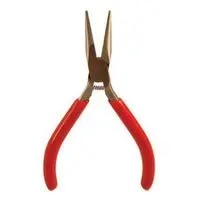
Needle-nose Pliers -

Electronic components are tiny and wiring up those tiny connectors is something our hands are just not built for. Needle-nose pliers are essential for any kind of circuit building.
 

image

Needle Nose Pliers


Wire Stripper

One of my lab partners use to strip wires with his teeth. With a few bites, a twist, and a pull, he'd have any gauge wire stripped and ready to go. For us regular people, wire strippers are mandatory.

image

Wire Strippers


Loupe or Magnifying Glass

Loupes or magnifying glasses are incredibly helpful when soldering or working with a breadboard.

image

Loupe or Magnifying Glass


Tweezers

I don't envy anyone who has to modify a circuit made up of surface mount components, but for those types of jobs, eagle eyes, steady hands, patience, and a good set of tweezers are required.

image

Tweezers Six Pack


Breadboard

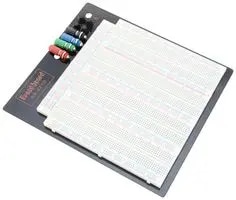
A breadboard is a quick prototyping tool where you can plug components and wires into holes to quickly connect them. Most labs will provide the necessary breadboard, but having one at your disposal is very handy.
image

Multicomp 1mm ABS Breadboard


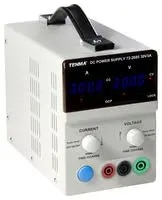
DC Power Supply

Circuits need a power source and for classroom projects, 5-12V should be sufficient.
image

Bench Power Supply


Soldering

Every EE should keep their soldering tools handy. Whether it's building cables or modifying/repairing equipment, soldering tools get a lot of use on the workbench.


Soldering Iron -

Soldering starts with a good iron. Because they're main task is melting things, they need to have enough power; 40W should do the job. A higher wattage iron doesn't get hotter, it maintains its temperature better. Every time an iron melts solder, it cools down. A higher wattage iron will heat back up more quickly. There's not much that's more frustrating than blobs of solder are taking forever to melt because the iron isn't getting hot fast enough.

image


Soldering Iron


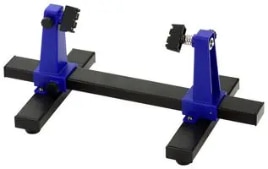
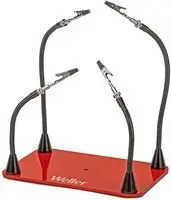
Helping Hand and Circuit Board Holder - You can always tell who likes to solder by the burn marks on their knees. We've all done it; holding a PCB or connector between our knees, with a soldering iron in one hand and a wire in the other. No matter how careful you are, you're going to hit your knee at some point! Growing a third arm is the best solution, but since science isn't quite there yet, save your knees with a Helping Hand setup or a circuit board holder.
 

image

Helping Hand -

Helping Hands


image

Circuit board holder -

Circuit Board Holder


Wicks and Desoldering Pumps -

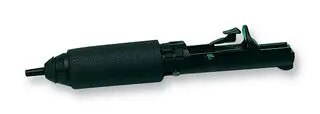
Sometimes things won't go right, and you'll find that you accidentally shorted two pins on an IC. Use a wick or a desoldering pump (or both) to remove that extra solder after you've heated it up.

 

image

Solder Wick

Solder Wick


image

Desoldering pump

Desoldering pump


Soldering Iron cleaner -

Soldering irons quickly get oxidized. To keep them clean, brass shavings are more effective than a wet sponge (although a wet sponge does make that cool sizzling sound).

image

Soldering Iron Tip Cleaner


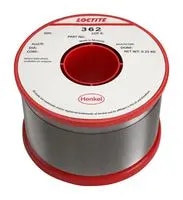
Solder - Of course, don't forget the solder!
image

Solder


Test Equipment

Testing is tricky with complex circuits. In order to make sure the different parts of the circuit are doing what you want them to, you need tools to measure the signal at each point.


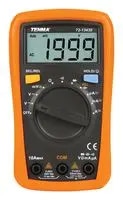
Multimeter -

Multimeters measure voltage, resistance, and current, the basic and most important measurements in electronics. Want to know if a component is broken? Measure across it; if the voltage drop is 0V, then it's broken.
image

Digital Multimeter


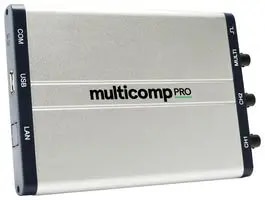
Oscilloscope - Oscilloscopes measure electrical signals mapped against time, useful for viewing the outputs of capacitors and inductors, distortion and noise, and clocked digital signals.


PC USB Oscilloscope -
image

USB Oscilloscope


Software

A big part of electrical engineering in the modern world is software. Most designs can be modeled and optimized before the first resistor even gets plugged into the breadboard.


PSpice - a SPICE (Simulation Program with Integrated Circuit Emphasis) circuit simulator that lets you design and simulate circuits built from a library of almost every component and IC available.

https://www.pspice.com


MATLAB - MATLAB (MATrix LABoratory) is used by many EEs to solve the complex math that arises from engineering problems. MATLAB simplifies matrix manipulations, graphing, creating algorithms, and with add-on toolkits, differential equations and linear algebra.

https://www.mathworks.com


Simulink - Simulink is a GUI add-on for MATLAB from Mathworks, the maker of MATLAB. It lets you combine graphical and textual programming, making MATLAB easier to use.

https://www.mathworks.com


LabVIEW - LabVIEW (Laboratory Virtual Instruments Engineering Workbench) from National Instruments is software that connects with measurement devices in order to control, retrieve, and analyze their data.

Labview


PI Expert - PI Expert from Power Integrations is a free tool that lets you design power supplies based on the specifications you need. It's a great learning tool in that you can switch parts in and out to see their effect on the circuit. It can even automatically optimize your design.

https://www.power.com/piexpert/


3D Printer

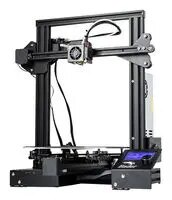
3D printers are on everyone's wishlist, but for EEs, they are especially useful. EEs are always in need of custom enclosures, mounts, risers, shims, and more. 3D printers can even print out entire sets of tools for the workbench. Because of advancing technology, prices have come down in recent years.
image

Ender 3 PRO 3D Printer


Microcontrollers and Single Board Computers

The integration of hardware and software has produced some of the most innovative devices out there. Microcontrollers and single board computers (SBC) are powerful learning tools to get you familiar with combining software and hardware.


Arduino

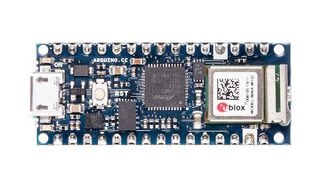
Arduino is a microcontroller that functions as an interface for a variety of hardware, including sensors, robots, displays, and more. It comes with its own development environment where you can write code (C++) to control the hardware attached to it. You can find Arduinos everywhere, from classrooms to automated factory floors.
image

Arduino Nano 33 IoT


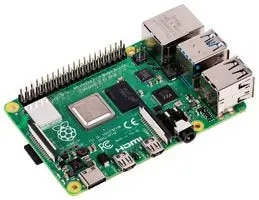
Raspberry Pi is entire computer packed onto a single board, capable of running any software compatible with the Linux operating system. Several manufacturers build "hats", small boards designed to interface with Pi that connect specifically to different types of hardware.
image

Raspberry Pi 4 2GB


Scientific Calculator

Last but not least, a good scientific calculator is mandatory for any EE student.

Mine was the legendary Hewlett Packard 28S (https://www.hpmuseum.org/hp28c.htm).

This $235 beast did everything, graphing, unit conversions, and it was the first Reverse Polish Lisp (RPL) (https://www.hpmuseum.org/rpl.htm) calculator.


However, the feature you really need as an EE student is solving matrices; any basic circuits class will have you solving hundreds. No one wants to solve matrices by hand! Luckily, these days, you don't need to pay $200 for a scientific calculator. Whether you're using iOS or Android, pop on your App Store and search for "scientific calculator" to pull up some low cost or even free alternatives to the monster HP.

  • what should i buy?
  • students
  • stem
  • electrical engineering
  • wishlist
  • Share
  • History
  • More
  • Cancel
  • Sign in to reply

Top Comments

  • maxpowerr
    maxpowerr over 4 years ago +4
    I figured out what was missing on this list.
  • kmikemoo
    kmikemoo over 4 years ago in reply to maxpowerr +2
    maxpowerr That got an audible laugh! That's funny!
  • phoenixcomm
    phoenixcomm over 4 years ago +2
    I have a bone to pick with you and your choice of wire strippers. both of these strippers do a better job with no twisting, razor blades, etc. ~~ Cris BTW By the best iron, you can afford. A ten - 20 hobby…
  • shs5789
    shs5789 over 4 years ago

    1. What was the first thing you learned in engineering school that stuck with you throughout your career?

        Ans: Learning Soldering skill which help me to get understanding of soldering Quality, Solder type used, Issue getting faced in Mfg. of Electronics devices/products, Maintenance & support to remote site for problem getting due to soldering issues; I start soldering in collage & currently I able to solder 2000 point of SMD component from range to 0201 to 3210; also able to solder 1000 pin IC of QFP1000 package, 64 pin QFN package, 100 pin BGA package. This is add on skill for Hardwar plus software developer like me.


    2. What is missing from this list?


    Ans:

    a. Wire cutter (https://in.element14.com/xcelite/1178m/diagonal-cutter-flush-1-6mm-143mm/dp/2965542?st=wire%20cutter )


    b. ESD protection kits (https://in.element14.com/multicomp/069-0024/eu-esd-work-station-kit/dp/2392801 )


    c. Rework Station (https://in.element14.com/multicomp-pro/mp740111/hot-air-station-700w-240vac-eu/dp/3235965 )


    d. Pin Header, Board-to-Board, 2.54 mm, 2 Rows/1 Rows Male/Female (like https://in.element14.com/amphenol-icc-fci/67997-410hlf/connector-header-10pos-2row-2/dp/2751378 )


    e. Ribbon Cable (https://in.element14.com/pro-power/r2651dtsy10ac85/ribbon-cable-10-core-28awg-per/dp/2628358, https://in.element14.com/3m/3365-16/ribbon-cable-16way-30-5m/dp/296831 )


    f. Solder Stand (https://in.element14.com/metcal/ws2/soldering-iron-stand-for-ps8-900/dp/1341343?st=solder%20stand )

    • Cancel
    • Vote Up 0 Vote Down
    • Sign in to reply
    • More
    • Cancel
  • kluivertcorreia
    kluivertcorreia over 4 years ago

    [1]: "Sometimes you need to accept a rule before you understand, it won't take long before you figure out why its so" , really helped me for the later sems


    [2]: Wire Wrapping tool image or USB oscilloscope (PICOSCOPE 2204A-D2)

    • Cancel
    • Vote Up 0 Vote Down
    • Sign in to reply
    • More
    • Cancel
  • carmelito
    carmelito over 4 years ago

    In early days, just before I got into engineering, a couple of things I had was a multi-meter, and a kit with a 555 timer, which contained a breadboard, few resistors, LEDs... And, I still remember I dint have a set of wire strippers , which meant I had to use my teeth to strip the breadboarding wire..

    And, still today I joke with my parents " that I have a strong Jaw, and weak teeth !! because they dint get wire strippers" imageimage..


    On a more serious note, I think today a must have for an electrical engineer is a Multimeter and Arduino kit, is a bare minimum to start. And, yes coffee mug per robogary suggestion ..


    And for the question on what is missing in the above list, I would suggest adding a breadboarding/prototyping kit in addition to the Arduino and Raspberry Pi in the list. Something on the lines of  - Educational Hobby Kit, Inventors Kit For Arduino, Prototyping Components Kit

    • Cancel
    • Vote Up 0 Vote Down
    • Sign in to reply
    • More
    • Cancel
  • surbhika
    surbhika over 4 years ago

    1) What was the first thing you learned in engineering school that stuck with you throughout your career?

    I have recently started pursuing my masters course in electrical engineering, but as i recall the most fascinating moments of my whole engineering is knowing the working of semiconductor devices.. it was pure magical how we control flow of electrons in tiny wafers through voltage barriers.

    And you ask is it stuck with me in my career - i am pursuing my masters in VLSI Design image.


    2) What is missing from this list?

    Since it is a starter kit which already involves all basic tools and equipment to get a pretty start, it would have been nice if we could include basic components also: few resistors, capacitors, transistors, LEDs, a simplest sensor (may be an IR module), an actuator such as 5V dc motor.

    If you are specific about a missing equipment (not components), i can think of: hot air gun, general purpose circuit boards, wires, heat shrink sleeves..

    • Cancel
    • Vote Up 0 Vote Down
    • Sign in to reply
    • More
    • Cancel
  • oguzakseki
    oguzakseki over 4 years ago

    Hello all,


    I remember my first day in university. The dean of our department held an acquaintance meeting. He had said that "we accept all of you as a little seed which is sowed today. You are going to vegetate and become a tree when you graduated from university. After that time, you should continue to vegetate and keep yourself healthy, too. This growth is maintained by improving your educational/occupational skills. Since learning process is not ended, you should not accept yourself adequate and you should endeavour to develop yourself."   That is the first thing that i have learned in the university image


    What is missing in the list?  --> I think missing item is printer. All engineering students utilize from printer frequently during university years. It is essential part for a student. image

    • Cancel
    • Vote Up 0 Vote Down
    • Sign in to reply
    • More
    • Cancel
  • swathic
    swathic over 4 years ago

    When I was in a class of 6th I used to listen songs, stories in a Radio set due to some power fluctuations the radio set got short-circuit and my father take it to nearby shop and got repaired by evening. As a girl I could not go along with him to see the procedure how it was got repaired and for years my mind was stuck on that. When I joined Electrical and Electronic Engineering I started to learn the Breadboard connections, Soldering, Coding for L-C-Rs, Basic knowledge on Diodes, transistors, gates, Flipflops, Drivers, filters, Power converters, Control systems, Instrumentation, MCU, PCB designing, Welding, Lathe works, CAD, C, C++, PYTHON, etc skills. Now I am happy to start projects on IoT for various applications in Agriculture, Medical, Industrial, Households, etc.


    I would like to include missing components/tools from the above list which are most essential and cost low for EE students are

    Tester: for current passage testing

    Screw Driver set: To open the screws for any instrument or device.

    Insulation Tape: to close the open contacts

    Glue Gun: to block/close the exposed short-circuit connections/points

    Gloves: For safety purpose they are must

    Measuring Scale: To fix the part in a suitable place

    Connecting Wires: without wire connections circuit has no life to run the system

    Spirit Level: the devices should align properly for safe and smooth running

    Hacksaw: to cut he unwanted material or to break the case.

    Drill: To hole the PCB for proper fitting in the case/box


    It will be good opportunity for me through this Giveaway to encouraging the women community members to share more number of thoughts and educate upcoming EE girls.

    • Cancel
    • Vote Up 0 Vote Down
    • Sign in to reply
    • More
    • Cancel
  • Jan Cumps
    Jan Cumps over 4 years ago in reply to kahocheng

    kahocheng  wrote:


    As an engineering student, I learned about pumps and hydrolics. ...

    The same for me. Pneumatics and hydraulics were part of my Control Techniques specialisation.

    • Cancel
    • Vote Up 0 Vote Down
    • Sign in to reply
    • More
    • Cancel
  • kahocheng
    kahocheng over 4 years ago

    As an engineering student, I learned about pumps and hydrolics. It was not my favorite course, but later I realized the importance of this, when I had to build mini-reactors for projects in other courses and during my internship.


    If we are using breadboards and the Raspberry Pi, I think jumper wires are required as tools for prototyping. For powering the breadboard from the power supply, as well as for the multimeter, banana leads are needed. A screw driver for adjusting screw terminals and some adjustable components is also very useful.

    • Cancel
    • Vote Up 0 Vote Down
    • Sign in to reply
    • More
    • Cancel
  • redcharly
    redcharly over 4 years ago

    I believe that the study in Engineering is particular because many different topics are studied and many different laboratory experiences are made,

    I was very happy when I had the opportunity to enter a real Electronics laboratory and I was finally able to use oscilloscopes, frequency meters, signals generators, data acquisition boards ... Wonderful experiences!

    The proposed tools are many and very functional, I would simply add a slightly higher power welder for welding on large surfaces or using large section cables.

    • Cancel
    • Vote Up 0 Vote Down
    • Sign in to reply
    • More
    • Cancel
  • robogary
    robogary over 4 years ago in reply to dougw

    .... ...Digital classes were electives and the 4 bit processor was state of the art. There was this dream thing called an 8080 that the profs were drooling over its development.

    • Cancel
    • Vote Up 0 Vote Down
    • Sign in to reply
    • More
    • Cancel
<>
element14 Community

element14 is the first online community specifically for engineers. Connect with your peers and get expert answers to your questions.

  • Members
  • Learn
  • Technologies
  • Challenges & Projects
  • Products
  • Store
  • About Us
  • Feedback & Support
  • FAQs
  • Terms of Use
  • Privacy Policy
  • Legal and Copyright Notices
  • Sitemap
  • Cookies

An Avnet Company © 2026 Premier Farnell Limited. All Rights Reserved.

Premier Farnell Ltd, registered in England and Wales (no 00876412), registered office: Farnell House, Forge Lane, Leeds LS12 2NE.

ICP 备案号 10220084.

Follow element14

  • X
  • Facebook
  • linkedin
  • YouTube