

.jpg)

 The demand for robotics is growing across various sectors due to the increasing adoption of automation. Businesses are increasingly turning to automation to address labour shortages, enhance efficiency, and improve the quality and consistency of their operations. However, robots require specialised computing solutions because they process copious amounts of sensor data and perform precise movements simultaneously. Adaptive computing platforms are crucial, as they offer the low latency and determinism required for safe, real-time control of multi-axis robots.
The AMD Kria KR260 Robotics Starter Kit is the easiest way to develop ROS 2-based robots with the attributes of adaptive computing and in adjunct applications involving industrial vision, communications, and control. This article discusses the KR260 Robotics Starter Kit and how adaptive computing, Robotics Operating System 2 (ROS), and particularly AMD Kria SOMs are the perfect compute platforms for next-generation robotics.
Robotic Starter Kit: A Comprehensive Development Platform for Robotics, Machine Vision, and Industrial Automation
A robotics starter kit is a comprehensive development platform designed for beginners, engineers, and researchers to develop hardware-accelerated applications for robotics, machine vision, and industrial communication and control. It typically contains all the necessary components and instructions to assemble and program a basic robot.
The main components of a robotics starter kit typically include a micro-controller or system-on-module (SOM), memory, boot, and security modules. It also includes a power solution, multiple Ethernet interfaces, SFP+ connectivity, sensor interfaces, a cooling fan, and a microSD card. There are robot kits that include power adaptors and cables for connectivity and assembly. Sensors, motors, and software (e.g., Robot Operating System, known as ROS) are often included to enable environmental interaction and programming.
Robotic starter kits find their application across various fields, including education, industry, and research. In education, they help understand STEM (Science, Technology, Engineering, and Mathematics) subjects and offer a practical approach to learning complex concepts. In the industrial sector, robotics kits provide a cost-effective solution for prototyping and testing new technologies. They help engineers and designers to develop and refine their design or prototype before full-scale production. These kits also provide them with a platform to test ideas and identify potential issues during the early stages of product development. A robotics starter kit also benefits researchers by providing them with a flexible and adaptable platform for experimentation. These kits allow them to develop new algorithms, test artificial intelligence applications, and explore innovative solutions to complex problems.
How AMD Kria K26 SOM and Robotics Carrier Card Power the AMD Kria KR260 Robotics Starter Kit
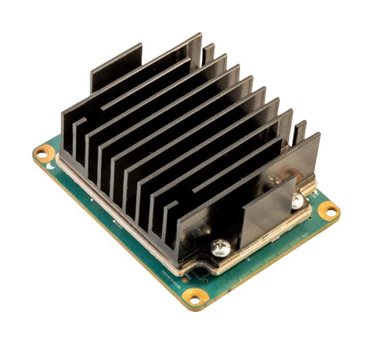
The KR260 Robotics Starter Kit is comprised of the AMD Kria K26 SOM (non-production) and a robotics application focused carrier card. The K26 SOM is featured in both the AMD Kria KV260 Vision AI and KR260 Robotics Starter Kits, customers can also design their own custom carrier card to target various applications.
The K26 SOM is a compact module built using a custom AMD Zynq UltraScale+ MPSoC device. This adaptive SoC integrates Arm® processors (Processor System, PS) for running operating systems like Linux and high-level applications, and Programmable Logic (PL) / FPGA for custom hardware acceleration of demanding tasks such as AI inference or image processing. It also includes essential memory and power management.
The carrier card acts as the "interface" and expansion hub. The K26 SOM plugs into it, gaining access to the external world. The carrier card breaks out the SOM's high-density connectors into accessible ports, including Ethernet, USB, and crucial camera interfaces (MIPI CSI-2) for vision-based use cases. It also provides power distribution and application-specific peripherals like motor control interfaces and additional sensor connections.
Using Kria SOMs together with AMD development tools (such as AMD Vivado Design Tools and AMD Vitis Software Platforms) and open-source tools (such as the Linux Device Tree Generator/Compiler), developers can create and test their own custom applications and programmable logic (PL) functions. This modularity also allows them to leverage powerful, standardised SOM while customising the carrier card for diverse robotic applications, accelerating development and reducing technical risk.
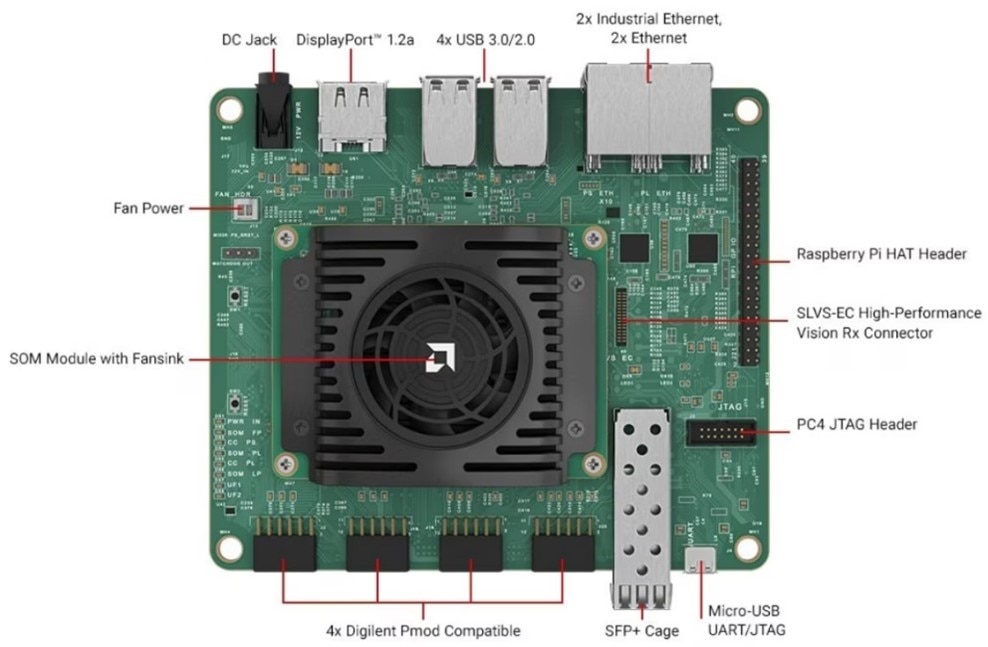
Figure 1: AMD Kria KR260 Robotics Starter Kit
Source: AMD
Native ROS 2 Support Offering Improved Reliability and Flexibility to Robotics Developers
ROS is an industry-standard software toolkit for developing robotics applications. It includes open-source software libraries (e.g., for motion planning and control) and tools (e.g., simulation, testing, and debugging) for building robotic applications.
ROS 2 is the latest version of ROS, with advanced communication capabilities and better performance than its predecessor. It is the de facto framework for robot application development, including current debugging and visualisation tools, libraries, and communication frameworks. Most features are available for all supported operating systems (including Ubuntu, macOS, and Windows), the communication protocol - historically DDS with several implementations - and programming language client libraries (in C++ and Python).
The KR260 Robotics Starter Kit adopts the ROS 2 Software Development Kit (SDK), enabling a ROS 2-centric development approach with its open-source Kria Robotics Stack. The Kria Robotics Stack is a superset of ROS 2 that combines modern C++ and High-Level Synthesis (HLS) to integrate the AMD infrastructure into the ROS architecture.
Figure 2 represents a simplified view of the Kria Robotics Stack and how it encompasses a robust set of system layers to enable hardware-accelerated libraries.
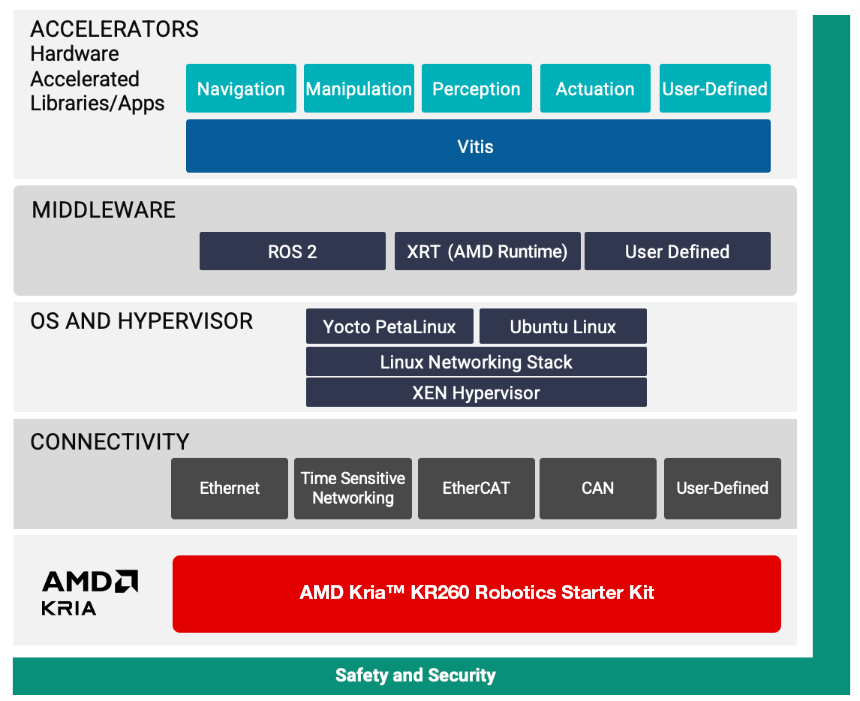
Figure 2: Simplified view of Kria Robotics Stack
One of the important features of Kria Robotics Stack is its optimization of the ROS 2 performance via FPGA-based hardware acceleration of some elements within the layers, such as TSN connectivity or packages within the perception stack. The Kria Robotics Stack can also be used by developers who do not use ROS, since most components are agnostic to the framework and can be used within traditional FPGA design approaches.
For robotics developers, the ROS 2 system has been upgraded with new tools like the ROS 2 build system (ament) and ROS 2 build tools (colcon), making it much easier to use hardware acceleration. This means the same simple commands and workflows they use for regular robot software development also work for building acceleration kernels. These improvements allow developers to quickly add powerful acceleration capabilities to their robots using ROS 2.
How Do AMD Kria SOMs and ROS 2 Drive Next-Gen Robotics Innovation?
Adaptive System on Modules (SOMs) provide a ready-made, off-the-shelf solution for robotics by blending an adaptive SoC with industry-standard interfaces and components, allowing roboticists with little or no hardware expertise to use an adaptive platform immediately. Adaptive SOMs (like the K26 SOM) are ideal for next-generation robotics, integrating powerful SoCs with FPGAs, Arm processors, and standard interfaces to simplify system integration and meet high compute demands. The Kria Robotics Stack enhances ROS 2-centric development and enables rapid prototyping with the KR260 Robotics Starter Kit. This allows developers to launch applications like the ROS 2 Perception Node faster. This out-of-the-box solution leverages FPGA flexibility for real-time performance without requiring deep hardware expertise, democratizing robotics development. The KR260 Robotics Starter Kit pairs a K26 SOM with a carrier card that supports critical robotics connections. It offers a customisable foundation using familiar tools like Python, C++, or FPGA RTL.
Transitioning to a production-ready K26 SOM provides validated designs, pre-built firmware, and ecosystem resources, reducing hardware complexity and enabling roboticists to focus on sensors and actuators.
Adaptive SOMs accelerate design cycles for software and hardware developers by supporting deep-learning frameworks like TensorFlow and PyTorch and eliminating proprietary tools.
Deterministic Communication Across the Robotics Internal Network
The KR260 Robotics Starter Kit features multiple Ethernet connections supporting standard DDS-UDP communication protocols. It has built-in support for precise time synchronization across networks using IEEE 802.1AS standards and advanced Time-Sensitive Networking (TSN) capabilities. These are essential for real-time applications like motor control or sensor coordination. The kit's TSN subsystem ensures that all connected devices operate in perfect synchronization with minimal timing variations. The system includes two external network interfaces, allowing it to connect directly to larger networks without requiring additional specialized TSN switching equipment.
Versatile Connectivity with Ample I/O Support
With four Pmod 12-pin interfaces and a 26-pin Raspberry Pi HAT, the KR260 Robotics Starter Kit allows developers to connect peripherals like GPS sensors, IMUs, motor drivers, or actuators. The kit’s non-production K26 SOM, equipped with 240-pin connectors, supports robust interfaces: four RJ-45 Ethernet ports, a 10GigE SFP+ cage for high-speed networking, a 2-lane SLVS-EC RX interface for advanced vision sensors (e.g., Sony IMX547 5.1MP camera), four USB 3.0 ports for cameras or standalone use with a keyboard and mouse, and a DisplayPort 1.2a for 1080p monitor output.
Conclusion
The growing installation of robots is driving increased demand for accelerated high-performance computing at the edge. The AMD Kria KR260 Robotics Starter Kit provides an excellent development platform for entry-level and experienced roboticists looking to create innovative ideas for ROS 2-based robotics and take them to production. It also helps developers, especially in small and medium enterprises, get to market faster with reduced total cost of ownership (TCO).
|
|
|
|
|

AMD, and the AMD Arrow logo, Kria, UltraScale+, Vitis, Vivado, Zynq, and combinations thereof are trademarks of Advanced Micro Devices, Inc. Other product names used in this publication are for identification purposes only and may be trademarks of their respective owners.
For more innovative products from AMD Shop Now
About the Sponsor
AMD is the high performance and adaptive computing leader, powering the products and services that help solve the world’s most important challenges. Our technologies advance the future of the data centre, embedded, gaming and PC markets.
Founded in 1969 as a Silicon Valley start-up, the AMD journey began with dozens of employees who were passionate about creating leading-edge semiconductor products. AMD has grown into a global company setting the standard for modern computing, with many important industry firsts and major technological achievements along the way. For more information, click here.


