.jpg)

 The rapid development of technology has not only revolutionized sectors such as advanced robotics, industrial inspection, and medical diagnostics. It has also paved the way for the miniaturization of associated equipment. Today, numerous devices, including inspection equipment, medical diagnostic tools, and robotic arms, have become smaller in size, more aesthetically appealing, and simultaneously increased in functionality. Such miniaturization demands cabling solutions that are not only compact and lightweight but can also maintain signal integrity, mechanical flexibility, and comply with environmental and regulatory standards. Traditional cabling solutions struggle to meet the preceding requirements due to their bulky insulation, insufficient bend radius, or inadequate EMI shielding.
This necessitates an innovative cabling solution that provides easy installation and uncompromising performance in dynamic applications, such as robotic arms and endoscopy devices. This article discusses the cabling challenges in space-constrained environments and how Alpha Wire addresses these challenges with its EcoCable Mini®, Micro Coaxial Cables, and EcoWire® hook-up wires.
Key Demands of Compact Cable Technologies
Advanced wiring solutions are key requirements for many demanding, space-constrained environments, delivering breakthrough performance. Here are a few examples of applications where these specialized cables not only connect components but also provide uncompromising performance.
Medical Diagnostics: Medical technology requires advanced wiring solutions as modern medical devices become increasingly miniaturized, more mobile, and integrated with advanced features.
As devices like wearable monitors, handheld diagnostic tools, and minimally invasive surgical equipment shrink in dimension, the internal wiring must maintain high electrical performance within extremely tight spaces. These cables transmit sensitive bio-signals reliably while being exceptionally lightweight and flexible, allowing for greater patient comfort and enhanced device mobility.
However, designing wiring for medical applications brings forth unique challenges. Cables must be made from biocompatible materials to ensure patient safety and must withstand frequent sterilization and cleaning cycles without degradation or material breakdown. Compact devices create tight bends and demand ultra-thin insulation. This increases the risk of flex fatigue and signal loss, especially in applications that require repeated movement or bending.
Medical environments often require low-outgassing and halogen-free materials to prevent toxic emissions, meeting strict regulatory and safety standards. Beyond mechanical constraints, advanced wiring must also provide robust shielding against electromagnetic interference (EMI) and ensure the accurate transfer of diagnostic images and biosensor data.
Industrial Robotics: Industrial robots operate in compact spaces with high-speed movements, often involving repeated bending, twisting, and vibration. This requires a wiring solution that provides reliable and precise performance. In robotics, every joint, actuator, and sensor requires cables with high service life that can perform without fatigue or signal loss. For example, multi-axis robotic arms require cables capable of withstanding ±180° torsion every 3 feet while enduring millions of flex cycles.
The most critical challenge with the traditional cables is achieving a lifespan of over one million flex cycles without conductor fatigue or insulation cracking. Cables must accommodate extremely tight, constant dynamic bend radii. Additionally, modern robots have become more compact and multi-functional. Hence, space constraints demand cables with smaller diameters, tighter bend radii, and ease of routing through narrow channels without compromising power or data transmission. Other challenges include electromagnetic interference affecting signal integrity, heat buildup during high-speed operations, and the need for chemical and abrasion-resistant materials in harsh industrial environments.
Technical Criteria For Dynamic Cable Selection In High-Flex Environments
Selection of cables for dynamic applications, such as robots, drag chains, or automation equipment, should focus on mechanical stress, signal integrity, thermal loads, and environmental factors. The following factors should be considered when selecting cables for dynamic applications:
Conductor Selection: In dynamic applications like articulated robots or gantry systems, stranded tinned copper conductors are preferred due to their flexibility and resistance to corrosion and fatigue. The American Wire Gauge (AWG) size must be compatible with the device's electrical load and connector requirements. For example, a 7/32 stranding for 24 AWG performs better than solid wires, resisting breaks from repeated torsion up to ±180°/m in welding bots.
Insulation and Shielding: The choice of insulating and jacketing materials is critical for signal integrity. Polyolefin-based insulations, such as polyethylene and polypropylene, offer superior dielectric properties compared to PVC, while also providing high strength and low density. This means less total material and a slimmer, lighter, and more flexible cable. In environments prone to EMI, such as those with motors, shielded cables are essential to minimize noise and signal degradation. For example, a double-layer cable with foil tape and 95% braid can reduce surface transfer impedance by 1/5, while preserving impedance (100-120 Ω) in high-speed data links.
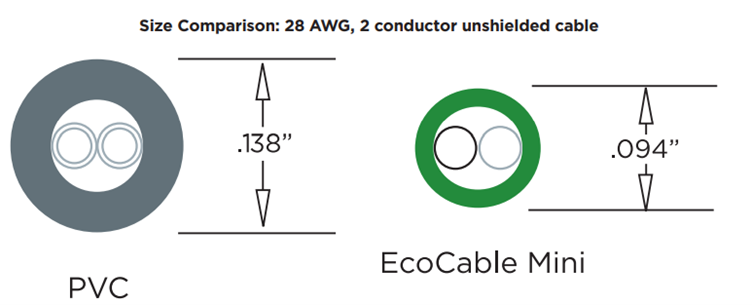
Figure 1: EcoCable Mini® cable with mPPE jacket offers the advantage of up to 92% lower outgassing than PVC control cable(Source: Belden)
Environmental Resilience: Cables exposed to heat, moisture, chemicals, or UV light must utilize materials such as Teflon or PVC jackets with flame-retardant properties to meet safety standards, including UL or RoHS. Polyurethane (PUR) or Thermoplastic Elastomer (TPE) for the outer jacket offers superior resistance to abrasion, oils, chemicals, and temperature fluctuations commonly found on the factory floor, thereby preventing premature wear and tear.
Bending Radius: It is the minimum radius formed by the cable's centerline when it is bent. For cables in a dynamic environment, the recommended minimum bending radius is typically a multiple of the cable's outer diameter (OD), often ranging from 4 times to 12 times the OD. Bend radius requirements vary depending on the type of cable. For example, flexible cables can tolerate smaller bend radii, whereas high-voltage wires or fiber optic cables require larger bend radii for safety and optimal performance.
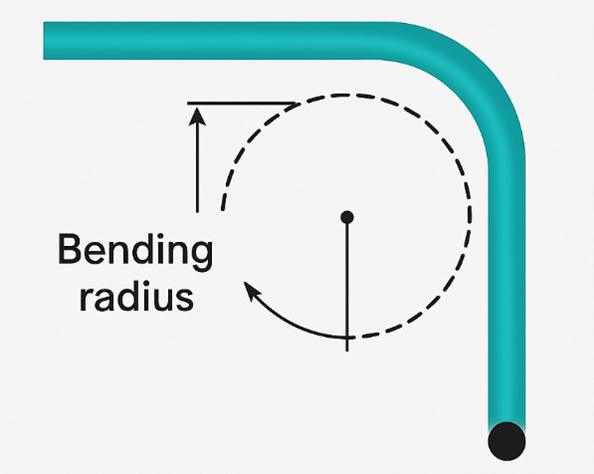
Figure 2: Illustration of bending radius of a wire
Installation Practices: When installing cable chains in dynamic environments, the travel distance of the cable chain should be as short as possible to maintain efficiency and reduce wear. For high-speed setups (high levels of acceleration up to 50 m/s²), pick chains that are both lightweight and rigid enough to prevent twisting and handle the motion demands. When installing cables of different diameters, separators should be used to keep them apart and avoid tangling or interference with signal and power transmission. Additionally, proper strain relief and routing should be ensured to allow the cables to flex naturally without sharp bends or excessive tension.
Alpha Wire’s Eco-Friendly, Space-Saving Cable Solutions
Alpha Wire has engineered its EcoGen family of cables and wires to meet the challenges of space constraints and weight reduction in medical, industrial, and robotic applications. With the EcoGen family featuring EcoCable Mini®, Micro Coaxial Cables, EcoWire® Hook-Up Wires, and EcoFlex® Series, it provides easy routing, durability, excellent signal integrity, and environmentally friendly footprints compared to traditional counterparts.
EcoCable Mini®: This is the newest addition to Alpha Wire's EcoGen® family of environmentally friendly, high-performance cables. Developed specifically for applications requiring a smaller, lighter, 300 V cable, it offers significant space-saving advantages over standard PVC cable. This makes it an ideal choice for intricate, compact designs in a variety of equipment. The key features are:
- Smaller and Lighter: Engineered with mPPE insulation and jacketing, making it up to 32% smaller and 44% lighter than traditional 300 V PVC cables. This allows for easier routing and installation in tight or densely packed areas.
- Environmental Benefits: This cable is free of halogens, phthalates, and heavy metals. It also produces up to 92% lower outgassing than standard PVC cable, which is crucial for sensitive environments, such as those in medical devices and semiconductor manufacturing.
- High-Performance Materials: The mPPE insulation and jacket combine durability with performance. The stranded tinned copper conductors provide fine flexibility for complex routing.
- Versatile Configurations: Offers over 250 standard configurations and four shielding options, including unshielded, foil-shielded, Supra-Shield foil + braid, and Supra-Shield foil + braid with enhanced shielding, to optimize signal integrity and noise rejection.
- Standard Compliance: The EcoCable Mini® is suitable for NFPA 79 applications and meets the requirements of RoHS, REACH, and WEEE.
EcoFlex® Series: These cables become the preferred choice when a pre-jacketed, multiconductor flexible cable is needed in a tight space. The key features are:
- Flexible and Compact: Using the same mPPE insulation as EcoWire®, EcoFlex® cables provide a flexible, multiconductor solution in a smaller and lighter overall package.
- Durable: EcoFlex PUR® cables also feature a rigid polyurethane (PUR) jacket for high durability, with an 8+ million-cycle flex life.
- Multiple Configurations are available, including both shielded and unshielded versions, as well as various conductor counts, allowing for tailored applications.
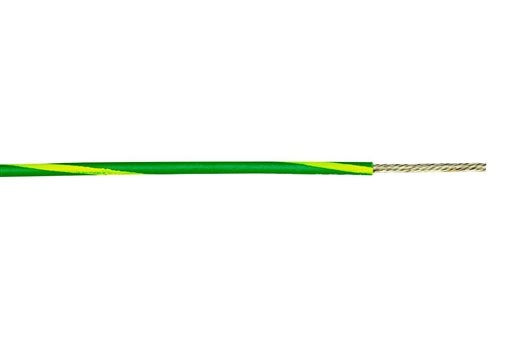
EcoWire® Hook-up Wire: EcoWire® is a single-conductor option ideal for point-to-point wiring in densely packed electronics. The key features are:
- Small and Lightweight: The modified polyphenylene ether (mPPE) insulation is up to 45% smaller in diameter and 40% lighter than standard PVC wire.
- Environmentally Friendly: EcoWire® is halogen-free ensuring compliance with environmental regulations.
- Excellent Electrical Properties: The mPPE insulation offers high dielectric strength and is resistant to a wide range of temperatures.
Micro Coaxial Cables: Micro coaxial cables are the best choice for transmitting sensitive signals in the most compact configurations.
- Space-Saving Design: These cables are available in extremely small sizes ranging from 50 AWG down to 32 AWG, with reduced outer diameters for easy routing in confined enclosures.
- Signal Integrity: The controlled impedance design, combined with a PFA dielectric, provides signal integrity and limits interference over short runs.
- High Performance: The high-strength, silver-plated or tinned-copper alloy construction extends its temperature rating up to 200°C.
A tabulated comparison of the above series of cables is listed:
|
Feature |
EcoCable Mini® (Control Cable) |
EcoFlex® (Continuous Flex) |
EcoWire® (Hook-Up Wire) |
Micro Coaxial Cables |
|
Best For |
Compact, lightweight multiconductor control applications (300 V) |
Continuous flexing and high-torsion movement (robotics/drag chains).
|
General point-to-point internal wiring in dense panels. |
High-performance signal transmission in extremely compact, high-temp spaces. |
|
Primary Advantage
|
Up to 32% smaller control cable footprint.
|
8 million+ flex cycles with a rugged PUR jacket.
|
Up to 45% smaller, 40% lighter, halogen-free. |
Highest signal integrity in the smallest size. |
|
Conductor Sizes |
Up to 20 AWG |
Up to 16 AWG |
28 AWG to 10 AWG |
50 AWG to 32 AWG |
|
Insulation |
Polyphenylene ether (mPPE) |
Polyphenylene ether (mPPE) |
Polyphenylene ether (mPPE) |
Perfluoroalkoxyalkan (PFA). |
|
Jacket |
Polyphenylene ether (mPPE) |
PUR (Polyurethane)
|
None |
Perfluoroalkoxyalkan (PFA). |
|
Bend Radius |
10 × OD (Static)
|
6 × OD (Static)
|
5 × OD (Static)
|
10 × OD (Static)
|
|
Temperature |
Up to 80° C |
Up to 80° C |
Up to 105° C |
Up to 200° C |
Table 1: Comparison of Alpha Wire EcoGen® family of cables
Summary
Selecting the right cable ensures reliability, efficiency, and safety of the system in space-constrained environments. Components such as medical probes and robotic arms demand compact cable solutions that must deliver superior flexibility, signal integrity, and durability without adding unnecessary bulk. Alpha Wire’s EcoGen product family, including EcoCable® Mini, Micro Coaxial Cables, EcoWire® hook-up wires, and EcoFlex® series, offers sustainable, high-performance, and space-saving wiring systems designed for today’s most demanding applications.
By combining reduced size with eco-friendly materials and versatile configurations, Alpha Wire provides unmatched performance and customization with EcoGen® solutions tailored for engineers and designers tackling tight installations.
ABOUT THE SPONSOR
Founded in New York City in 1922 as a supplier of wire strengtheners to the millinery industry (women’s hats), Alpha Wire grew to become a valued supplier to the expanding radio industry throughout the 1930s by producing wire and insulators for antennas. The company’s purpose-driven, hazard-matched connectivity solutions along with its leadership in flexible automation cabling, consultative approach and responsive support of customers’ unique needs, availability of small put-ups, short minimum runs, and highly engineered custom cable solutions have enabled Alpha to serve many of the world’s leading companies. For more information, click here.
Featured Products
|
Micro Coaxial Cable |
|
|
|
EcoCable Mini® |