

.jpg)

When the Spectrum Gets Harder to Read
The RF environment is dominated by non‑continuous, time‑varying emissions rather than steady transmissions. These signals appear as short bursts, rapid frequency hops, low-duty-cycle signals, and wideband channels that can change in just microseconds.
In these conditions, a traditional swept spectrum analyzer cannot monitor the entire spectrum simultaneously. A sweep-based analyzer moves across the selected frequency range step by step. Between those steps, the instrument has dead time - brief moments when it cannot see what is happening. Short-lived interferers, fast-hopping signals, and burst transmissions can easily occur during these blind periods and go undetected. For a network engineer testing a 5G base station, or a regulator tracking down an illegal transmitter, missing one of these events can mean another site visit, delayed approval, or continuing service problems with no clear cause.
Keysight FieldFox handheld analyzers are designed to solve this problem. In this Tech Spotlight, we will examine what makes the FieldFox D series different from other handheld analyzers, the technologies that enable 120 MHz of continuous, gap-free capture, and how it delivers real return on investment for 5G deployment teams, regulators, defense organizations, and industrial RF users.
The Challenges of Field-Based RF Analysis in the Modern Spectrum
The RF test challenge in 2026 is not simply one of frequency ranges, it is one of information density, signal transience, and workflow integration. Four compounding challenges drive the demand for a new generation of field analyzers.
- Transient Signal Problem: Interference in modern wireless systems is often short and unpredictable, sometimes lasting only a few milliseconds. A traditional swept spectrum analyzer can easily miss these short-lived events. Real-time spectrum analysis (RTSA) solves this problem by using FFT-based processing to monitor the entire bandwidth simultaneously, ensuring a high probability of interception. Figure 1 illustrates how traditional spectrum analysis introduces dead time between acquisitions. While figure 2 shows how RTSA enables continuous, gap‑free signal capture.

Fig 1. A signal captured using traditional spectrum analysis mode with dead time between updates (Source: Keysight)
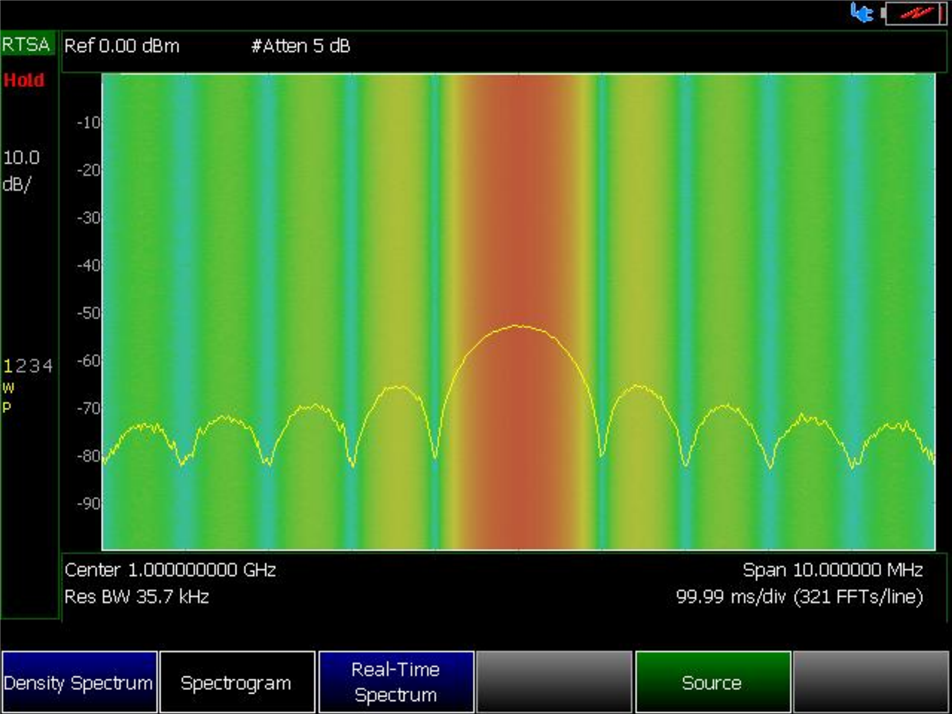
Fig 2. A signal captured using RTSA mode with gap-free results (Source: Keysight)
- Bandwidth Bottleneck: Older handheld analyzers typically offered only 10–40 MHz of instantaneous bandwidth-insufficient for wideband signals such as 5G NR’s 100 MHz channels or radar waveforms exceeding 80 MHz. Narrow analysis windows create blind spots, revealing the signal in parts and leading to incomplete conclusions.
- Data Streaming Limitations: Many handheld units claim IQ streaming, but in practice suffer from limited bandwidth, duty‑cycle caps, or slow interfaces like USB 2.0/3.0, which cannot sustain continuous 120 MHz streaming. Dropped samples or gaps compromise evidence in spectrum monitoring, EW analysis, and 5G verification.
- Disconnect between Field and Lab: Advanced tools like 89600 VSA require complete, corrected IQ datasets for deep analysis. If field instruments cannot capture and transfer full-fidelity data, it creates uncertainty between field measurements and lab results.
One Instrument, the Full Field Kit: Introducing the Keysight FieldFox D-Series
The N99xxD (D-Series) is a family of 14 handheld models with maximum frequencies of 14, 18, 26.5, 32, 44, 50, and 54 GHz. These models are available in both combination and dedicated spectrum-analyzer variants. The N9918D combines several capabilities in one rugged package: 120 MHz of gap-free real-time bandwidth, ±0.1 dB amplitude accuracy without warm-up, a 10 GbE SFP+ interface for continuous IQ streaming, a Linux-based operating system, and more than 25 software-controlled measurement modes.
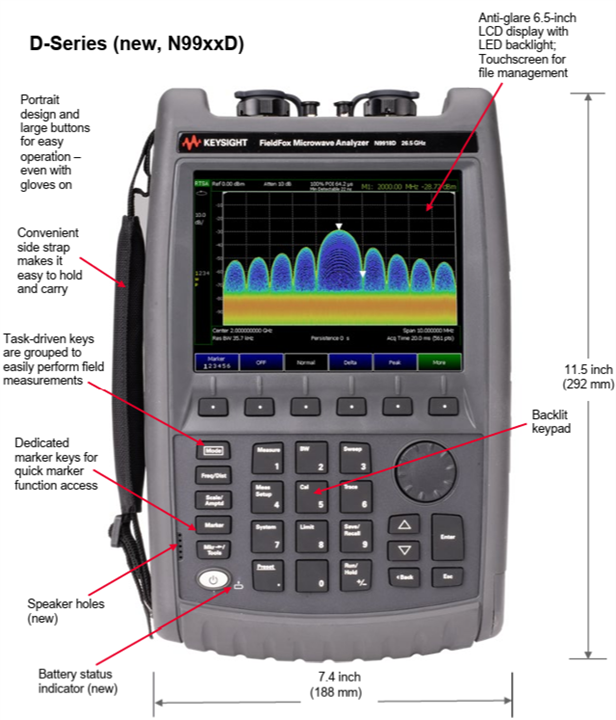
Figure 3. Keysight N9918D FieldFox D-Series Handheld Microwave Analyzer (9 kHz – 26.5 GHz). Source: Keysight Technologies
What makes the FieldFox D series truly different?
120 MHz Gap‑Free IQ Streaming — The Breakthrough Capability
The N9918D delivers true 120 MHz gap‑free IQ capture, meaning no missing samples throughout the entire recording. This architecture guarantees 100% probability of intercept (POI) for signals as short as 5.52 µs. Traditional swept analyzers miss transient events because they measure one frequency at a time, and many FFT‑based systems still lose samples at frame boundaries. FieldFox overcomes this with a high‑speed ADC, FPGA‑based DSP, and a 10 GbE SFP+ interface that sustains the required 3.84 Gbps data rate—far beyond what USB 3.0 or 1 GbE can support. This wide, continuous bandwidth is essential for 5G NR (50/80/100 MHz channels), wideband radar waveforms, and EW signals that hop rapidly across tens of MHz. With 120 MHz gap‑free capture, engineers can reliably detect and analyze signals that narrowband or bandwidth‑limited handheld analyzers would simply miss.
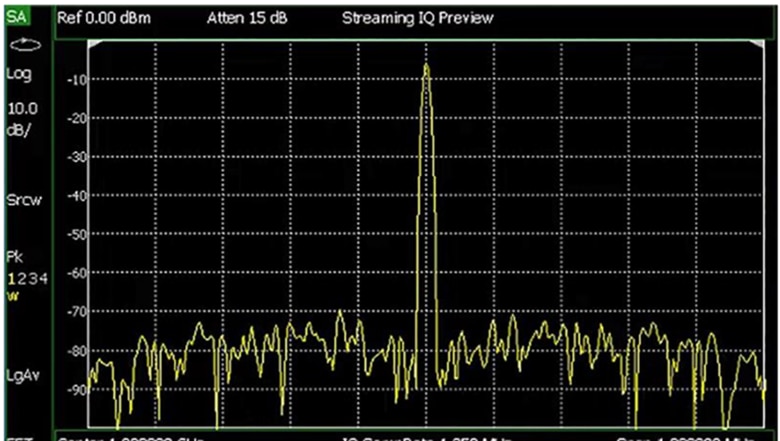
Fig 4. IQ Streaming on FieldFox Handheld Analyzer (Source: Keysight)
±0.1 dB Amplitude Accuracy Without Warm-up
The N9918D achieves ±0.1 dB absolute amplitude accuracy immediately at power‑on, eliminating the need for warm‑up or frequent recalibration. Keysight’s CalReady architecture applies internal correction factors for frequency response, temperature drift, and power flatness, enabling instant accuracy for S‑parameters, cable loss, and DTF/TDR measurements. For applications like EIRP verification, compliance testing, and link‑budget calculations, ±0.1 dB accuracy represents a 5x reduction in uncertainty compared to typical ±0.5 dB handheld instruments—often determining whether a system passes or fails.
Software‑Defined Architecture: 25+ Applications in One Platform
The N9918D is designed as a software-defined platform rather than a single-purpose spectrum analyzer. All functionality—CAT, SA, RTSA, full 2-port VNA, power meter, pulse analysis, noise figure, OTA demodulation, AoA/TDoA geolocation, and EMI pre-compliance—is activated through software licenses, allowing one device to serve multiple roles without hardware swaps. Engineers can upgrade capabilities over time, making the instrument adaptable for telecom, defense, and regulatory workflows with a single hardware investment.
Linux‑Based OS - Secure and Operationally Stable
By moving to a Linux‑based OS, FieldFox eliminates Windows‑related update interruptions, background processes, and cybersecurity risk. Defense and critical‑infrastructure users benefit from reduced attack surface, simpler IT approval, and stable operation in sensitive environments. This OS transition reflects a deliberate focus on secure, reliable field deployment.
AI‑Driven Signal Classification with KSMS S9916A
When used with Keysight Spectrum Management Software (KSMS) and the S9916A ML engine, the N9918D enables automated classification of signals across the full 120 MHz bandwidth, including LTE, 5G NR, Wi‑Fi, and Bluetooth. The workflow streams corrected IQ data via 10 GbE to a KSMS workstation, where ML algorithms perform near‑real‑time identification, spectrogram visualization, direction finding, and occupancy analysis. Tasks that once required hours of expert manual demodulation can now be completed in minutes.
Seamless Field‑to‑Lab IQ Workflow
The N9918D can create fully corrected IQ recordings that can be replayed directly in Keysight 89600 VSA, supporting deep demodulation and protocol analysis across 75+ standards. Field‑captured RF conditions can be reconstructed in the lab with full fidelity, enabling traceable EW validation, interference investigations, and network troubleshooting without recreating complex test scenarios.
MIL‑Grade Ruggedness Designed for Real‑World Deployment
The Keysight N9918D FieldFox D-Series Handheld Microwave Analyzer is built for demanding field work. The instrument meets MIL‑PRF‑28800F Class 2 and MIL‑STD‑810G requirements, with ratings for explosive atmospheres and ingress protection. It operates from −10 to +55°C, offers a swappable battery for 4‑hour runtime, provides glove‑friendly controls, and includes a sunlight‑readable display. A standard three-year warranty and optional KeysightCare coverage help ensure long-term reliability in the field.
How Does the N9918D Compare to Typical Handheld Analyzers?
|
Parameter |
Typical Handheld Analyzer |
Keysight N9918D FieldFox D-Series |
|
Analysis Bandwidth |
10–40 MHz typical; up to 80 MHz on select high‑end models |
120 MHz gap‑free real‑time / IQ bandwidth |
|
IQ Streaming Interface |
USB or 1 GbE; bandwidth‑limited, often burst‑mode |
10 GbE SFP+ for sustained, gap‑free IQ streaming |
|
Amplitude Accuracy |
±0.4 to ±0.5 dB, typically after warm‑up |
±0.1 dB, no warm‑up required |
|
Operating System |
Embedded OS or Windows‑based platforms |
Embedded Linux OS with hardened security |
|
Signal Classification |
Manual identification by user |
Automated signal analysis via KSMS with optional ML‑assisted workflows |
|
Application Modes |
Fixed hardware configurations |
25+ software‑defined modes, license‑activated in the field |
|
Field-to-Lab IQ Workflow |
IQ capture with limited metadata and offline handling |
Time‑aligned, corrected IQ capture with direct replay in 89600 VSA |
|
VNA Configuration |
1‑port or limited 2‑port (model‑dependent) |
Full 2‑port VNA with all four S‑parameters |
|
DTF + TDR |
Sequential measurements or option‑dependent |
Simultaneous DTF/TDR measurements in a single sweep |
|
Direction Finding |
Not available or external‑system dependent |
Software‑enabled AoA and TDoA using GPS‑time‑stamped IQ |
|
Ruggedization Standard |
Industrial or light‑rugged (varies by vendor) |
MIL‑PRF‑28800F Class 2, MIL‑STD‑810G |
|
Software Upgradability |
Hardware refresh is typically required |
Capabilities added via license key, no hardware change |
Table 1. Feature comparison: typical handheld analyzer vs. Keysight N9918D FieldFox D-Series
Real-World Applications: Where the N9918D Excels
The following scenarios illustrate where the instrument’s specific capabilities translate directly into solved problems.
- 5G NR Deployment and Interference Monitoring
With up to 120 MHz gap‑free bandwidth, the N9918D can capture entire 5G NR channels (50/80/100 MHz) in a single shot. This allows engineers to see transient interference that narrowband handhelds may miss. In a stadium deployment scenario, real‑time IQ streaming to KSMS enables rapid signal analysis, geolocation, and resolution during one site visit. - Defense, Radar and Electronic Warfare Diagnostics
Using real-time spectrum analysis (RTSA) and time-domain capabilities, the N9918D can measure radar pulse characteristics such as pulse repetition interval (PRI), pulse width, chirp, and rise/fall time without missing events. Its 2-port vector network analysis (VNA) capability enables full S-parameter characterization of RF components directly in the field. Its Linux operating system also supports secure deployment. - Cable and Antenna Maintenance
Most microwave link failures are caused by damaged cables or faulty antennas. The N9918D provides Distance-to-Fault (DTF) and Time Domain Reflectometry (TDR) measurements to accurately locate faults and identify impedance discontinuities. These measurements can be performed efficiently in a single sweep, significantly reducing troubleshooting time for technicians working on towers or in remote locations. - Satellite Terminal Verification
With frequency coverage up to 26.5 GHz (and higher across other FieldFox D-Series models), the analyzer supports critical measurements such as EIRP validation, noise figure analysis, and phased array over-the-air (OTA) testing. Its high amplitude accuracy (up to ±0.1 dB under calibrated conditions) ensures reliable and standards-compliant verification of satellite communication systems. - Spectrum Monitoring and Interference Hunting
The RTSA mode, combined with persistence display, enables detection of short-duration and low-probability signals that are often missed by conventional analyzers. When integrated with systems like KSMS, the solution supports advanced geolocation techniques (e.g., AoA, TDoA) for accurate interference source identification, delivering high-performance spectrum monitoring without the need for complex vehicle-mounted setups.
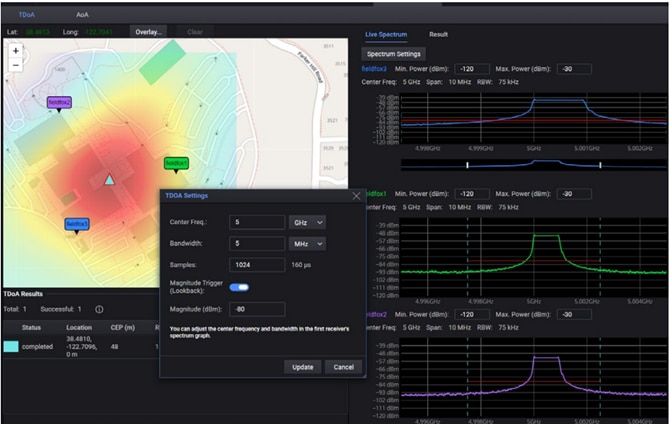
Fig 5. Centralized spectrum monitoring and geolocation using KSMS for efficient interference detection and resolution (Source: Keysight)
Product Family Highlights: The N99xxD Series
The N99xxD family shares a unified software-defined architecture, 10 GbE streaming, and Linux OS, differing mainly by frequency range and configuration.
|
Model |
Max Frequency |
Primary Application Domain |
|
N9913D |
4 GHz |
Cellular sub-6 GHz, Wi-Fi 6/6E deployment |
|
N9916D |
14 GHz |
Sub‑6 GHz DF/TDOA, LTE & early 5G FR1 interference location, microwave link monitoring near C‑band |
|
N9918D |
26.5 GHz |
5G NR FR1 & low‑FR2, K‑band radar signals, microwave backhaul, mobile vehicle‑based TDOA deployments. |
|
N9950D |
32 GHz |
Ka‑band DF/TDOA, early mmWave 5G, satellite downlink interference location |
|
N9951D |
44GHz |
Q‑band DF, automotive radar (24–40 GHz) development, high‑resolution geolocation |
|
N9952D |
50 GHz |
V‑band DF/TDOA, mmWave spectrum monitoring, advanced radar and dense urban 5G FR2 investigations |
|
N9953D |
54 GHz |
W‑band DF/TDOA for advanced radar, defense, and research‑grade millimeter‑wave geolocation |
Table 2. N99xxD FieldFox D-Series family — model, maximum frequency, and primary application domain
Conclusion
The evolution of the RF landscape demands a departure from traditional, sweep-based limitations. By integrating 120 MHz of gap-free real-time bandwidth and 10 GbE streaming into a ruggedized, Linux-based platform, the Keysight FieldFox D-Series effectively bridges the gap between laboratory precision and field-based necessity. It transforms complex signal environments—from 5G NR deployments to mission-critical electronic warfare—into actionable data with ±0.1 dB accuracy and AI-driven insights. As spectrum density intensifies, the FieldFox D-Series ensures that what was once missed can now be captured, analyzed, and resolved, providing an uncompromising tool for the modern RF professional.
ABOUT THE SPONSOR
Keysight helps innovators build confidence, reduce risk, and prove what's next. For more information, click here.
Top Comments