

.jpg)

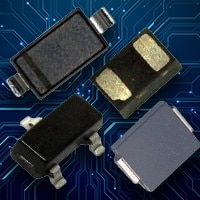 Modern automotive and industrial electronic systems rely on densely packed, high-performance semiconductors that operate at lower voltages. Engine control units (ECUs), Advanced Driver Assistance Systems (ADAS), PLCs, motor drives, sensors, and communication interfaces must ensure uninterrupted operation in electrically harsh environments.
In real-world applications, these circuits are exposed to various electrical disturbances generated within the system. These disturbances include inductive load switching, relay chatter, motor commutation, field collapse in solenoids, and fast transients propagating through long wiring harnesses. External factors, such as electrostatic discharge (ESD) and surge coupling on power or signal lines, further increase the chances of malfunction or permanent damage. Unlike steady-state overvoltage, these disturbances have very fast rise times and high peak energy. Their unpredictable occurrence makes them especially destructive to modern ICs. Even short duration transients can trigger latch up, corrupt data on communication buses, or exceed the maximum ratings of sensitive components.
To mitigate transient threats, engineers require fast-response protection that clamps spikes in nanoseconds. Transient voltage suppressor (TVS) diodes function as a defense mechanism by clamping harmful voltage spikes before they reach critical circuitry. This technology spotlight focuses on the practical circuit challenges of transient over voltages across power rails, signal lines, and communication interfaces. It also explains how YAGEO’s comprehensive portfolio of TVS diodes protects circuits vulnerable to harsh surge threats.
How Voltage Transients Damage Silicon and Why Fuses Aren’t Enough
Voltage transients are highly impulsive, short-duration surges of electrical energy. Although they typically last only nanoseconds or microseconds, their amplitudes can peak at several thousand volts. When these transients affect unprotected silicon, the damage usually falls into two categories:
- Catastrophic Failure (Immediate Destruction): The high energy density of a surge can melt semiconductor junctions, damage the silicon die, rupture PCB traces, or destroy wire bonds. This causes immediate hardware failure, often with visible charring or “magic smoke,” rendering the device permanently inoperable and requiring replacement.
- Latent Failure (Delayed Degradation): This type of failure occurs when a transient partially damages the internal structure of an IC without causing an immediate breakdown. These failures are difficult to identify during production testing or initial deployment because the device continues to function normally. However, the transient stress weakens the semiconductor over time, compromising long-term reliability and eventually leading to unexpected and often costly field failures months later.
These destructive transients commonly originate from: Inductive Switching: Motors, solenoids, transformers, and electromechanical relays spew high-voltage flyback pulses when their magnetic fields collapse. These surges can propagate through power rails and communication lines, placing PLCs, ECUs, and sensor interfaces at significant risk.
- Relay Chatter and Motor Commutation: Rapid switching events in relays and brushed motors generate repetitive electrical noise and fast transient spikes that can disturb nearby electronics and communication networks.
- Electrostatic Discharge (ESD): ESD results from the sudden discharge of accumulated static electricity caused by human handling or cable contact. Even a simple touch on an HMI panel or USB connector can inject several kilovolts into sensitive circuitry.
- Hot-Plugging and Cable Discharge Events: USB, HDMI, Ethernet, and other hot-swappable interfaces are vulnerable to transient surges during cable insertion or removal, potentially corrupting high-speed data or damaging interface ICs.
- Lightning-Induced Surges: Lightning-generated surges coupled through external cables or power infrastructure can introduce extremely large transient currents into industrial and automotive systems, potentially causing catastrophic electronic damage.
TVS diodes: The engineering of instant protection?
Beyond damaging electronic components, voltage transients can lead to costly field repairs, unplanned production downtime, communication failures, and even safety risks in mission-critical systems. Protecting modern electronic platforms, therefore, requires protection devices capable of responding within nanoseconds, effectively clamping harmful voltage spikes, and maintaining stable performance across wide operating voltage and temperature ranges.
Conventional protection methods are often insufficient in these harsh electrical environments. Fuses generally respond too slowly to suppress fast transient events, while metal oxide varistors (MOVs) introduce relatively high parasitic capacitance, making them less suitable for high-speed communication interfaces and sensitive signal lines. Transient voltage suppressor (TVS) diodes are specifically designed to address these limitations. Their ultra-fast response time and precise voltage-clamping capability allow them to suppress transient over voltages before they reach sensitive downstream circuitry. As a result, TVS diodes play a critical role in improving system reliability while reducing equipment failure and maintenance costs.
A TVS diode, also referred to as an avalanche breakdown diode, is a device made of a single P-N junction or several integrated P-N junctions fabricated through the semiconductor diffusion process. The protection principle is shown in Figure 1. TVS devices are available in both unidirectional and bidirectional configurations. Unidirectional TVS diodes are commonly used in DC power supply circuits, while bidirectional devices are preferred for AC circuits. Their V-I characteristics are shown in Figure 2.
In a DC protection circuit, a unidirectional TVS diode is connected in reverse, parallel with the protected circuit. Under normal operating conditions, the device remains in a high-impedance state and does not affect circuit operation. However, when the applied voltage exceeds the avalanche breakdown threshold, the TVS rapidly transitions to a low-impedance state. It then diverts the transient surge current safely to ground while clamping the voltage across the protected circuit to a safe level. Once the transient event subsides, the TVS diode automatically returns to its original high-impedance state.
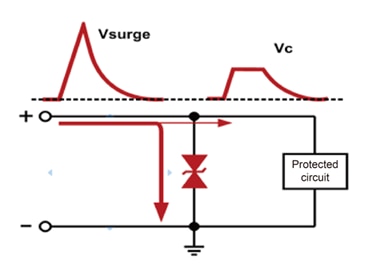

Figure 1: Protection principle of diode Figure 2: V-I characteristic Curve of TVS
Table 1 represents the main parameters associated with a TVS diode.
|
Parameter |
Symbol |
Significance |
|
Cut-off Voltage |
VRWM |
Maximum DC voltage that can be applied continuously without causing TVS degradation or damage (choose ≥ system max voltage) |
|
Leakage Current (standby current) |
IR |
Maximum current flowing through TVS under a specified temperature and the highest operating voltage. Must stay <1 µA at 175 °C for automotive designs. |
|
Breakdown Voltage |
VBR |
Voltage where the diode starts to conduct (typically 10–20 % above VRWM) |
|
Peak Pulse Current |
IPP |
Maximum surge current the TVS diode can withstand without damage. Typically specified at 10/1000μs waveform. |
|
Clamping Voltage
|
VC |
The peak voltage measured across TVS when the peak pulse current IPP of a specified waveform is applied. Must be lower than the absolute maximum voltage rating of the ICs being protected. |
|
Junction Capacitance |
Cj |
Important for high-speed communication and signal interfaces such as Ethernet, USB, HDMI, CAN-FD, and RF lines, where excessive capacitance may affect signal integrity. For power-line protection applications, surge current capability, peak pulse power, and clamping performance are generally more critical design considerations than capacitance. |
Table 1: Parameters associated with TVS diodes
Solving voltage transient challenges with Yageo TVS diodes
YAGEO offers a comprehensive portfolio of TVS diodes specifically designed to address the challenges of voltage transients, ensuring that circuits remain operational regardless of the environment's temperature, energy level, or other factors.
A standard 5V DC power input port faces significant overvoltage risks during the hot plugging of power adapters, peripheral modules, or battery packs. During connection events, sudden step changes in current interact with the parasitic inductance (present in cables, PCB traces, and connectors. This interaction generates severe transient voltage spikes that can easily exceed twice the nominal supply voltage. In addition to electrostatic discharge (ESD), the interface is also vulnerable to surge events caused by cable discharge, inductive switching, and unstable power insertion conditions. Surge transients carry substantially higher energy and longer pulse durations compared to ESD, making them far more destructive to sensitive electronic systems.
Once these surges propagate through the power rail, they can overstress power management stages, damage DC/DC converters, and permanently affect downstream components such as microcontrollers, USB PHYs, and application processors. To prevent these failures, a TVS diode is typically placed across the 5V input rail, as shown in Figure 4. Under normal operating conditions, the TVS diode remains in a high-impedance state and does not interfere with circuit operation. However, when the input voltage exceeds the device’s breakdown threshold during a transient event, the TVS diode rapidly switches to a low-impedance state within picoseconds to nanoseconds. It safely diverts the excess surge current to ground while clamping the voltage to a safe level, thereby protecting sensitive downstream circuitry and ensuring reliable long-term system operation.
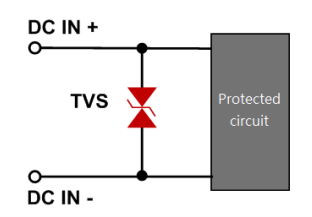
Figure 3: DC power port protection using TVS Diode (Source: Yageo)
RS-485 is widely used in industrial automation, instrumentation, and security systems because of its long communication range and low implementation cost. However, RS-485 transmission lines are usually exposed outdoors, making them vulnerable to transient overvoltage events. These events can be caused by lightning-induced surges, inductive switching, or cable coupling effects. Since RS-485 transceivers typically operate at low voltages (around 5V), even short-duration transients can corrupt data communication or permanently damage interface ICs.
To improve system reliability, TVS diodes are commonly used for RS-485 surge protection due to their fast response and low clamping voltage. Figure 5 shows a typical protection scheme using an SMBJ6.5CA TVS diode, which is connected between the A and B communication lines. During a surge event, the TVS diode rapidly diverts excess current away from the transceiver. This provides both differential-mode and common-mode surge protection for the communication interface. This protection scheme can satisfy the 10/700us 2KV surge test. The SMBJ6.5CA achieves a lower residual voltage under the 2kV surge test, ensuring clamping protection for the transceiver.
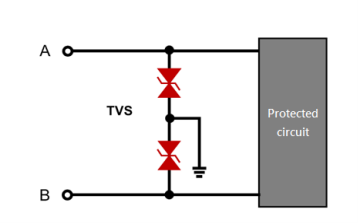
Figure 4: Surge protection of an RS‑485 interface using an SMBJ6.5CA TVS diode (Source: Yageo)
Conclusion
Modern automotive, industrial, and embedded electronic systems operate in increasingly harsh electrical environments where transient overvoltage events can severely impact reliability and long-term performance. Fast transient disturbances caused by ESD, inductive switching, hot-plugging, and lightning-induced surges can damage sensitive semiconductor devices, corrupt communication networks, and trigger costly system failures.
Conventional protection methods often cannot respond quickly enough to suppress these high-energy events effectively. TVS diodes provide an ultra-fast and reliable protection mechanism by clamping transient voltages before they reach critical circuitry. With a robust surge capability, low clamping voltage, and compact packaging, YAGEO’s TVS diode portfolio enables designers to improve system reliability, protect communication interfaces and power rails, and reduce maintenance and downtime costs.
Featured Products
|
|
SDD32C/SDT23C/SET23A/ |
|
UAQ02C/ UDD32CX/UDT23AX Series |
P6SMB/P6SMB-AT Series |
|
SMBJ/SMBJ-AT Series |
SMCJ/SMCJ-AT Series
|
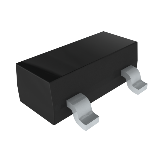
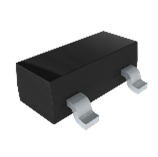
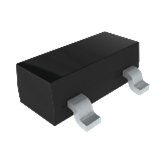
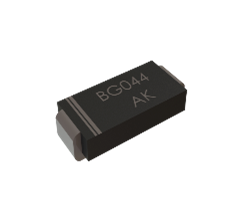
For more Industrial Electronics and TVS Diodes from Yageo Shop Now
About the Sponsor
Evolving from a regional supplier to a global powerhouse, YAGEO offers an extensive portfolio that includes resistors, capacitors, inductors, transformers, relays, antennas, wireless components, and circuit protection solutions, providing customers seamless one-stop shopping. A recognized leader in the industry, YAGEO ranks No.1 worldwide in chip resistors and tantalum capacitors and No.3 in MLCCs (by volume) and inductors. The company’s expansive global network comprises 29 sales offices, 51 manufacturing sites, and 20 R&D centers across 25 countries, supported by a workforce of 40,000 employees. YAGEO serves key vertical markets, including aerospace, automotive, 5G telecommunications, industrial equipment, medical devices, IoT, power management, green energy, computer peripherals, and consumer electronics. For more information, click here.

