


Last week while I was debugging a memory bus, my wife came down and asked if I could watch the kids when they woke up. I knew the design was good, so the bus problem was just an assembly defect, which I hoped to find before the baby woke up. She handed me the old 49MHz FM baby monitor receiver. I set it next to the scope and began looking at each line of the bus. When I touched the probe to a digial net, the high-frequency components coupled from probe’s ground lead and/or from the inside the scope itself causing the baby monitor made noises like the baby monitor in the movie Signs detecting the aliens. 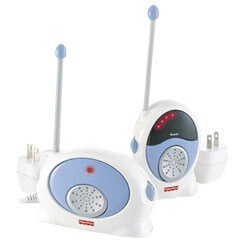
As I went down the lines of the bus, I realized I could tell from the sound whether there was activity on the bus. A low-duty-cycle pulse train made a different sound from a line with a 50% duty cycle square wave. I suspect pulses with faster edge rates would sound louder due to their higher frequency spectral components. I found I could tell an awful lot about the waveform without looking up at the scope. Eventually I found a memory pin that didn’t have much activity on it. The pad beneath it, however, had a good deal of bus activity. It turns out there was a cold joint that I could close by pushing on the IC. I put the probe on the IC pin, pushed down on the IC, and listened to when the noise on the baby monitor changed. I reflowed the joint, and the problem was fixed. I’m not sure if I would have noticed if the baby had cried in the middle of all this, but she did not wake up until after the board was fixed. I probably could not have found the cold joint as fast without the audible indications from the baby monitor.
It seems like an audible indication feature on a scope designed to convey some signal information could be at least as helpful as noise that finds its way through a cheap baby monitor’s signal chain. The ability to get some information without looking up is a bigger time saver than I would have imagined.
