


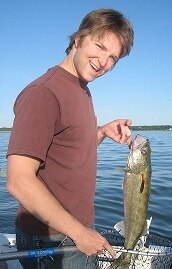
 I love control systems. So much so that I find myself analyzing the feedback and response mechanisms of everything from the way my body runs to the relationships I have. I spent Memorial Day fishing for walleye, perch, and small mouth bass on Lake Erie
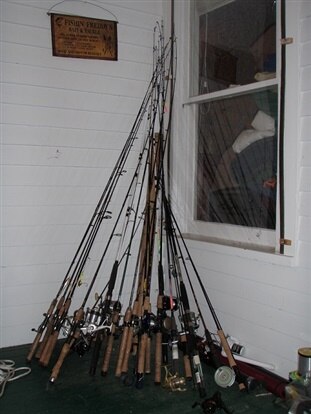
  and marveled at the multiple variables angling gear represents. The rod, reel, and line are all part of a control system that unites the mouth of the fish to my eager hand. The ability to sense and control the fish is directly related to the gear that I have which explains why the engineer in me loves fishing.
SNR:
The first thing I notice when I pick up a rod and cast is the signal to noise ratio. The main components that contribute to SNR are the smoothness of reel, line guides, and line friction. Everyone loves the feel of a smooth reel paired with line that seems to just float above the guides. But it is much more important than nice feel. In cases where I am fishing for small pan fish, that signal can be awfully weak. I want to feel the fish on the line as it gets reeled in to avoid that sinking feeling of the fish maybe getting off. If there is coarse braided line grinding on rough guides being spooled on a nasty reel, I might get everyone excited about this huge fish I'm fighting to pull in only to land a clump of seaweed which can be used by friends to serve up a fresh dish of mockery.
Sensitivity Range:
The power of a rod can be likened to a system's sensitivity. Similar to a DMM that is used to measure voltage, in order to be able to land a 10 pound fish a rod needs to have a 20 pound range. But that same 20 pound range will not have the resolution to properly sense a 1 pound pan fish nibbling away at the bait. And before you ask, all of the manufacturers have yet to come up with a handy autoranging feature.
Bandwidth:
A rod's 'Action' is best described as the bandwidth of a circuit. You can get 'fast' action that will respond quickly and return to its resting position right away. This type of response works well in situations such as keeping tension on a bass which might quickly jerk and flip in order to get the hook off. But in the case of trolling, a slower rod will have the effect of integrating out the noise from the water turbulence that might otherwise raise lots of false alarms. That way a keen eye can watch 4 rods at once, waiting for one to hit big.

Integration:
It is important to note, however, that even with a perfectly designed control system real world integration will cause problems. Unknown variables such as beer, food, and the occasional glimpse of a boat loaded with the opposite sex tanning will all have drastic effects on the entire system. Thankfully, such variables are inevitable.
Given all of the design parameters, one can enjoy a lifetime of tweaking the system for all kinds of different use cases. So the next time you need an excuse to get away from the bench, spend some time designing a new system where testing involves a lake and some sunshine