


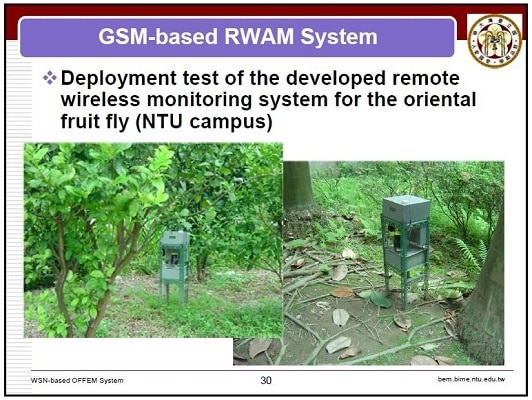
RWAM in action (via National Taiwan University)
The 800 photoreceptive lenses coalesce the scene into one panoramic image as the monsters wings flutter in the California sun. The beast is on the hunt looking to lay its eggs in a pristine setting of idyllic farmland where its larva will systematically kill every last crop leaving nothing in its wake, if left unchecked. The monster in question is the oriental fruit fly, and it can, and will, destroy billions of dollars’ worth of agriculture in California without any remorse what-so-ever. There is a new hope.
Officials recently went on the alert in the Golden State after 13 of the genus Bactrocera Dorsalis were spotted to which they began unleashing pesticides in key areas in an effort to protect farmland. In an effort to gain a better handle on the problem the state demands a way of detecting the invasive pests before they can damage crops (if left unchecked they will decimate 100% of crops), which is where researchers from National Taiwan University come in. The research team has designed a novel trap system that uses AI (Artificial Intelligence) to warn officials of imminent out-breaks, which would reduce the need to quarantine large areas and focus on specific locations instead.
The trap, known as the GSM-based RWAM (Rural Wireless Architecture Model) system, uses infrared beams that count the number of flies entering (attracting the fly using specific pheromones) when the beam is broken and then sends that number wirelessly to an observation station every 30 minutes. Computers then use learning algorithms along with weather data (from sensors attached to each trap) to analyze the data collected from the traps in the field (240 deployed so far) which it uses to predict where an infestation might occur. An alert is issued by text message (which includes time, location and severity of the infestation) to official’s phones when the trap-count rises past 1024 within a 10-day period allowing workers to spray pesticides before the problem becomes out of control. As it stands right now, the traps are fielded in a test phase. If the system is found to be successful, it could be very well implemented all over the globe to combat the oriental fruit fly scourge.
Cabe