element14 Community
element14 Community
    Register Log In
  • Site
  • Search
  • Log In Register
  • Community Hub
    Community Hub
    • What's New on element14
    • Feedback and Support
    • Benefits of Membership
    • Personal Blogs
    • Members Area
    • Achievement Levels
  • Learn
    Learn
    • Ask an Expert
    • eBooks
    • element14 presents
    • Learning Center
    • Tech Spotlight
    • STEM Academy
    • Webinars, Training and Events
    • Learning Groups
  • Technologies
    Technologies
    • 3D Printing
    • FPGA
    • Industrial Automation
    • Internet of Things
    • Power & Energy
    • Sensors
    • Technology Groups
  • Challenges & Projects
    Challenges & Projects
    • Design Challenges
    • element14 presents Projects
    • Project14
    • Arduino Projects
    • Raspberry Pi Projects
    • Project Groups
  • Products
    Products
    • Arduino
    • Avnet & Tria Boards Community
    • Dev Tools
    • Manufacturers
    • Multicomp Pro
    • Product Groups
    • Raspberry Pi
    • RoadTests & Reviews
  • About Us
  • Store
    Store
    • Visit Your Store
    • Choose another store...
      • Europe
      •  Austria (German)
      •  Belgium (Dutch, French)
      •  Bulgaria (Bulgarian)
      •  Czech Republic (Czech)
      •  Denmark (Danish)
      •  Estonia (Estonian)
      •  Finland (Finnish)
      •  France (French)
      •  Germany (German)
      •  Hungary (Hungarian)
      •  Ireland
      •  Israel
      •  Italy (Italian)
      •  Latvia (Latvian)
      •  
      •  Lithuania (Lithuanian)
      •  Netherlands (Dutch)
      •  Norway (Norwegian)
      •  Poland (Polish)
      •  Portugal (Portuguese)
      •  Romania (Romanian)
      •  Russia (Russian)
      •  Slovakia (Slovak)
      •  Slovenia (Slovenian)
      •  Spain (Spanish)
      •  Sweden (Swedish)
      •  Switzerland(German, French)
      •  Turkey (Turkish)
      •  United Kingdom
      • Asia Pacific
      •  Australia
      •  China
      •  Hong Kong
      •  India
      • Japan
      •  Korea (Korean)
      •  Malaysia
      •  New Zealand
      •  Philippines
      •  Singapore
      •  Taiwan
      •  Thailand (Thai)
      • Vietnam
      • Americas
      •  Brazil (Portuguese)
      •  Canada
      •  Mexico (Spanish)
      •  United States
      Can't find the country/region you're looking for? Visit our export site or find a local distributor.
  • Translate
  • Profile
  • Settings
Publications
  • Learn
  • More
Publications
Blog Alternative to uranium, here all along
  • Blog
  • Documents
  • Events
  • Files
  • Members
  • Mentions
  • Sub-Groups
  • Tags
  • More
  • Cancel
  • New
Join Publications to participate - click to join for free!
  • Share
  • More
  • Cancel
Group Actions
  • Group RSS
  • More
  • Cancel
Engagement
  • Author Author: Eavesdropper
  • Date Created: 20 Jun 2011 11:13 PM Date Created
  • Views 922 views
  • Likes 1 like
  • Comments 6 comments
  • research
  • alternative_energy
  • nuclear
  • dit
  • eavesdropper:dit
  • university
  • energy
  • innovation
Related
Recommended

Alternative to uranium, here all along

Eavesdropper
Eavesdropper
20 Jun 2011
image
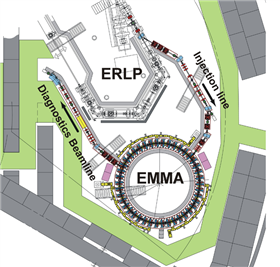
EMMA ring and ERLP accelerator (via Daresbury & Wikipedia)
 
In the wake of the Fukushima disaster, many have been searching harder for an alternative to Uranium based nuclear energy generation. Alternative thinking, as a majority, was put aside in the effort to develop technology that could work alongside of, and benefit from research pertaining to, nuclear weapons. Research at UK's Daresbury science park have brought back an old alternative to uranium, thorium.
 
Thorium, discovered in 1828, has long been known to potentially have the same energy producing qualities as uranium. In 1996, the International Atomic Energy Agency began a study over the use of thorium reactors. Some of the benefits show it to be a clear winner over uranium or plutonium. Thorium produces 10 to 10,000 times less radioactive waste. The thorium used in the fission reactors come out of the earth in the state needed for usage. It is difficult to pull weapons-grade materials from a thorium reactor. And the nuclear chain reaction in thorium requires priming, and the reaction stops if the energy introduced stops. In other words, thorium will never produce a meltdown. Finally, the thorium supply is much more abundant that uranium. The study found that the raw supply will not be exhausted, in used as an energy source, for 1,000 years.
 
At Daresbury recently, the EMMA (Electron Machine with Many Applications) particle accelerator was show to be able to produce the energy needed to foster the chain reaction in thorium. Such facilities, and energy needed, does make the use of thorium much more expensive than reactors today. Along with the study on thorium, the Britain team at Daresbury are also researching the use of particle accelerators to treat hard to reach cancer in patients.
 
Sound like they are doing some fine work across the pond.
 
Eavesdropper
 
Thorium fun facts: The name is derived from Thor, the Norse god of thunder. Attomic number 90, it has 90 protons and electrons. 4 are valence electrons. It is a solid, white like metal.
  • Sign in to reply

Top Comments

  • DAB
    DAB over 14 years ago +1
    For those of you too young to remember vacuum tubes, Thorium was used to initiate the electron cloud around the cathode so that the grid voltage could control the number of electrons that went to the anode…
Parents
  • DAB
    DAB over 14 years ago

    For those of you too young to remember vacuum tubes, Thorium was used to initiate the electron cloud around the cathode so that the grid voltage could control the number of electrons that went to the anode for signal amplification.


    It appears that some did not forget its early uses and have found new uses for this old freind of electronics.


    DAB

    • Cancel
    • Vote Up +1 Vote Down
    • Sign in to reply
    • More
    • Cancel
Comment
  • DAB
    DAB over 14 years ago

    For those of you too young to remember vacuum tubes, Thorium was used to initiate the electron cloud around the cathode so that the grid voltage could control the number of electrons that went to the anode for signal amplification.


    It appears that some did not forget its early uses and have found new uses for this old freind of electronics.


    DAB

    • Cancel
    • Vote Up +1 Vote Down
    • Sign in to reply
    • More
    • Cancel
Children
  • yogi1940
    yogi1940 over 14 years ago in reply to DAB

    AS you say DAB, very well stated I also entered electronics studing and using vacuum tubes. I well remember some great experiments we got up to. Lots of dirty brown smells.

    • Cancel
    • Vote Up 0 Vote Down
    • Sign in to reply
    • More
    • Cancel
element14 Community

element14 is the first online community specifically for engineers. Connect with your peers and get expert answers to your questions.

  • Members
  • Learn
  • Technologies
  • Challenges & Projects
  • Products
  • Store
  • About Us
  • Feedback & Support
  • FAQs
  • Terms of Use
  • Privacy Policy
  • Legal and Copyright Notices
  • Sitemap
  • Cookies

An Avnet Company © 2026 Premier Farnell Limited. All Rights Reserved.

Premier Farnell Ltd, registered in England and Wales (no 00876412), registered office: Farnell House, Forge Lane, Leeds LS12 2NE.

ICP 备案号 10220084.

Follow element14

  • X
  • Facebook
  • linkedin
  • YouTube