element14 Community
element14 Community
    Register Log In
  • Site
  • Search
  • Log In Register
  • Community Hub
    Community Hub
    • What's New on element14
    • Feedback and Support
    • Benefits of Membership
    • Personal Blogs
    • Members Area
    • Achievement Levels
  • Learn
    Learn
    • Ask an Expert
    • eBooks
    • element14 presents
    • Learning Center
    • Tech Spotlight
    • STEM Academy
    • Webinars, Training and Events
    • Learning Groups
  • Technologies
    Technologies
    • 3D Printing
    • FPGA
    • Industrial Automation
    • Internet of Things
    • Power & Energy
    • Sensors
    • Technology Groups
  • Challenges & Projects
    Challenges & Projects
    • Design Challenges
    • element14 presents Projects
    • Project14
    • Arduino Projects
    • Raspberry Pi Projects
    • Project Groups
  • Products
    Products
    • Arduino
    • Avnet & Tria Boards Community
    • Dev Tools
    • Manufacturers
    • Multicomp Pro
    • Product Groups
    • Raspberry Pi
    • RoadTests & Reviews
  • About Us
    About the element14 Community
  • Store
    Store
    • Visit Your Store
    • Choose another store...
      • Europe
      •  Austria (German)
      •  Belgium (Dutch, French)
      •  Bulgaria (Bulgarian)
      •  Czech Republic (Czech)
      •  Denmark (Danish)
      •  Estonia (Estonian)
      •  Finland (Finnish)
      •  France (French)
      •  Germany (German)
      •  Hungary (Hungarian)
      •  Ireland
      •  Israel
      •  Italy (Italian)
      •  Latvia (Latvian)
      •  
      •  Lithuania (Lithuanian)
      •  Netherlands (Dutch)
      •  Norway (Norwegian)
      •  Poland (Polish)
      •  Portugal (Portuguese)
      •  Romania (Romanian)
      •  Russia (Russian)
      •  Slovakia (Slovak)
      •  Slovenia (Slovenian)
      •  Spain (Spanish)
      •  Sweden (Swedish)
      •  Switzerland(German, French)
      •  Turkey (Turkish)
      •  United Kingdom
      • Asia Pacific
      •  Australia
      •  China
      •  Hong Kong
      •  India
      •  Japan
      •  Korea (Korean)
      •  Malaysia
      •  New Zealand
      •  Philippines
      •  Singapore
      •  Taiwan
      •  Thailand (Thai)
      •  Vietnam
      • Americas
      •  Brazil (Portuguese)
      •  Canada
      •  Mexico (Spanish)
      •  United States
      Can't find the country/region you're looking for? Visit our export site or find a local distributor.
  • Translate
  • Profile
  • Settings
Publications
  • Learn
  • More
Publications
Blog Antennas tuned to light waves collect energy
  • Blog
  • Documents
  • Events
  • Files
  • Members
  • Mentions
  • Sub-Groups
  • Tags
  • More
  • Cancel
  • New
Join Publications to participate - click to join for free!
  • Share
  • More
  • Cancel
Group Actions
  • Group RSS
  • More
  • Cancel
Engagement
  • Author Author: Eavesdropper
  • Date Created: 28 Nov 2011 8:22 PM Date Created
  • Views 412 views
  • Likes 0 likes
  • Comments 0 comments
  • alternative_energy
  • on_campus
  • light
  • wavelength
  • Design
  • eavesdropper
  • university
  • solar
  • solar_cell
  • innovation
Related
Recommended

Antennas tuned to light waves collect energy

Eavesdropper
Eavesdropper
28 Nov 2011
imageimage
 
Tel Aviv University's Department of Physical Electronics' Renewable Energy Center has demonstrated that a tried and true technology can meet or exceed traditional solar collecting panels in producing electricity. Professor Koby Scheuer is using, as he put it, "old school" metallic antennas to collect light based energy. The team's findings were presented at Photonics West earlier this year.
 
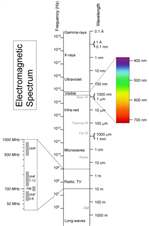
Electromagnetic energy comes in many forms, and they are all present in light. The key to the solar collecting with this method is to tune the antenna to the mico-wavelengths of each component. For example, visible light has wavelengths between 400nm and 700nm. Only recently has manufacturing technology been fine enough to build components less than a micron.
 
In tests, the team would absorb light at a certain frequency using the antenna, and then re-emit the signal. The idea was to see how much of the energy was lost in the transition. The results show that only a 5% loss of energy was experienced in the circuit. 
 
The ultimate goal is to collect energy from a wide spectrum, from ultra-violet to infrared. The wavelengths vary from as low as 50nm to 10um. The antenna arrays to collect this energy will be housed in a plastic sheet using a nano-imprinting lithography machine. The antennas are made of aluminum with a small amount of gold. The team boasts that the cost to build such a panel will be a fraction of the price compared to silicon cells.
 
Sounds like the tech has a high potential for the energy industry. However, no word on its actual light to energy efficiency. Current solar panels convert somewhere between 1 to 15% of the light energy, depending on the construction type. The Tel Aviv team stated that their panel will be more efficient than the best silicon cell available today.
 
Eavesdropper
  • Sign in to reply
element14 Community

element14 is the first online community specifically for engineers. Connect with your peers and get expert answers to your questions.

  • Members
  • Learn
  • Technologies
  • Challenges & Projects
  • Products
  • Store
  • About Us
  • Feedback & Support
  • FAQs
  • Terms of Use
  • Privacy Policy
  • Legal and Copyright Notices
  • Sitemap
  • Cookies

An Avnet Company © 2026 Premier Farnell Limited. All Rights Reserved.

Premier Farnell Ltd, registered in England and Wales (no 00876412), registered office: Farnell House, Forge Lane, Leeds LS12 2NE.

ICP 备案号 10220084.

Follow element14

  • X
  • Facebook
  • linkedin
  • YouTube