element14 Community
element14 Community
    Register Log In
  • Site
  • Search
  • Log In Register
  • Community Hub
    Community Hub
    • What's New on element14
    • Feedback and Support
    • Benefits of Membership
    • Personal Blogs
    • Members Area
    • Achievement Levels
  • Learn
    Learn
    • Ask an Expert
    • eBooks
    • element14 presents
    • Learning Center
    • Tech Spotlight
    • STEM Academy
    • Webinars, Training and Events
    • Learning Groups
  • Technologies
    Technologies
    • 3D Printing
    • FPGA
    • Industrial Automation
    • Internet of Things
    • Power & Energy
    • Sensors
    • Technology Groups
  • Challenges & Projects
    Challenges & Projects
    • Design Challenges
    • element14 presents Projects
    • Project14
    • Arduino Projects
    • Raspberry Pi Projects
    • Project Groups
  • Products
    Products
    • Arduino
    • Avnet & Tria Boards Community
    • Dev Tools
    • Manufacturers
    • Multicomp Pro
    • Product Groups
    • Raspberry Pi
    • RoadTests & Reviews
  • About Us
    About the element14 Community
  • Store
    Store
    • Visit Your Store
    • Choose another store...
      • Europe
      •  Austria (German)
      •  Belgium (Dutch, French)
      •  Bulgaria (Bulgarian)
      •  Czech Republic (Czech)
      •  Denmark (Danish)
      •  Estonia (Estonian)
      •  Finland (Finnish)
      •  France (French)
      •  Germany (German)
      •  Hungary (Hungarian)
      •  Ireland
      •  Israel
      •  Italy (Italian)
      •  Latvia (Latvian)
      •  
      •  Lithuania (Lithuanian)
      •  Netherlands (Dutch)
      •  Norway (Norwegian)
      •  Poland (Polish)
      •  Portugal (Portuguese)
      •  Romania (Romanian)
      •  Russia (Russian)
      •  Slovakia (Slovak)
      •  Slovenia (Slovenian)
      •  Spain (Spanish)
      •  Sweden (Swedish)
      •  Switzerland(German, French)
      •  Turkey (Turkish)
      •  United Kingdom
      • Asia Pacific
      •  Australia
      •  China
      •  Hong Kong
      •  India
      •  Japan
      •  Korea (Korean)
      •  Malaysia
      •  New Zealand
      •  Philippines
      •  Singapore
      •  Taiwan
      •  Thailand (Thai)
      •  Vietnam
      • Americas
      •  Brazil (Portuguese)
      •  Canada
      •  Mexico (Spanish)
      •  United States
      Can't find the country/region you're looking for? Visit our export site or find a local distributor.
  • Translate
  • Profile
  • Settings
Publications
  • Learn
  • More
Publications
Blog Carter Aviation Tests Airplane/Helicopter Hybrid
  • Blog
  • Documents
  • Events
  • Files
  • Members
  • Mentions
  • Sub-Groups
  • Tags
  • More
  • Cancel
  • New
Join Publications to participate - click to join for free!
  • Share
  • More
  • Cancel
Group Actions
  • Group RSS
  • More
  • Cancel
Engagement
  • Author Author: gervasi
  • Date Created: 6 Apr 2012 9:49 PM Date Created
  • Views 739 views
  • Likes 1 like
  • Comments 2 comments
  • aviation
Related
Recommended

Carter Aviation Tests Airplane/Helicopter Hybrid

gervasi
gervasi
6 Apr 2012

Carter Aviation is a research company developing an aircraft that can take off as a helicopter and fly as an airplane.  The helicopter capability gives it the ability to land without a runway.  It is also more tolerant than an airplane to adverse weather. 


I spoke to John Coffin, an electrical engineer and angel investor who serves on Carter Avaition’s board, about the recent prototype testing and the how the technology works.


A helicopter’s speed is limited by the fact that the tip of its blades must not exceed the speed of sound.  The tip velocity is the sum of its tangential velocity around the rotor center and the helicopter’s velocity.  The rotor must maintain a certain speed to provide lift.  This limits any helicopter’s speed to around 150 miles per hour.  Somewhat higher speeds are theoretically possible, but the asymmetry in drag between blades on the advancing and retreating side becomes a problem.  Carter Aviation’s solution is to slow the rotor blade and to begin relying on wings to provide lift in this condition.  Depending on design tradeoffs, this could allow speeds above 400 miles per hour with a range of 500 miles.  image
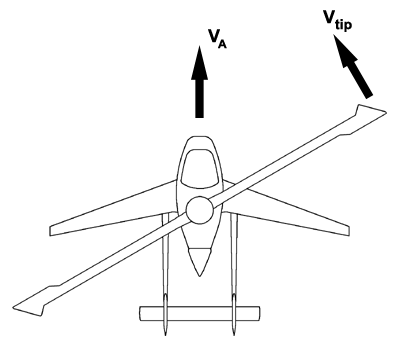
 

Carter Aviation’s technology uses an autogyro to turn the propeller.  This eliminates the need for a trail rotor.  It reduces cost but removes the ability for the vehicle to hover.  It instead takes off and lands at 15 to 30 miles per hour.  A larger engine would provide the ability to hover but would eliminate the cost savings. 


This video goes over the possibilities and shows some fun and fanciful applications starting about half way through:


You don't have permission to edit metadata of this video.
Edit media
x
image
Upload Preview
image


Carter Aviation has a working prototype using this technology.  They are continuing to work on control systems to increase ease of piloting and safety margin.  There are no current regulations regarding safety for an airplane/helicopter hybrid, so aircraft vendors will have to work with regulators to create rules and standards as they commercialize this technology. 


Here is some video John and his colleagues recorded of the recent testing in Texas:

You don't have permission to edit metadata of this video.
Edit media
x
image
Upload Preview
image


This technology could make helicopters as affordable as small single-engine aircraft and make elements of the fanciful depictions in the video come true.  I asked John why, if we went from the Wright brothers to the Apollo Program in 60 years, don’t we have more advanced aviation technology today.  In other words, “Where’s my jetpack?”  Part of it is regulatory issues and bumping up against the laws of physics.  Research has gone toward improving efficiency, doubling the efficiency of large commercial jets, which improves cost but not passenger experience.  I hope future developments lower cost and make personal aircraft more affordable and accessible. 

  • Sign in to reply
  • rew
    rew over 13 years ago in reply to DAB

    17000 feet is a heigth where you should use oxygen or have a pressurized cabin. But besides that, height means safety: If things go wrong, you have time to sort it out.


    The Air France plane plunged into the ocean because the pilots didn't give enough attention to basic flying parameters, which in a fixed wing craft is flying speed. In "auto gyro" mode, the important parameter is rotor RPM. If that drops the rotor stalls and the craft plunges. If they manage to lose control of their aircraft one way, why do you thing they wouldn't have another way?


    In the small scale example, they don't have a motor driving the rotor (during flying). So to keep the rotor doing its thing (rotating and thereby keepint the craft in the air) the craft has to keep moving forward. This means that going too slow is still not good for your health. (On the other hand, vertical speed can probably be converted to rotor rotation meaning you can usually land in a survivable manner, right?)

    • Cancel
    • Vote Up 0 Vote Down
    • Sign in to reply
    • More
    • Cancel
  • DAB
    DAB over 13 years ago

    I like it.

    Combining the autogyro wing with stable wings adds a stability for the vehicle that is much better than ultralights or small aircraft.  You get improve performance, plus you get the safety factor from a power failure.

    Not sure I would take one to 17,000 feet, but for short hops it would be a quick way to get around and avoid traffic congestion.

    Going big scale could save a lot of lives in times of problems.  Think about the Air France aircraft that plunged into the sea.  With an autogyro system, they would not have stalled out and they would have settled more gently on the ocean.


    I hope they get the financial backing to make this idea work.


    Good post,

    DAB

    • Cancel
    • Vote Up 0 Vote Down
    • Sign in to reply
    • More
    • Cancel
element14 Community

element14 is the first online community specifically for engineers. Connect with your peers and get expert answers to your questions.

  • Members
  • Learn
  • Technologies
  • Challenges & Projects
  • Products
  • Store
  • About Us
  • Feedback & Support
  • FAQs
  • Terms of Use
  • Privacy Policy
  • Legal and Copyright Notices
  • Sitemap
  • Cookies

An Avnet Company © 2026 Premier Farnell Limited. All Rights Reserved.

Premier Farnell Ltd, registered in England and Wales (no 00876412), registered office: Farnell House, Forge Lane, Leeds LS12 2NE.

ICP 备案号 10220084.

Follow element14

  • X
  • Facebook
  • linkedin
  • YouTube