


The year was 1990. Some friends and I marveled at one of the first handheld transmitters in the 800MHz band. We had all used handheld transmitters at lower bands, but somehow transmitting close to 1000MHz made it “microwave” and therefore scary. In a display of teenage bravado, a friend grabbed the antenna in his hand, keyed the PTT, and said he could feel it warming his hand after a few seconds. We figured if these “handheld microwave transmitters” gained widespread popularity, it would take careful study to work out power and antenna location limits. 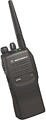
The transmitters caught on way beyond our wildest dreams in the form of mobile phones, but the careful study did not materialize. I learned that detailed study was unnecessary because RF radiation is non-ionizing and therefore cannot damage DNA as ionizing radiation can. The only risk was absorbing enough power to physically heat the body. My friend who heated his hand with an 800MHz talkie suffered no noticable health effects. Modern mobile phones have a lower average output power than the transmitters I played with 20 years ago, so modern phones cannot heat the body. As a result we can use phones with antennas integrated into the enclosure and press them directly to our heads without fear.
 Some still maintain the need for more study to rule out unknown effects of microwaves at levels too weak to cause significant heating. To understand these concerns, I read Disconnect by esteemed scientist, Devra Davis. Davis argues mobile phones may play a role in a variety of medical problems:
- Cancer
- Reducing effectiveness of the blood-brain barrier
- Suprathermal effects - Micro heat pockets that may interact with the immune system or other parts of the body in unpredictable ways
- Formation of free radicals
- Difficulty concentrating
- Weakening cellular membranes
She does not offer a hypothesis to explain how microwaves could cause so many unrelated problems. She simply says that it may play a role in any number of health problems. With such a broad hypothesis, any evidence of athermal interaction between microwaves and the human body that may be found supports the hypothesis.
Occasionally she goes beyond scientific support for this vague hypothesis and ventures into poisoning the well and other fallacies. She talks about how screen time is not good for young children, how mobile phones can distract people from paying attention to their surroundings, and how working conditions in mines that extract the materials used in electronic components are sometimes deplorable. At times she claims that scientific studies usually support whatever result the people funding it want. She believes the electronics industry has bribed and threatened scientists into ignoring health risks of non-ionizing radiation. There is a heart-rending story of a dying man asking his wife to publicize his belief that his mobile phone was responsible for his death. She makes much of the fact that most mobile phone manuals contain warnings telling the user to hold the phone a little away from the ear to reduce RF exposure. This seems contrary to her claim that the mobile phone industry is hiding any suggestion that their product could be dangerous.
All of these un-scientific and fallacious arguments detract from her case, but she still makes some strong points about the possibility of yet unknown risks. 
For example, she points out that most carcinogens take decades of low exposure to increase someone’s risk of cancer. We have only had widespread use of mobile phones for twenty years and only a few years of widespread use of phones with pulsed digital transmission schemes with antennas integrated into the enclosure. If there were some yet unknown risk peculiar to low-power pulsed transmissions from an antenna pressed right up against the head, it may take decades to become apparent.
Davis says she has an anonymous source at the DoD who claims that microwave antennas at very close range can heat small areas of water or even single molecules well beyond the temperature of their surroundings. Such a tiny “suprathermal hotspot” in a human body could have unknown health effects. The concept of suprathermal hotspots is interesting because it does not require us to accept the possibility of mysterious athermal effects. All the other arguments for health risks rest on the possibility of athermal effects of non-ionizing radiation, which physics tells us do not exist.
This reminds me of the very beginning of wireless technology when Marconi was trying to send a radio signal across the Atlantic. Contemporary physics said this was impossible because radio waves were thought to propagate only by line of sight. Marconi thought that he if he just delivered enough power to a big enough antenna located high enough off the ground, trans-Atlantic communication would be possible. It turns out that radio waves propagate in a variety of ways beyond simple line of sight, allowing Marconi’s wireless telegraph system to work.. There was no way Marconi could have known that. He was a maverick to think the brute force approach of simply radiating more power would allow his signals to travel around the world. The claims of health risks associated with mobile phones strike me as similar. A discovery of unknown effects of non-ionizing radiation on DNA would be no more surprising than the discovery of groundwave propagation.
Do you take any precautions when using a phone or working on low-power microwave transmitters?
