


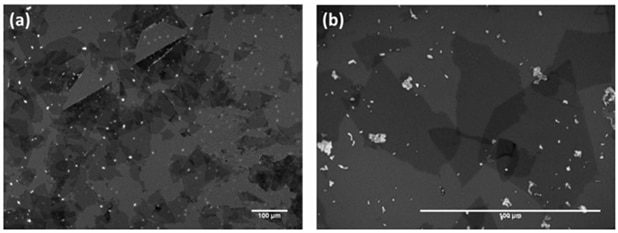
Reduced graphene oxide (a) Optical magnification of sheet (b) increased magnification
Most of you have heard of graphene, one atom thick super-packed sheet of carbon atoms. It is little know that, depending on the process used, graphene is very difficult to produce. The materials used to make the extremely hard substance usually consist of using sodium ethoxide, magnesium or sugar as well of a host of other substances. The quantity produced using these materials is typically on the small side due to the toxic by-products (hydrazine) that come as a result of the manufacturing process (which is usually done with heat and/or chemicals).
A research team from Toyohashi Tech (Japan) headed by Yuji Tanizawa have come up with a novel way of producing graphene that significantly reduces, if not eliminates, the toxic after-birth by using micro-organisms found in ponds and rivers. Hydrazine is used to remove the oxygen from the graphene film which makes it denser and also stronger. Tanizawa and his team were able to eliminate the toxic by-product by realizing that graphene acts as a magnate to micro-organisms. These organisms, taken from a local river bank, help to reduce the oxygen left over from the chemical process used to create the graphene sheets.
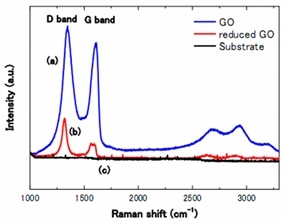
GO (graphene oxide) via traditional methods in blue. Red is the bacterial reduced GO.
The team found that when sheets of graphene oxide (GO) were placed in a dish containing the pond water which was left to sit for three days produced high-quality graphene sheets. This process is not only a more environmentally friendly way of mass producing high-quality graphene, but it’s also a cheaper one. Maybe now we can actually see graphene introduced in our electronic devices' as core-technology.
Cabe
All images via Toyohashi University of Technology
-

DAB
-
Cancel
-
Vote Up
0
Vote Down
-
-
Sign in to reply
-
More
-
Cancel
Comment-

DAB
-
Cancel
-
Vote Up
0
Vote Down
-
-
Sign in to reply
-
More
-
Cancel
Children