element14 Community
element14 Community
    Register Log In
  • Site
  • Search
  • Log In Register
  • Community Hub
    Community Hub
    • What's New on element14
    • Feedback and Support
    • Benefits of Membership
    • Personal Blogs
    • Members Area
    • Achievement Levels
  • Learn
    Learn
    • Ask an Expert
    • eBooks
    • element14 presents
    • Learning Center
    • Tech Spotlight
    • STEM Academy
    • Webinars, Training and Events
    • Learning Groups
  • Technologies
    Technologies
    • 3D Printing
    • FPGA
    • Industrial Automation
    • Internet of Things
    • Power & Energy
    • Sensors
    • Technology Groups
  • Challenges & Projects
    Challenges & Projects
    • Design Challenges
    • element14 presents Projects
    • Project14
    • Arduino Projects
    • Raspberry Pi Projects
    • Project Groups
  • Products
    Products
    • Arduino
    • Avnet & Tria Boards Community
    • Dev Tools
    • Manufacturers
    • Multicomp Pro
    • Product Groups
    • Raspberry Pi
    • RoadTests & Reviews
  • About Us
  • Store
    Store
    • Visit Your Store
    • Choose another store...
      • Europe
      •  Austria (German)
      •  Belgium (Dutch, French)
      •  Bulgaria (Bulgarian)
      •  Czech Republic (Czech)
      •  Denmark (Danish)
      •  Estonia (Estonian)
      •  Finland (Finnish)
      •  France (French)
      •  Germany (German)
      •  Hungary (Hungarian)
      •  Ireland
      •  Israel
      •  Italy (Italian)
      •  Latvia (Latvian)
      •  
      •  Lithuania (Lithuanian)
      •  Netherlands (Dutch)
      •  Norway (Norwegian)
      •  Poland (Polish)
      •  Portugal (Portuguese)
      •  Romania (Romanian)
      •  Russia (Russian)
      •  Slovakia (Slovak)
      •  Slovenia (Slovenian)
      •  Spain (Spanish)
      •  Sweden (Swedish)
      •  Switzerland(German, French)
      •  Turkey (Turkish)
      •  United Kingdom
      • Asia Pacific
      •  Australia
      •  China
      •  Hong Kong
      •  India
      • Japan
      •  Korea (Korean)
      •  Malaysia
      •  New Zealand
      •  Philippines
      •  Singapore
      •  Taiwan
      •  Thailand (Thai)
      • Vietnam
      • Americas
      •  Brazil (Portuguese)
      •  Canada
      •  Mexico (Spanish)
      •  United States
      Can't find the country/region you're looking for? Visit our export site or find a local distributor.
  • Translate
  • Profile
  • Settings
Publications
  • Learn
  • More
Publications
Blog Drones set to become life-guards at Queensland beaches
  • Blog
  • Documents
  • Events
  • Files
  • Members
  • Mentions
  • Sub-Groups
  • Tags
  • More
  • Cancel
  • New
Join Publications to participate - click to join for free!
  • Share
  • More
  • Cancel
Group Actions
  • Group RSS
  • More
  • Cancel
Engagement
  • Author Author: Catwell
  • Date Created: 25 Sep 2012 5:51 PM Date Created
  • Views 1153 views
  • Likes 1 like
  • Comments 3 comments
  • research
  • test
  • rescue
  • transportation
  • industry
  • safety&security
  • hmi
  • robotics
  • robot
  • cabeatwell
  • prototyping
  • measurement
  • medical
  • technology_for_the_disabled
  • sensor
  • innovation
  • safety
  • communication
Related
Recommended

Drones set to become life-guards at Queensland beaches

Catwell
Catwell
25 Sep 2012

image

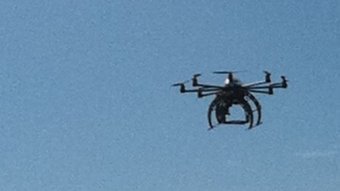
Eyedroid 8 caught flying over Queensland beach (via Kim Powell)


While it may not look all that impressive running in slow-motion to save drowning victims, the octocopter drone is looking to become the latest addition in the life-guard tool-box to help save lives in Queensland, Australia. Adopted by Surf Life Saving Australia, the octocopters are set to undergo test trials at North Stradbroke Island (about 20 miles southwest of Brisbane) before they’re deployed for beach monitoring. While Australia’s beaches are some of the most beautiful on the planet, they parallel to looked in danger. Varied wildlife found in the area such as crocodiles (yes they have them), sharks, stingrays and box jellyfish add to the risk. Actually it’s more probable that you get hit by a vehicle crossing the street than becoming injured by the wildlife, but accidents do happen (with 550 rescues and 2408 receiving first-aid already this year). Life-guards need to be able to respond quickly to be effective in their job. This is where the octocopters come in as there is simply too much ground to monitor and too few personnel to cover it all. According to the SLSA, the drones will be outfitted with flotation buoys so they can be dropped onto the ocean as an ‘on-station’ option for delivery. They will also be outfitted with a siren that can alert people in the area if there is dangerous marine life, or somebody is in need of assistance.


You don't have permission to edit metadata of this video.
Edit media
x
image
Upload Preview
image

Eye Droid 8


So, what drone model will the SLSA be using for beach monitorization? Very little is known, however a local (Kim Powell) was able to grab a picture of the drone as it flew by her window and looks to be an Eye Droid 8 Rotor Octocopter (purely speculative but the design is strikingly similar) from Infinite Jib. The Eye Droid 8 would be perfect for the life-guard job and features a Droidworx AD-8 air-frame capable of lifting DSLR and Large HD cameras, HoverFlyPro flight controller and a HoverFlyGPS navigation system capable of autonomous flight using GPS waypoints (including ‘return to home’). The total diameter of the octocopter is 35.7 inches and each rotor measures in at a foot (3 spin clockwise on one side, while another 3 spin counterclockwise while 2 are used as back-up) which provides a stable flight platform. The best feature of the Eye Droid 8 is the inclusion of Fat Shark Goggles (used in conjunction with the on-board Fat Shark FPV equipment), which the pilot uses to navigate through a live continuous video feed from the drone. There are a few drawbacks at using this system, as the drone itself costs about $13,000 US for the basic model (no extra equipment such as HD cameras) which is pretty expensive but the most important drawback is the drones flight-time. The Eye Droid 8 only has enough power (LiPo Flight Battery with 5450mah) to remain airborne for 8 minutes and 30 seconds with no payload and only 6 min when the drone is fully loaded which limits the area these drones can cover. Still, accidents usually occur in less time and when every second counts an extra pair of eyes in the sky would be welcomed.


Cabe

http://twitter.com/Cabe_e14

  • Sign in to reply
Parents
  • Former Member
    Former Member over 13 years ago

    When you are paying 13K for the platform, spending some extra bucks on top vision gear is not a big adder. I would equip the beach monitor rescue drones with stabilized zoom cameras, so that a drone in a central location can pan over a wide swath of beach and regularly scan a large number of bathers without going airborne (from atop a lifeguard tower). This would allow for inductive charging from the watchpost, allowing it to take off instantly with a full charge with cool, efficient motors, and so a maximum likelihood of sucess. This is truly a good case for technology to the rescue. It might even make sense to design and build a bigger drone that can go longer on a charge and lift more, as the cost adder from the current model shouldn't be too big (a 20K model might be able to conduct a 20-30 minute rescue, lifting a victim for a 1 to 5 minute flight to the shore).

    • Cancel
    • Vote Up 0 Vote Down
    • Sign in to reply
    • More
    • Cancel
Comment
  • Former Member
    Former Member over 13 years ago

    When you are paying 13K for the platform, spending some extra bucks on top vision gear is not a big adder. I would equip the beach monitor rescue drones with stabilized zoom cameras, so that a drone in a central location can pan over a wide swath of beach and regularly scan a large number of bathers without going airborne (from atop a lifeguard tower). This would allow for inductive charging from the watchpost, allowing it to take off instantly with a full charge with cool, efficient motors, and so a maximum likelihood of sucess. This is truly a good case for technology to the rescue. It might even make sense to design and build a bigger drone that can go longer on a charge and lift more, as the cost adder from the current model shouldn't be too big (a 20K model might be able to conduct a 20-30 minute rescue, lifting a victim for a 1 to 5 minute flight to the shore).

    • Cancel
    • Vote Up 0 Vote Down
    • Sign in to reply
    • More
    • Cancel
Children
No Data
element14 Community

element14 is the first online community specifically for engineers. Connect with your peers and get expert answers to your questions.

  • Members
  • Learn
  • Technologies
  • Challenges & Projects
  • Products
  • Store
  • About Us
  • Feedback & Support
  • FAQs
  • Terms of Use
  • Privacy Policy
  • Legal and Copyright Notices
  • Sitemap
  • Cookies

An Avnet Company © 2025 Premier Farnell Limited. All Rights Reserved.

Premier Farnell Ltd, registered in England and Wales (no 00876412), registered office: Farnell House, Forge Lane, Leeds LS12 2NE.

ICP 备案号 10220084.

Follow element14

  • X
  • Facebook
  • linkedin
  • YouTube