


Professor Alice Parker and Chongwu Zhou of the USC Viterbi School of Engineering Ming Hsieh Department of Electrical Engineering seek to create a full working model of the human brain. Parker began her quest in making a synthetic brain back in 2006. She says, " We wanted to answer the question: Can you build a circuit that would act like a neuron? The next step is even more complex. How can we build structures out of these circuits that mimic the function of the brain, which has 100 billion neurons and 10,000 synapses per neuron?"
One of the challenges she faces is creating a circuit that mimics "brain plasticity," or the brains ablility to create new neurons and connections. Parker goes over this, "The human cortex is massively interconnected and the connections are always changing. That’s always been one of the biggest hurdles in trying to simulate neural functioning. But as technologies become smaller and less expensive, there is a possibility of constructing neural structures on the scale of the human brain.”
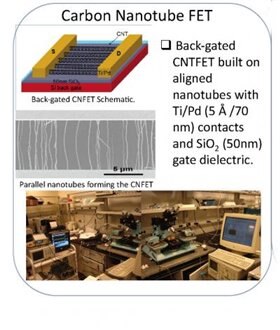
First things first, making a single neuron. The cost and size of electronics were always a hurdle for parker and the team, but recent developments in nanocarbon electronics have changed all that. Using carbon nanotubes, the team have successfully created a single neuron circuit. By the end of this current semester, Parker plans to have several neurons communicating with each other. After that only 100 billion more to make a synthetic brain.
Eavesdropper
pics via USC (University of Southern California)