element14 Community
element14 Community
    Register Log In
  • Site
  • Search
  • Log In Register
  • Community Hub
    Community Hub
    • What's New on element14
    • Feedback and Support
    • Benefits of Membership
    • Personal Blogs
    • Members Area
    • Achievement Levels
  • Learn
    Learn
    • Ask an Expert
    • eBooks
    • element14 presents
    • Learning Center
    • Tech Spotlight
    • STEM Academy
    • Webinars, Training and Events
    • Learning Groups
  • Technologies
    Technologies
    • 3D Printing
    • FPGA
    • Industrial Automation
    • Internet of Things
    • Power & Energy
    • Sensors
    • Technology Groups
  • Challenges & Projects
    Challenges & Projects
    • Design Challenges
    • element14 presents Projects
    • Project14
    • Arduino Projects
    • Raspberry Pi Projects
    • Project Groups
  • Products
    Products
    • Arduino
    • Avnet & Tria Boards Community
    • Dev Tools
    • Manufacturers
    • Multicomp Pro
    • Product Groups
    • Raspberry Pi
    • RoadTests & Reviews
  • About Us
  • Store
    Store
    • Visit Your Store
    • Choose another store...
      • Europe
      •  Austria (German)
      •  Belgium (Dutch, French)
      •  Bulgaria (Bulgarian)
      •  Czech Republic (Czech)
      •  Denmark (Danish)
      •  Estonia (Estonian)
      •  Finland (Finnish)
      •  France (French)
      •  Germany (German)
      •  Hungary (Hungarian)
      •  Ireland
      •  Israel
      •  Italy (Italian)
      •  Latvia (Latvian)
      •  
      •  Lithuania (Lithuanian)
      •  Netherlands (Dutch)
      •  Norway (Norwegian)
      •  Poland (Polish)
      •  Portugal (Portuguese)
      •  Romania (Romanian)
      •  Russia (Russian)
      •  Slovakia (Slovak)
      •  Slovenia (Slovenian)
      •  Spain (Spanish)
      •  Sweden (Swedish)
      •  Switzerland(German, French)
      •  Turkey (Turkish)
      •  United Kingdom
      • Asia Pacific
      •  Australia
      •  China
      •  Hong Kong
      •  India
      • Japan
      •  Korea (Korean)
      •  Malaysia
      •  New Zealand
      •  Philippines
      •  Singapore
      •  Taiwan
      •  Thailand (Thai)
      • Vietnam
      • Americas
      •  Brazil (Portuguese)
      •  Canada
      •  Mexico (Spanish)
      •  United States
      Can't find the country/region you're looking for? Visit our export site or find a local distributor.
  • Translate
  • Profile
  • Settings
Publications
  • Learn
  • More
Publications
Blog Hard-drives of the future could be made from bacteria
  • Blog
  • Documents
  • Events
  • Files
  • Members
  • Mentions
  • Sub-Groups
  • Tags
  • More
  • Cancel
  • New
Join Publications to participate - click to join for free!
  • Share
  • More
  • Cancel
Group Actions
  • Group RSS
  • More
  • Cancel
Engagement
  • Author Author: Eavesdropper
  • Date Created: 9 May 2012 8:00 PM Date Created
  • Views 568 views
  • Likes 1 like
  • Comments 2 comments
  • research
  • bioscience
  • industry
  • hmi
  • on_campus
  • storage
  • Design
  • prototyping
  • eavesdropper
  • university
  • biomedical
  • data
  • sensor
  • innovation
Related
Recommended

Hard-drives of the future could be made from bacteria

Eavesdropper
Eavesdropper
9 May 2012

image

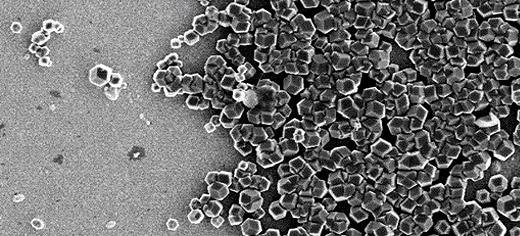
Image of the bacteria in question (via University of Leeds)


Everybody knows that getting a computer virus is an absolute nightmare, analogous to their real-life counterparts. How about the other way around, using real life in the computer world? That’s precisely what a team of researchers from the University of Leeds has in mind. What if you could harness real-life bacteria to make the data-storage devices bigger and faster? The team, led by Dr. Sarah Staniland, has found that when a certain protein is used with the bacterium Magnetospirillium Magneticum it eats iron leaving behind a surface of magnates similar to those found in hard-drives. The team succeeded in creating a magnetic array using a process, not unlike potato-printing (potato art used like an ink stamp). Using the stamping process, the team deposited the bacterium onto half of a checker-patterned surface of gold. Which was then placed in a specialized solution with iron at a temperature of 80o C. They found that the portion of the gold surface that had the bacterium stamped onto it formed nano-sized crystals of magnetite. While this process is an interesting feat in its own right, the team wants to reduce the size and pattern of the magnetite crystals into one single array which would allow for each nano-magnet to hold 1-bit of information for use in future hard-drives.


On a similar note, Dr. Masayoshi Tanaka from the University of Agriculture and Technology has used bacteria to create a type of nano bio-wiring that might be used to create a biocomputer. To create the tiny wires Dr. Tanaka used a different protein from that of Dr. Staniland’s, combined with copper indium sulphide and zinc sulphide that make magnetic ‘quantum-dots’ that conduct electricity. The nano-wires are encased in a shroud of fat molecules known as lipids (I’m not kidding). Dr. Tanaka states that it’s possible to tune the nano-wires to have specific electrical resistances and could be used in the future to ‘grow’ computer components from scratch!


Eavesdropper

  • Sign in to reply
  • Eavesdropper
    Eavesdropper over 13 years ago in reply to DAB

    Science fiction-reality.


    E

    • Cancel
    • Vote Up 0 Vote Down
    • Sign in to reply
    • More
    • Cancel
  • DAB
    DAB over 13 years ago

    HI E,


    All this research keeps pointing to an eventual Bio-electrical technology.

    I just saw another article where they used bacteria to form graphene structures from common materials.

    Graphene just might become the substance that will enable us to build nano-bots to repair human tissues at the cellular level.


    Very interesting,

    DAB

    • Cancel
    • Vote Up 0 Vote Down
    • Sign in to reply
    • More
    • Cancel
element14 Community

element14 is the first online community specifically for engineers. Connect with your peers and get expert answers to your questions.

  • Members
  • Learn
  • Technologies
  • Challenges & Projects
  • Products
  • Store
  • About Us
  • Feedback & Support
  • FAQs
  • Terms of Use
  • Privacy Policy
  • Legal and Copyright Notices
  • Sitemap
  • Cookies

An Avnet Company © 2026 Premier Farnell Limited. All Rights Reserved.

Premier Farnell Ltd, registered in England and Wales (no 00876412), registered office: Farnell House, Forge Lane, Leeds LS12 2NE.

ICP 备案号 10220084.

Follow element14

  • X
  • Facebook
  • linkedin
  • YouTube