


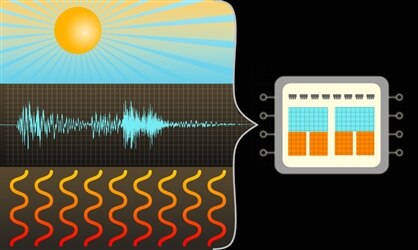
Concept image (via Christine Daniloff & MIT)
Collecting energy from light, heat, and vibrations is a common practice in science and engineering communities. Collecting energy from all three of those sources at the same time is unheard-of. Current energy collection chips that pull from multiple sources rely upon switching to the source which has the most energy to offer. While this method works, it can miss out on collecting energy from the others sources. MIT has created a new chip uses a sophisticated control system to overcome loses through optimizing the energy being collected.
The DARPA funded work being carried out by Saurav Bandyopadhyay, currently a doctoral student, uses a unique control circuit to harvest energy. The circuit can produce a constant output of power using the varying voltages supplied from the different sources. The voltages can vary from the thermal energy being as low as 0.02 Volts to the vibration energy being as high as 5 Volts. While the chip is collecting energy from one source, capacitors are used to store energy being produced by the other sources, so no energy is being left out from being collected. The new circuit can optimize energy collection more efficiently than any chip to date.
The control circuit minimizes operating power consumed. Using a single time-shared inductor, it can support the multiple converters needed to extract the energy from different sources. The circuit features a dual-path architecture which can allow it to bypass a storage system for energy, and instead power a sensor directly making it more efficient. The work being done is crucial to creating more functionality for medical and industrial sensors. Once produced, engineers could start reaping the benefits of energy from multiple environmental sources, at all times.
Cabe
