element14 Community
element14 Community
    Register Log In
  • Site
  • Search
  • Log In Register
  • Community Hub
    Community Hub
    • What's New on element14
    • Feedback and Support
    • Benefits of Membership
    • Personal Blogs
    • Members Area
    • Achievement Levels
  • Learn
    Learn
    • Ask an Expert
    • eBooks
    • element14 presents
    • Learning Center
    • Tech Spotlight
    • STEM Academy
    • Webinars, Training and Events
    • Learning Groups
  • Technologies
    Technologies
    • 3D Printing
    • FPGA
    • Industrial Automation
    • Internet of Things
    • Power & Energy
    • Sensors
    • Technology Groups
  • Challenges & Projects
    Challenges & Projects
    • Design Challenges
    • element14 presents Projects
    • Project14
    • Arduino Projects
    • Raspberry Pi Projects
    • Project Groups
  • Products
    Products
    • Arduino
    • Avnet & Tria Boards Community
    • Dev Tools
    • Manufacturers
    • Multicomp Pro
    • Product Groups
    • Raspberry Pi
    • RoadTests & Reviews
  • About Us
  • Store
    Store
    • Visit Your Store
    • Choose another store...
      • Europe
      •  Austria (German)
      •  Belgium (Dutch, French)
      •  Bulgaria (Bulgarian)
      •  Czech Republic (Czech)
      •  Denmark (Danish)
      •  Estonia (Estonian)
      •  Finland (Finnish)
      •  France (French)
      •  Germany (German)
      •  Hungary (Hungarian)
      •  Ireland
      •  Israel
      •  Italy (Italian)
      •  Latvia (Latvian)
      •  
      •  Lithuania (Lithuanian)
      •  Netherlands (Dutch)
      •  Norway (Norwegian)
      •  Poland (Polish)
      •  Portugal (Portuguese)
      •  Romania (Romanian)
      •  Russia (Russian)
      •  Slovakia (Slovak)
      •  Slovenia (Slovenian)
      •  Spain (Spanish)
      •  Sweden (Swedish)
      •  Switzerland(German, French)
      •  Turkey (Turkish)
      •  United Kingdom
      • Asia Pacific
      •  Australia
      •  China
      •  Hong Kong
      •  India
      • Japan
      •  Korea (Korean)
      •  Malaysia
      •  New Zealand
      •  Philippines
      •  Singapore
      •  Taiwan
      •  Thailand (Thai)
      • Vietnam
      • Americas
      •  Brazil (Portuguese)
      •  Canada
      •  Mexico (Spanish)
      •  United States
      Can't find the country/region you're looking for? Visit our export site or find a local distributor.
  • Translate
  • Profile
  • Settings
Publications
  • Learn
  • More
Publications
Blog IBM proves electron's rotation can carry instructions, bringing us one step closer to spintronics
  • Blog
  • Documents
  • Events
  • Files
  • Members
  • Mentions
  • Sub-Groups
  • Tags
  • More
  • Cancel
  • New
Join Publications to participate - click to join for free!
  • Share
  • More
  • Cancel
Group Actions
  • Group RSS
  • More
  • Cancel
Engagement
  • Author Author: Catwell
  • Date Created: 23 Aug 2012 6:56 PM Date Created
  • Views 306 views
  • Likes 1 like
  • Comments 0 comments
  • research
  • digital
  • spintronics
  • industry
  • hmi
  • on_campus
  • embedded
  • cabeatwell
  • prototyping
  • cpu
  • university
  • innovation
  • communication
Related
Recommended

IBM proves electron's rotation can carry instructions, bringing us one step closer to spintronics

Catwell
Catwell
23 Aug 2012

image

(via IBM, ETH Zurich & Nature)


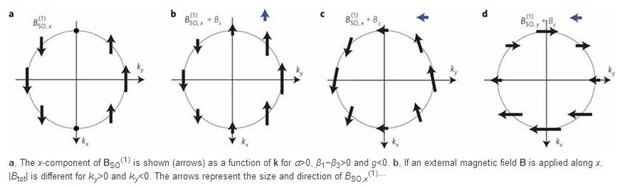
IBM and ETH Zurich have taken a critical step towards bringing us spintronics. Current computing technology uses charge of electrons to encode and process data. Spintronics is a computing technology that uses the spin of an electron to store, transfer, and process information. If successful, spintronics would create a new class of semiconductor transistors which would result in much more energy efficient computing products.


Up until recently, scientists and researchers were not sure if spintronics could actually work. The theory was originally proposed in 2003 when scientist set out trying to observe electron spins arrange into a stripe pattern called the spin helix. By synchronizing electron spins into the spin helix, it extends the length of time the electron will spin by 30 times. As a result, the lifetime of the spins will last 1.1 nanoseconds or the same amount of time it takes for a 1GHz processor to complete a full cycle.


To complete this task, ultra short laser pulses were used by the IBM scientists to monitor the thousands of electron spins created simultaneously in a very small area. In addition, ETH Zurich scientists created the material used for the semiconductor, gallium arsenide. Together they have made giant leap, getting the electrons to spin long enough to transfer data. However, much more work and research is still needed before spintronics can be used in a consumer product. Researchers worked at temperatures of 40 Kelvin, or -387F to make this first step. Until transistors can be produced that run at normal household temperatures, spintronics is going to have to remain in the lab.


Cabe

http://twitter.com/Cabe_e14

  • Sign in to reply
element14 Community

element14 is the first online community specifically for engineers. Connect with your peers and get expert answers to your questions.

  • Members
  • Learn
  • Technologies
  • Challenges & Projects
  • Products
  • Store
  • About Us
  • Feedback & Support
  • FAQs
  • Terms of Use
  • Privacy Policy
  • Legal and Copyright Notices
  • Sitemap
  • Cookies

An Avnet Company © 2026 Premier Farnell Limited. All Rights Reserved.

Premier Farnell Ltd, registered in England and Wales (no 00876412), registered office: Farnell House, Forge Lane, Leeds LS12 2NE.

ICP 备案号 10220084.

Follow element14

  • X
  • Facebook
  • linkedin
  • YouTube