element14 Community
element14 Community
    Register Log In
  • Site
  • Search
  • Log In Register
  • Community Hub
    Community Hub
    • What's New on element14
    • Feedback and Support
    • Benefits of Membership
    • Personal Blogs
    • Members Area
    • Achievement Levels
  • Learn
    Learn
    • Ask an Expert
    • eBooks
    • element14 presents
    • Learning Center
    • Tech Spotlight
    • STEM Academy
    • Webinars, Training and Events
    • Learning Groups
  • Technologies
    Technologies
    • 3D Printing
    • FPGA
    • Industrial Automation
    • Internet of Things
    • Power & Energy
    • Sensors
    • Technology Groups
  • Challenges & Projects
    Challenges & Projects
    • Design Challenges
    • element14 presents Projects
    • Project14
    • Arduino Projects
    • Raspberry Pi Projects
    • Project Groups
  • Products
    Products
    • Arduino
    • Avnet & Tria Boards Community
    • Dev Tools
    • Manufacturers
    • Multicomp Pro
    • Product Groups
    • Raspberry Pi
    • RoadTests & Reviews
  • About Us
  • Store
    Store
    • Visit Your Store
    • Choose another store...
      • Europe
      •  Austria (German)
      •  Belgium (Dutch, French)
      •  Bulgaria (Bulgarian)
      •  Czech Republic (Czech)
      •  Denmark (Danish)
      •  Estonia (Estonian)
      •  Finland (Finnish)
      •  France (French)
      •  Germany (German)
      •  Hungary (Hungarian)
      •  Ireland
      •  Israel
      •  Italy (Italian)
      •  Latvia (Latvian)
      •  
      •  Lithuania (Lithuanian)
      •  Netherlands (Dutch)
      •  Norway (Norwegian)
      •  Poland (Polish)
      •  Portugal (Portuguese)
      •  Romania (Romanian)
      •  Russia (Russian)
      •  Slovakia (Slovak)
      •  Slovenia (Slovenian)
      •  Spain (Spanish)
      •  Sweden (Swedish)
      •  Switzerland(German, French)
      •  Turkey (Turkish)
      •  United Kingdom
      • Asia Pacific
      •  Australia
      •  China
      •  Hong Kong
      •  India
      •  Korea (Korean)
      •  Malaysia
      •  New Zealand
      •  Philippines
      •  Singapore
      •  Taiwan
      •  Thailand (Thai)
      • Americas
      •  Brazil (Portuguese)
      •  Canada
      •  Mexico (Spanish)
      •  United States
      Can't find the country/region you're looking for? Visit our export site or find a local distributor.
  • Translate
  • Profile
  • Settings
Publications
  • Learn
  • More
Publications
Blog IC that mimics how a brain synapse learns
  • Blog
  • Documents
  • Events
  • Files
  • Members
  • Mentions
  • Sub-Groups
  • Tags
  • More
  • Cancel
  • New
Join Publications to participate - click to join for free!
  • Share
  • More
  • Cancel
Group Actions
  • Group RSS
  • More
  • Cancel
Engagement
  • Author Author: Catwell
  • Date Created: 16 Nov 2011 10:22 PM Date Created
  • Views 578 views
  • Likes 1 like
  • Comments 2 comments
  • transistor
  • hmi
  • microcontrollers
  • on_campus
  • synapse
  • Design
  • cabeatwell
  • university
  • medical
  • brain
  • innovation
Related
Recommended

IC that mimics how a brain synapse learns

Catwell
Catwell
16 Nov 2011
image
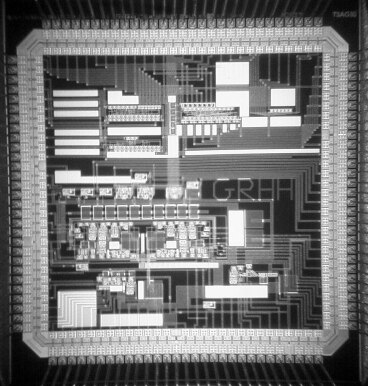
Analog IC that mimics a single synapse (via Guy Rachmuth and MIT)
 
Modeling the human brain into a usable computer is the basis for much research to date. IBM is attempting to build a computer system that rivals the human mind through brute force, one for one, copying the 100 billion neurons and 100 trillion synapses. Statistically so, the computer will be similar, but could it learn like a brain?
 
MIT and Harvard have modeled a new IC to follow how the brain learns. In the team's chip, 400 transistors simulate a single synapse. This acts as a digital representation of the pathway that nerve impulses from an axon travels before reaching neurons. More specifically, the chip emulates the ion channels. Neurons change their cell characteristics by releasing neurotransmitters (glutamate or GABA) which bind the receptors of postsynaptic cell membranes. This opens or closes the ion channels, which changes the cell's electrical potential.
 
The team was most concerned with two features of the synaptic connections, long-term depression (LTD) and long-term potentiation (LTP). LTD reduces the synaptic efficiency for periods of time, while LTP enhances. These processes are controlled by the flow of charged atoms (ie: sodium, calcium, potassium) through ion channels. The MIT chip mimics these processes closely in an analog fashion.
 
MIT-Harvard Division of Health Sciences and Technology explained their achievement further, "We now have a way to capture each and every ionic process that’s going on in a neuron. [The IC is a] significant advance in the efforts to incorporate what we know about the biology of neurons and synaptic plasticity onto CMOS [complementary metal-oxide-semiconductor] chips. If you really want to mimic brain function realistically, you have to do more than just spiking. You have to capture the intracellular processes that are ion channel-based. We can tweak the parameters of the circuit to match specific ion channels."
 
Aside from using this technology study brain function from a different perspective, build communication networks between the brain and artificial prosthetics, or step closer to a true artificial intelligence. If this team could only partner with IBM's SyNAPSE program, and they could both catalyst their way to another level.
 
Cabe
http://twitter.com/Cabe_e14
 
 
Other emulated mind news:

The human brain computer from IBM

Electronic brain via nanotubes

  • Sign in to reply
  • DAB
    DAB over 13 years ago

    What I would like to see is the research where they figured out how to trace the neurons and connections.  I think the structure of the brain is more important than just the mimicing the action.  Given that the brain can "rewire" itself based upon need, I think the chip needs to have a capability to dynamically change itself, similar to a FPGA.  The combination of this chip and some dynamic rewiring could lead to some interesting results.


    DAB


    PS:  Satire is fine, but only if the people it is intended for are smart enough to understand the message.  Just a thought.

    • Cancel
    • Vote Up 0 Vote Down
    • Sign in to reply
    • More
    • Cancel
  • Catwell
    Catwell over 13 years ago

    How about a little satire on the subject? See the Engineering on Friday comic strip.


    Cabe

    http://twitter.com/Cabe_e14
    • Cancel
    • Vote Up 0 Vote Down
    • Sign in to reply
    • More
    • Cancel
element14 Community

element14 is the first online community specifically for engineers. Connect with your peers and get expert answers to your questions.

  • Members
  • Learn
  • Technologies
  • Challenges & Projects
  • Products
  • Store
  • About Us
  • Feedback & Support
  • FAQs
  • Terms of Use
  • Privacy Policy
  • Legal and Copyright Notices
  • Sitemap
  • Cookies

An Avnet Company © 2025 Premier Farnell Limited. All Rights Reserved.

Premier Farnell Ltd, registered in England and Wales (no 00876412), registered office: Farnell House, Forge Lane, Leeds LS12 2NE.

ICP 备案号 10220084.

Follow element14

  • X
  • Facebook
  • linkedin
  • YouTube