element14 Community
element14 Community
    Register Log In
  • Site
  • Search
  • Log In Register
  • Community Hub
    Community Hub
    • What's New on element14
    • Feedback and Support
    • Benefits of Membership
    • Personal Blogs
    • Members Area
    • Achievement Levels
  • Learn
    Learn
    • Ask an Expert
    • eBooks
    • element14 presents
    • Learning Center
    • Tech Spotlight
    • STEM Academy
    • Webinars, Training and Events
    • Learning Groups
  • Technologies
    Technologies
    • 3D Printing
    • FPGA
    • Industrial Automation
    • Internet of Things
    • Power & Energy
    • Sensors
    • Technology Groups
  • Challenges & Projects
    Challenges & Projects
    • Design Challenges
    • element14 presents Projects
    • Project14
    • Arduino Projects
    • Raspberry Pi Projects
    • Project Groups
  • Products
    Products
    • Arduino
    • Avnet & Tria Boards Community
    • Dev Tools
    • Manufacturers
    • Multicomp Pro
    • Product Groups
    • Raspberry Pi
    • RoadTests & Reviews
  • About Us
  • Store
    Store
    • Visit Your Store
    • Choose another store...
      • Europe
      •  Austria (German)
      •  Belgium (Dutch, French)
      •  Bulgaria (Bulgarian)
      •  Czech Republic (Czech)
      •  Denmark (Danish)
      •  Estonia (Estonian)
      •  Finland (Finnish)
      •  France (French)
      •  Germany (German)
      •  Hungary (Hungarian)
      •  Ireland
      •  Israel
      •  Italy (Italian)
      •  Latvia (Latvian)
      •  
      •  Lithuania (Lithuanian)
      •  Netherlands (Dutch)
      •  Norway (Norwegian)
      •  Poland (Polish)
      •  Portugal (Portuguese)
      •  Romania (Romanian)
      •  Russia (Russian)
      •  Slovakia (Slovak)
      •  Slovenia (Slovenian)
      •  Spain (Spanish)
      •  Sweden (Swedish)
      •  Switzerland(German, French)
      •  Turkey (Turkish)
      •  United Kingdom
      • Asia Pacific
      •  Australia
      •  China
      •  Hong Kong
      •  India
      •  Korea (Korean)
      •  Malaysia
      •  New Zealand
      •  Philippines
      •  Singapore
      •  Taiwan
      •  Thailand (Thai)
      • Americas
      •  Brazil (Portuguese)
      •  Canada
      •  Mexico (Spanish)
      •  United States
      Can't find the country/region you're looking for? Visit our export site or find a local distributor.
  • Translate
  • Profile
  • Settings
Publications
  • Learn
  • More
Publications
Blog Liquid Nanocrystal Solar Cells Improve in Efficiency, Painted on Surfaces
  • Blog
  • Documents
  • Events
  • Files
  • Members
  • Mentions
  • Sub-Groups
  • Tags
  • More
  • Cancel
  • New
Join Publications to participate - click to join for free!
  • Share
  • More
  • Cancel
Group Actions
  • Group RSS
  • More
  • Cancel
Engagement
  • Author Author: Catwell
  • Date Created: 2 May 2012 4:25 PM Date Created
  • Views 351 views
  • Likes 0 likes
  • Comments 0 comments
  • research
  • alternative_energy
  • on_campus
  • Design
  • cabeatwell
  • prototyping
  • university
  • energy
  • solar
  • solar_cell
  • innovation
Related
Recommended

Liquid Nanocrystal Solar Cells Improve in Efficiency, Painted on Surfaces

Catwell
Catwell
2 May 2012

image

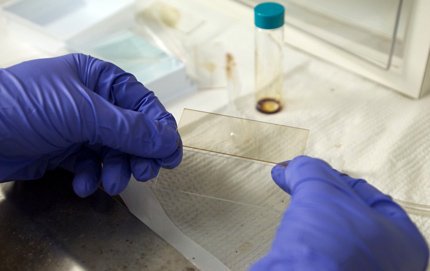
Glass treated with nanocrystal solar element (via University of Southern California and Dietmar Quistorf)


As the dominance of solar power in today's energy market grows, so does competition within innovation and production of this technology. A recent addition to the solar mix is the advancements being made in liquid nanocrystals solar cells. These nanocrystal cells have their main advantages over their single crystal wafer counterparts in their cost and size. However, the low efficiency of nanocrystal solar cells has been holding back their expansion. Now, scientists from the University of Southern California have found a way to improve the efficiency of liquid nanocrystal solar cells to make them more competitive and solar energy more prominent.


The liquid nanocrystals used in the production of these PV cells are about 4 nanometers across. These cells must be stabilized and kept apart from one another. To do this, scientists used organic ligands that attached to the nanocrystals. Unfortunately, these organic ligands also acted as insulators that impeded conductivity between the crystals. To over come this, scientists at USC have engineered synthetic ligands that perform the same function as the organic ones but also improve the conductivity between the crystals and thus improve the efficiency and effectiveness of liquid nanocrystal solar cells.


This type of solar panel is cheaper to make than the traditional single-crystal silicon wafer partly due to their small size. These liquid crystals can exist as paint or ink that will not melt. Liquid nanocrystals can be applied to plastic surfaces, which can be shaped to fit in more places than traditional glass surfaces. Using liquid nanocrystals, solar panels can be made to be extremely thin and flexible. However, more research is needed to find more suitable materials to make these crystals. Currently, cadmium selenide is used in their manufacture but this chemical is commercially restricted due to its high toxicity. The commercialization of this technology is still years away but is a leader in the next generation solar cells.


Cabe

http://twitter.com/Cabe_e14

  • Sign in to reply
element14 Community

element14 is the first online community specifically for engineers. Connect with your peers and get expert answers to your questions.

  • Members
  • Learn
  • Technologies
  • Challenges & Projects
  • Products
  • Store
  • About Us
  • Feedback & Support
  • FAQs
  • Terms of Use
  • Privacy Policy
  • Legal and Copyright Notices
  • Sitemap
  • Cookies

An Avnet Company © 2025 Premier Farnell Limited. All Rights Reserved.

Premier Farnell Ltd, registered in England and Wales (no 00876412), registered office: Farnell House, Forge Lane, Leeds LS12 2NE.

ICP 备案号 10220084.

Follow element14

  • X
  • Facebook
  • linkedin
  • YouTube