element14 Community
element14 Community
    Register Log In
  • Site
  • Search
  • Log In Register
  • Community Hub
    Community Hub
    • What's New on element14
    • Feedback and Support
    • Benefits of Membership
    • Personal Blogs
    • Members Area
    • Achievement Levels
  • Learn
    Learn
    • Ask an Expert
    • eBooks
    • element14 presents
    • Learning Center
    • Tech Spotlight
    • STEM Academy
    • Webinars, Training and Events
    • Learning Groups
  • Technologies
    Technologies
    • 3D Printing
    • FPGA
    • Industrial Automation
    • Internet of Things
    • Power & Energy
    • Sensors
    • Technology Groups
  • Challenges & Projects
    Challenges & Projects
    • Design Challenges
    • element14 presents Projects
    • Project14
    • Arduino Projects
    • Raspberry Pi Projects
    • Project Groups
  • Products
    Products
    • Arduino
    • Avnet & Tria Boards Community
    • Dev Tools
    • Manufacturers
    • Multicomp Pro
    • Product Groups
    • Raspberry Pi
    • RoadTests & Reviews
  • About Us
  • Store
    Store
    • Visit Your Store
    • Choose another store...
      • Europe
      •  Austria (German)
      •  Belgium (Dutch, French)
      •  Bulgaria (Bulgarian)
      •  Czech Republic (Czech)
      •  Denmark (Danish)
      •  Estonia (Estonian)
      •  Finland (Finnish)
      •  France (French)
      •  Germany (German)
      •  Hungary (Hungarian)
      •  Ireland
      •  Israel
      •  Italy (Italian)
      •  Latvia (Latvian)
      •  
      •  Lithuania (Lithuanian)
      •  Netherlands (Dutch)
      •  Norway (Norwegian)
      •  Poland (Polish)
      •  Portugal (Portuguese)
      •  Romania (Romanian)
      •  Russia (Russian)
      •  Slovakia (Slovak)
      •  Slovenia (Slovenian)
      •  Spain (Spanish)
      •  Sweden (Swedish)
      •  Switzerland(German, French)
      •  Turkey (Turkish)
      •  United Kingdom
      • Asia Pacific
      •  Australia
      •  China
      •  Hong Kong
      •  India
      • Japan
      •  Korea (Korean)
      •  Malaysia
      •  New Zealand
      •  Philippines
      •  Singapore
      •  Taiwan
      •  Thailand (Thai)
      • Vietnam
      • Americas
      •  Brazil (Portuguese)
      •  Canada
      •  Mexico (Spanish)
      •  United States
      Can't find the country/region you're looking for? Visit our export site or find a local distributor.
  • Translate
  • Profile
  • Settings
Publications
  • Learn
  • More
Publications
Blog Madder plant root an excellent lithium-ion cathode
  • Blog
  • Documents
  • Events
  • Files
  • Members
  • Mentions
  • Sub-Groups
  • Tags
  • More
  • Cancel
  • New
Join Publications to participate - click to join for free!
  • Share
  • More
  • Cancel
Group Actions
  • Group RSS
  • More
  • Cancel
Engagement
  • Author Author: Catwell
  • Date Created: 19 Dec 2012 7:50 PM Date Created
  • Views 554 views
  • Likes 1 like
  • Comments 1 comment
  • research
  • alternative_energy
  • plant
  • materials
  • industry
  • on_campus
  • battery
  • cathode
  • cabeatwell
  • prototyping
  • lithium-ion
  • university
  • energy
  • innovation
Related
Recommended

Madder plant root an excellent lithium-ion cathode

Catwell
Catwell
19 Dec 2012

image

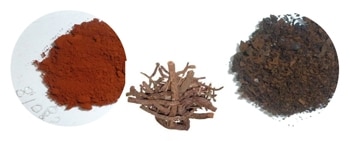
(Left) Purpurin extracted from the center madder root is chemically lithiated (meaning treated with lithium of its compounds, shown right) This treated extract can make for an alternative to current lithium-ion battery cathodes. (via Rice University)


To combat the increasing amount of pollution and waste being produced every year, green technology has quickly grown into a large and important area of research. More specifically, green technology involves creating products that can meet the needs of society while not using up and depleting natural resources. Such products should be able to be fully re-used and recycled, reduce pollution and waste, and in some cases provide an alternative source for energy sources currently used, such as fossil fuels. Although lots of research and studies have been conducted on green technology, none have devoted a great deal of time to creating a more environment friendly battery.


Additionally, due to the rise of technical devices we use batteries have become an integral part of modern life. As a result, countless batteries are disposed of improperly around the world every day. These batteries can have an extremely harmful effect on  the environment by releasing toxic substances and heavy metals into water, air, and the land. Even batteries that are recycled properly have to go through an extensive and expensive process. However, researchers from Rice University and the City College of New York may have made the first step toward creating a more effective and efficient green battery.


The researchers may have found a substance that can replace the cobalt cathodes used in lithium ion batteries. Their material used is called purpurin, a fully plant based substance which is derived from madder, a commonly found herb. The lead author on the study, Arava Leela Mohana Reddy, stated, “This is an area that needs immediate attention and sustained thrust, but you cannot discover sustainable technology over night. The current focus of the research community is still on conventional batteries, meeting challenges like improving capacity. While those issues are important, so are issues like sustainability and recyclability.” The researcher's prototype battery is created with the purpurin cathode which includes 20% of carbon for better conductivity. While testing the device, it was able to provide a capacity of 90 mAh per gram over 50 charge and discharge cycles.


While that capacity is still low, it is a start in a better direction for batteries. The researchers are going to continue to work on their prototype and want to find an organic material to replace the anodes also. Furthermore, they would like to find a better solution to use as an electrolyte until the entire battery is entirely organic. While the researchers are hard at work, we can remember to recycle all of our used batteries and when possible use rechargeable batteries or longer lasting ones to help the cause.


Cabe

http://twitter.com/Cabe_e14

  • Sign in to reply
  • DAB
    DAB over 13 years ago

    Hi Cabe,


    Great post, it shows how bio-electric technology could greatly improve how we use and reuse materials for systems.

    I think most people are beginning to understand that the bio-electric interface will enable more and better connections to the human body to facilitate health care, healing and augmentatation for disabled people.

    It makes sense that we can use organic material to improve our everyday tools to improve both performance and facilitate clean disposal after use.


    I look forward to seeing some of these ideas make themselves into future products.  We should see some really neat developments.


    DAB

    • Cancel
    • Vote Up 0 Vote Down
    • Sign in to reply
    • More
    • Cancel
element14 Community

element14 is the first online community specifically for engineers. Connect with your peers and get expert answers to your questions.

  • Members
  • Learn
  • Technologies
  • Challenges & Projects
  • Products
  • Store
  • About Us
  • Feedback & Support
  • FAQs
  • Terms of Use
  • Privacy Policy
  • Legal and Copyright Notices
  • Sitemap
  • Cookies

An Avnet Company © 2026 Premier Farnell Limited. All Rights Reserved.

Premier Farnell Ltd, registered in England and Wales (no 00876412), registered office: Farnell House, Forge Lane, Leeds LS12 2NE.

ICP 备案号 10220084.

Follow element14

  • X
  • Facebook
  • linkedin
  • YouTube